What is a decoy? Flares, chaff, towed decoys and naval decoys explained
A decoy, also called a “lure”, is a device that is launched or deployed to look to the enemy like the real target, drawing its missile, torpedo or radar attention away from the aircraft, ship or vehicle being protected. Türkiye’s Presidency of Defence Industries (SSB) defines it in its glossary as “a deception system used to protect the targeted friendly element from attacks by hostile elements”. Decoys range from simple flares and metallic chaff to smart electronic devices that retransmit hostile radar signals, and small rockets that mimic the signature of an entire ship.
This guide explains how decoys work, their types in the air, at sea and on land, and the difference between them and electronic jamming, with documented examples from Kuwait, Saudi Arabia, Türkiye, the United States, Australia and the United Kingdom.
What is a decoy in brief?
Every guided missile or torpedo relies on a “seeker” that picks up the target’s signature: engine heat, radar echo or acoustic noise under water. A decoy works on precisely this point: it presents the seeker with a stronger or more convincing signature than that of the real target, or adds many false targets that confuse the defence system. To understand the other side of the equation, see the guide to the seeker in missiles (Arabic).
How does a decoy work?
Decoys rely on three main mechanisms, and a single device may combine more than one:
- Seduction: the seeker has already “locked on” to the target, so the decoy is released close to it with a stronger signature; the seeker transfers to the decoy while the real target manoeuvres away.
- Distraction: false targets are deployed before the enemy locks on to the target, forcing it to choose between several possible targets.
- Saturation: large numbers of decoys are launched to flood air defence radars and force them to waste their missiles and time.
The basic condition in all cases is that the decoy’s signature must resemble the target’s signature in the spectrum in which the hostile seeker operates: thermal, radar, acoustic or visual.
Types of decoys
1. Flares
Charges that burn at high temperature after being released from the aircraft to attract infrared-guided missiles. Modern generations of infrared seekers have developed ways to distinguish flares, which has led to the development of flares with a spectral signature closer to that of the engine.
2. Chaff
A cloud of thin metal-coated fibres that reflect radar waves and create a false echo. It is released from aircraft and ships and works against radars and radar-guided missiles. For the difference between radar guidance modes, see types of radar guidance (Arabic).
3. Towed decoys
A device towed behind the aircraft on a cable that emits signals making a radar-guided missile head towards it instead of the aircraft. An example is the US AN/ALE-55 fibre-optic towed decoy, which a US Defense Security Cooperation Agency (DSCA) notification describes as improving the aircraft’s survivability.
4. Expendable active decoys
Small devices ejected from the same flare and chaff dispensers, but carrying active electronics. An example is Leonardo’s BriteCloud, which the company describes as the first expendable jammer based on digital radio frequency memory (DRFM) for fast jets; it captures hostile radar pulses and retransmits a modified copy that creates a convincing false target away from the aircraft.
5. Air-launched decoys
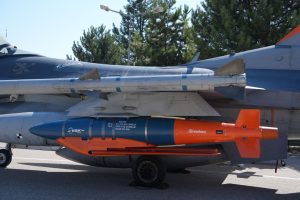
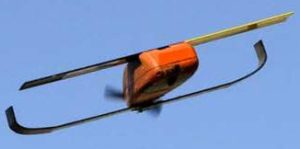
Small unmanned aircraft launched from combat aircraft that mimic the signature and flight paths of combat aircraft in order to mislead and tie up enemy air defences. An example is Raytheon’s (RTX) ADM-160 MALD, and its MALD-J version, which adds a radar-jamming capability to the decoy function.
6. Naval decoys
Ships use chaff, flares and active decoys against anti-ship missiles. One of the best known is Nulka, which, according to the Royal Australian Navy, is a ship-launched rocket decoy that hovers at a programmed altitude, direction and speed and emits a radar signal mimicking a large ship to lure the attacking missile away from it.
7. Anti-torpedo decoys
Under water, the torpedo relies on sound, so ships use towed or expendable acoustic decoys that emit noise mimicking the ship or jam the torpedo’s sonar. For more background, see What is a torpedo? (Arabic) and What is sonar? (Arabic)
8. Land decoys
Replicas identical in shape to tanks, missile launchers or radars, which may also mimic thermal or radar signatures, used to deplete enemy munitions and mislead its reconnaissance, especially in the era of drones searching for targets for guided munitions (Arabic).
What is the difference between a decoy and electronic jamming?
Jamming aims to “blind” the enemy radar, flood it with noise or falsify the information it receives, and is usually emitted from the platform itself or from an escort platform. A decoy, by contrast, presents a separate “substitute target” physically detached from the protected platform. The two approaches meet in active devices such as BriteCloud and MALD-J. The advantage of a separate decoy is that it moves the missile’s point of attraction away from the platform, so the missile does not home in on the jamming source itself. For more on jamming, see What is electronic jamming? (Arabic) and What is electronic warfare? (Arabic)
Documented Arab, Turkish and international examples
Kuwait: the self-protection package in the Super Hornet notification
In the proposed sale notification published by the US Defense Security Cooperation Agency in the Federal Register (28 November 2016) for F/A-18E/F Super Hornet fighters for Kuwait, the package included 45 countermeasures dispensers AN/ALE-47, 45 radio frequency countermeasures systems AN/ALQ-214 and 45 towed decoys AN/ALE-55. The notification describes the ALE-47 as a threat-adaptive dispensing system. It should be noted that the notification represents a proposed package with an estimated ceiling, and that the details of the final contract may differ.
Saudi Arabia: flares in F-15 training
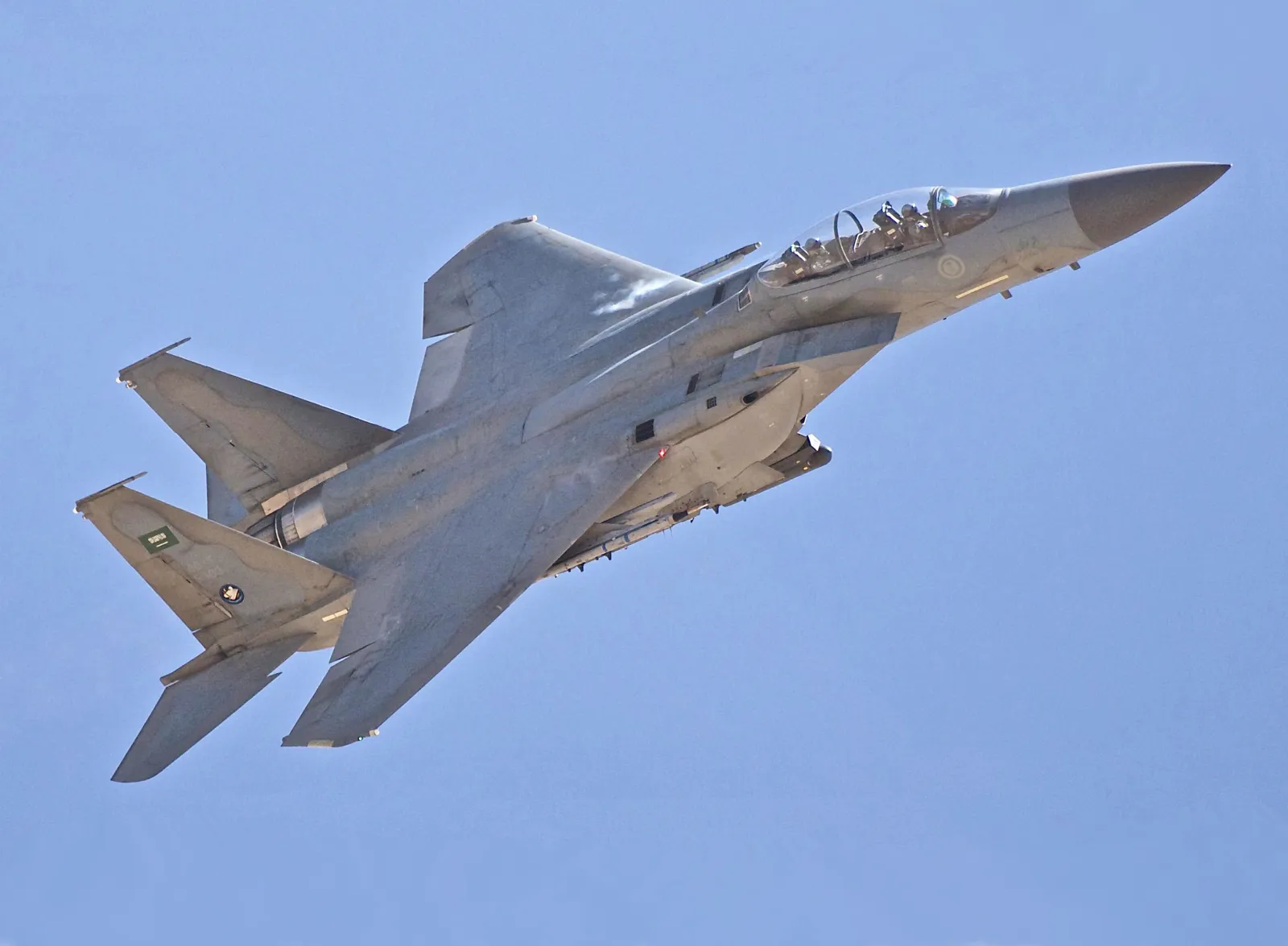
An image published on the US DVIDS platform shows a Royal Saudi Air Force F-15 releasing flares during a training exercise; it is the image accompanying this guide. Flare-release training is part of training fighter crews to protect against infrared-guided missiles.
Türkiye: the HIZIR anti-torpedo system
ASELSAN describes the HIZIR 100-N system as a surface-ship system that detects, tracks and classifies incoming torpedoes and then recommends or executes countermeasures. The system includes a towed acoustic decoy with its cable and winch, as well as programmable expendable decoys and jammers fired from launchers on both sides of the ship; it can be operated automatically or with operator approval, and provides recommendations for evasive manoeuvres.
The United States, Australia and the United Kingdom
The US MALD represents the air-launched decoy model, Australia’s Nulka the active naval decoy model, and the British-Italian BriteCloud the expendable active decoy model ejected from standard dispensers.
Comparison table: types of decoys
| Type | Targeted spectrum | Platform | Documented example | Source |
|---|---|---|---|---|
| Flares | Infrared | Aircraft, helicopters and ships | Saudi F-15 training | DVIDS |
| Chaff | Radar | Aircraft and ships | Ejected from dispensers such as the ALE-47 | DSCA |
| Towed air decoy | Radar | Fighters | AN/ALE-55 (Kuwait notification, 2016) | DSCA |
| Expendable active decoy (DRFM) | Radar | Fighters | BriteCloud | Leonardo |
| Air-launched decoy | Air defence radars | Fighters and bombers | ADM-160 MALD / MALD-J | RTX |
| Hovering naval decoy | Anti-ship missile radar | Warships | Nulka | Royal Australian Navy |
| Acoustic anti-torpedo decoy | Underwater sound | Surface ships | HIZIR 100-N | ASELSAN |
Note: the table does not compare performance; each device was designed for a different threat and platform, and no public official data is available to compare their effectiveness.
Limitations of decoys
- Seeker advances: modern imaging infrared seekers and advanced radars can distinguish some simple decoys.
- Timing: a decoy’s effectiveness depends on releasing it at the right moment, often in conjunction with a manoeuvre by the real target.
- Stock: expendable decoys are limited in number on each platform.
- Cost and complexity: active devices are much more expensive than flares and chaff, but are more capable of deceiving modern radars.
Decoys are therefore used as part of an integrated protection system that combines warning devices, jamming and manoeuvring, and on land vehicles they may be complemented by active protection systems.
Frequently asked questions
What is the difference between flares and chaff?
Flares deceive infrared-guided missiles because they are an intense heat source, while chaff deceives radar because it reflects radar waves and creates a false echo.
Is a decoy an offensive or defensive weapon?
Most decoys are defensive means for protecting the platform, but some, such as MALD, are also used in offensive operations to tie up enemy air defences and clear the way for aircraft and munitions.
How do ships protect themselves from torpedoes?
With systems that detect the torpedo and launch towed or expendable acoustic decoys, such as Türkiye’s HIZIR 100-N, combined with an evasive manoeuvre.
Can drones be decoys?
Yes. Air-launched decoys such as MALD are essentially small unmanned aircraft programmed to mimic the signature of combat aircraft.
What does DRFM mean?
Digital radio frequency memory: a technology that captures a radar signal, stores it digitally and then retransmits it after modification to create false targets in range or velocity.
Sources
- Presidency of Defence Industries of Türkiye (SSB), glossary – SavunmaSanayii360: ssb.gov.tr
- US Federal Register, arms sales notification: Kuwait – F/A-18E/F Super Hornet (28 November 2016): govinfo.gov
- Leonardo, BriteCloud – the world’s first expendable DRFM jammer for fast jet aircraft: leonardo.com
- RTX (Raytheon), MALD Decoy: rtx.com
- US Office of the Director, Operational Test and Evaluation (DOT&E), MALD and MALD-J report for fiscal year 2017: dote.osd.mil
- Royal Australian Navy, Nulka active missile decoy: navy.gov.au
- ASELSAN, HIZIR 100-N – torpedo countermeasure system for surface ships: aselsan.com
- DVIDS / US military, image of a Saudi F-15 releasing flares during an exercise (public domain).