Southern Forces withdraw from Dhubab and the Bab al-Mandab area towards Aden as the Houthis claim control
The Southern Armed Forces, loyal to Yemen’s internationally recognised government and backed by the Saudi-led coalition, announced on Sunday 15 November 2026 a “redeployment” of their forces from Dhubab airport and the Bab al-Mandab area in western Taiz governorate, justifying the move by the priority of securing the interim capital Aden and neighbouring governorates. Houthi-affiliated media later reported that the group had taken control of the area, according to the BBC, while Saudi Arabia had not commented officially at the time of writing.
What did the Southern Forces’ statement say?
According to the statement the forces published on X, reported by Reuters and Yemeni media, the forces “announce the implementation of a redeployment of their forces from Dhubab airport and the Bab al-Mandab area in western Taiz governorate”, adding that the step “stems from the priority of securing the capital Aden and neighbouring governorates, reinforcing the front lines and confronting existing threats”.
The statement stressed, according to Yemen Monitor, that the decision came in light of “recent military and field developments” and the build-ups and threats targeting Aden on the fronts, while operations aimed at breaking the siege of the city of Taiz continue, emphasising that the duty to confront the Houthis “is not tied to a specific geographical location”.
“Not a withdrawal in the military sense”: the Yemeni presidency’s account
For his part, Jaber Mohammed, media adviser at the Yemeni presidency, told Asharq Al-Awsat (as published by Arab News) that the step “should not be interpreted as a withdrawal in the military sense” but as a redistribution of forces aimed at three objectives:
- protecting the interim capital Aden;
- reinforcing the fronts in Lahj governorate;
- creating the conditions to break the siege of Taiz and liberate the governorate.
He explained that the forces had repositioned in the Al-Suqayya area, about 6 to 8 kilometres from Bab al-Mandab, keeping them within the area of operations, arguing that deployment along the exposed coastal strip had made the forces more vulnerable to attack and that the greater danger lies in the mountainous heights overlooking Bab al-Mandab, Dhubab and Perim (Mayun) island. He added that the Kahboub mountains, in his assessment, remain under the control of government forces.
Meanwhile, Yemeni Armed Forces spokesman Colonel Majed Al-Nuzaili said that liberating Bab al-Mandab and the west coast is an “inherent right” of the armed forces, affirming that Operation “Dawn of Yemen” (Arabic) will continue until it achieves its objectives.
Why now? Houthi pressure on the Lahj fronts
China’s Xinhua news agency reported that the withdrawal came after Houthi fighters seized several strategic positions in Lahj governorate, including areas overlooking the roads leading to Aden and to the Bab al-Mandab strait, and quoted a military source as saying the decision also aims to prevent the Houthis from outflanking government positions or cutting their lines of movement. A southern military commander also warned, according to Asharq Al-Awsat, that losing the heights overlooking the coast could open the way for an advance towards Lahj and Aden, given the proximity of the Ras al-Ara and Al-Madaraba areas to Aden’s Al-Buraiqa district.
The fighting in the Kahboub mountains in Lahj (Arabic) has seen conflicting accounts of who controls them since October; they are among the commanding heights overlooking the coast and the strait.
Background: from the Houthi takeover in September to “Dawn of Yemen”
In September 2026 the Houthis seized areas around the strait, including Perim (Mayun) island and the city of Mokha (Arabic), in a surprise offensive. Government forces responded in early October by launching Operation “Dawn of Yemen”, during which they advanced towards Dhubab airport and parts of Bab al-Mandab and Kahboub, and at the time announced they had “secured” the strait. The latest announcement effectively ends the weeks-long offensive to retake the area, according to the BBC.
In parallel, Houthi missile and drone attacks on Saudi territory continue: on the same Sunday the coalition announced the interception of two ballistic missiles heading towards Riyadh and drones over the Eastern Province (Arabic), as well as the interception of other drones in the Makkah and Madinah regions.
Why does Bab al-Mandab matter militarily?
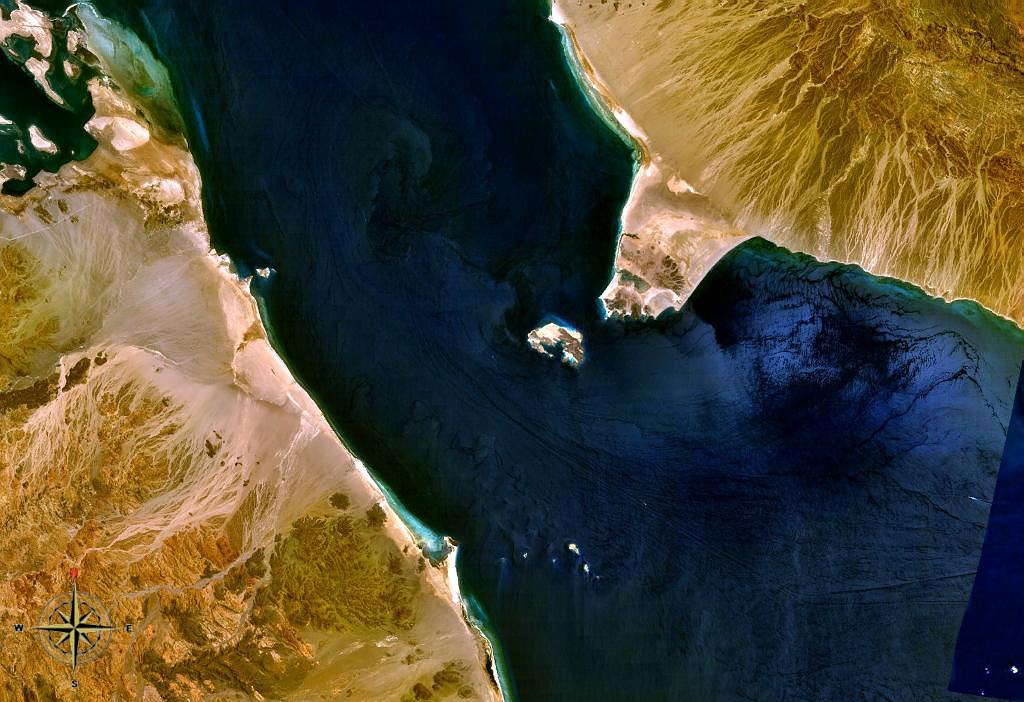
The Bab al-Mandab strait (Arabic) is one of the world’s most important sea lanes, linking the Red Sea to the Gulf of Aden, and a large share of trade between Asia and Europe passes through it via the Suez Canal. According to Reuters, the withdrawal of government forces gives the Houthis greater leverage over this vital chokepoint at a time when Iran continues to disrupt shipping in the Strait of Hormuz on the other side of the Arabian Peninsula, doubling the pressure on Gulf oil export routes. The BBC noted that Saudi Arabia had been relying on the Red Sea for its oil exports since shipping through Hormuz was disrupted.
When they took control of the area in September, the Houthis announced that they posed no threat to international shipping transiting the strait but would continue to target Saudi vessels.
What do we not know yet?
- The exact limits of the areas the Houthis have entered, as there has been no independent confirmation of their media’s account;
- The position of the Saudi-led coalition on the redeployment, as no official Saudi comment has been issued so far;
- The impact of the development on commercial shipping and foreign warships operating in the southern Red Sea.
Frequently asked questions
Have government forces withdrawn from Bab al-Mandab?
On 15 November 2026 the Southern Armed Forces announced a “redeployment” from Dhubab airport and the Bab al-Mandab area towards Aden. The Yemeni presidency describes the move as a redistribution rather than a withdrawal in the military sense, while Reuters and the BBC say it leaves the area under Houthi control.
Where did the forces position themselves after the redeployment?
According to an adviser at the Yemeni presidency, in the Al-Suqayya area about 6 to 8 kilometres from Bab al-Mandab, with forces directed to reinforce Aden and the Lahj fronts.
Is Operation “Dawn of Yemen” continuing?
Yes, according to the Yemeni Armed Forces spokesman and the official statement of the Southern Forces, both of which affirmed that operations against the Houthis and efforts to break the siege of Taiz will continue.
Note: the accompanying image is an archive NASA satellite image of the Bab al-Mandab strait (public domain) and does not show the recent events.
Sources
- Reuters via NBC News, “Yemen government forces withdraw from area near Bab el Mandeb strait, Houthis in control”, 15 November 2026 — nbcnews.com
- BBC News, “Yemeni forces’ retreat leaves Houthis in control of key Red Sea waterway”, 15 November 2026 — bbc.com
- Arab News / Asharq Al-Awsat, “Yemeni presidency: redeployment of forces near Bab Al-Mandab a ‘calculated military move’”, 15 November 2026 — arabnews.com
- Yemen Monitor, “Government forces announce redeployment of their forces in Dhubab and Bab al-Mandab, west of Taiz” (Arabic), 15 November 2026 — yemenmonitor.com
- Xinhua, “Yemen’s gov’t forces withdraw from strategic Bab al-Mandab area amid Houthi advances”, 15 November 2026 — news.cn