The War You Can’t See: How GPS Jamming and Spoofing Threaten Aviation, Shipping and Timing
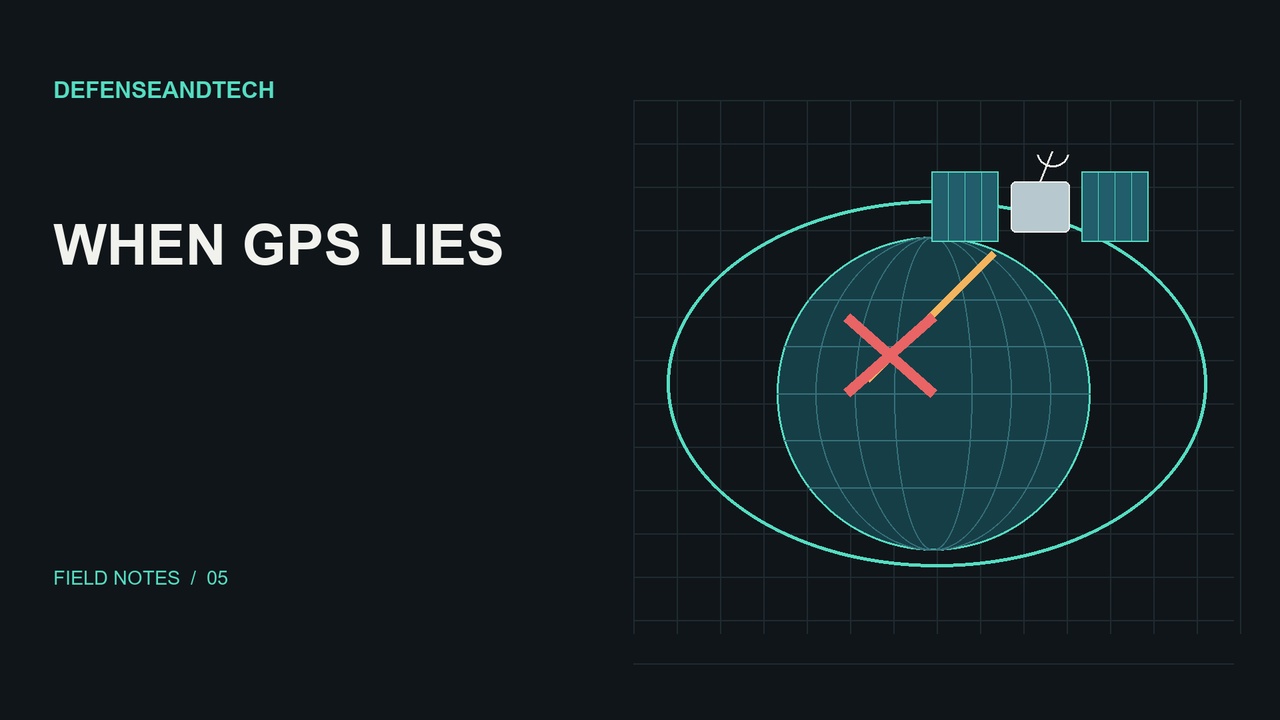
The most unsettling navigation failure is not always a blank screen. It can be a screen that still gives a confident answer, and the answer is wrong. That is why satellite navigation interference has moved from a specialist concern into international safety warnings, with no satellite having to leave orbit for a service on Earth to become unreliable.
GPS is one member of a larger family
GPS is the American system; GNSS is the wider term that also covers Galileo, BeiDou and GLONASS. Receivers use precise timing signals to work out both position and time, which is why the service matters far beyond driving directions. A healthy satellite constellation and a trustworthy answer at one receiver are related, but not identical, achievements.
Jamming and spoofing are different failures
Jamming can stop a receiver from using a signal; spoofing tries to make it accept false information that looks plausible. One removes an answer, the other offers a wrong one. A ship icon drawn on land is a reason to ask questions, not automatic proof of who caused the problem.
Aviation authorities are treating it as an ongoing risk
In July 2026 the European Union Aviation Safety Agency updated its safety bulletin on satellite navigation outages and alterations, addressing pilot and air traffic control communication, training and operational preparation. EASA’s material notes increased interference around several sensitive regions, including parts of the Middle East and surrounding conflict areas.
The same problem reaches the sea
In March 2025 the International Maritime Organization joined UN aviation and telecommunications agencies in warning about satellite navigation interference. Ports and ships rely on positioning and timing across connected systems, and the UK’s Maritime and Coastguard Agency has issued guidance on operating in degraded navigation environments.
The clock behind the map
Precise time is as important as location. GPS timing supports communications, power grids and financial networks, dependencies studied by the U.S. National Institute of Standards and Technology. Real resilience means detecting unreliable information, understanding the consequences and keeping essential services running, and making sure a backup does not quietly depend on the same source.
This report accompanies the video above from DefenseandTech, Defence Arabia’s English-language partner channel, part of the Defense Vision series. Research checked on 7 November 2026; the full source list and footage credits are in the video description on YouTube.