What is military artificial intelligence? How it works, where it is used and the limits of autonomy in weapons
Military artificial intelligence is the use of algorithms capable of learning from data, such as machine learning, deep learning and computer vision, in defence tasks: from analysing reconnaissance imagery and recognising targets, to autonomous drone navigation, predictive maintenance and decision support in command centres. The glossary of Türkiye’s Presidency of Defence Industries (SSB) defines artificial intelligence as “the ability of a computer or a computer-controlled system to perform various activities in a manner similar to intelligent beings”. In military use, however, the most important question is not “Is there AI in the weapon?” but rather: What function does it perform, and where does the decision to use force remain in human hands?
This guide explains how AI works in defence systems, the difference between automation and autonomy, its main areas of use and the international frameworks that regulate it, with documented examples from the UAE, Türkiye, the United States and NATO, and a clear distinction between what manufacturers announce and what independent official sources confirm.
What is military AI in brief?
It is a software layer added to sensors, platforms and command systems to accelerate three stages: detection (spotting what cameras and radars pick up), understanding (classifying the target and assessing the threat), and decision or recommendation (proposing a route, target or action). This does not necessarily mean a weapon that “decides on its own”; most applications announced today fall within intelligence, surveillance and reconnaissance (ISR), navigation, logistics and maintenance, while armed engagement generally remains subject to the approval of a human operator.
How does AI work in defence systems?
1. Data and training
Models are trained on large amounts of labelled data, such as aerial images of vehicles, ships and facilities, or radar signal signatures. A model’s quality depends on the quality and diversity of this data; a model trained on daytime images in a desert environment may make mistakes at night or in a coastal or urban environment.
2. Inference on the platform or at the centre
After training, the model runs either “at the edge” inside the drone or vehicle itself, which allows it to work even when the link is lost, or in a command centre that fuses data from multiple sources. In the first case the constraints are weight, power and processing capacity; in the second they are the speed and security of communications.
3. Integration with the human
The model’s output is presented to the operator as an alert, a box around a potential target or a recommendation, and then the human decides. Three common patterns are used in the literature to describe this relationship:
- Human-in-the-loop: engagement is carried out only with direct human approval.
- Human-on-the-loop: the system operates autonomously and a human can monitor and stop it.
- Human-out-of-the-loop: the system selects and attacks the target without intervention after activation; this is the focus of the international debate on “lethal autonomous weapons”.
What is the difference between automation, autonomy and AI?
These terms are often used interchangeably, but they are not synonyms:
| Concept | Meaning | Illustrative example |
|---|---|---|
| Automation | Executing a predefined sequence according to fixed rules | An autopilot that maintains altitude and heading |
| Autonomy | The system’s ability to complete a task and adapt its behaviour without real-time direction | A drone that returns to base when the link is lost |
| Artificial intelligence | Models that learn patterns from data instead of hand-written rules | Classifying a vehicle in a thermal image |
An autonomous system may exist that does not use machine learning, and AI may be used in a system with no autonomy in engagement, such as software that analyses satellite imagery for a human analyst.
Where is AI used militarily?
- Intelligence and reconnaissance: sorting thousands of images and video clips from drones and satellites, a field directly linked to military satellites (Arabic).
- Drones and swarms: navigation without satellite navigation signals (GNSS), collision avoidance and task allocation among several aircraft. To distinguish between drone categories, see the difference between UAV and UCAV (Arabic).
- Air defence and counter-drone: classifying small, slow targets and distinguishing them from birds and clutter, within counter-drone (C-UAS) systems (Arabic).
- Electronic warfare: rapid recognition of hostile signals and adaptive jamming, an extension of the concepts of electronic warfare (Arabic).
- Command and control: fusing sensor data into a single operational picture, as in combat management systems (Arabic) on ships.
- Unmanned naval systems: autonomous boats for surveillance and protection, a field in which navies are racing, as explained in the report on the autonomous fleet race (Arabic).
- Logistics and maintenance: predicting failures before they occur and managing inventories and fleets of autonomous vehicles.
- Cybersecurity: detecting anomalous behaviour in networks, as distinct from cyber warfare (Arabic) in its offensive sense.
Documented examples: the UAE, Türkiye and the world
UAE: EDGE Group and an AI centre of excellence
The UAE’s EDGE Group states that it runs an AI centre of excellence for the research, development and deployment of AI capabilities in the group’s products, explicitly linking this to the concept of “technological sovereignty” for the UAE Armed Forces because of the opaque nature of AI algorithms. On 19 May 2025 the group announced the launch of the “Group AI Accelerator” as a centre of excellence to speed up AI projects across its entities.
On 13 November 2025 EDGE and the US company Anduril announced their intention to establish a joint venture in the UAE to develop and produce autonomous systems, the first being the “Omen” aircraft, which takes off vertically and transitions to horizontal flight. According to EDGE’s statement, the UAE has completed an initial acquisition of 50 systems, and the venture gives EDGE access to the AI-enabled “Lattice” command-and-control software platform, with a stated goal of reaching full-rate production by the end of 2028. These are goals announced by the two companies, not yet proven operational capabilities.
EDGE also announced that it led the integration of sovereign autonomous systems in a UAE Navy demonstration with the participation of the US Navy, in which unmanned surface vessels carried out AI-supported reconnaissance and protection missions, and in which the “HADAF” targeting system, which the group describes as built on military doctrine and rules of engagement, was used.
Türkiye: KARGU and computer vision
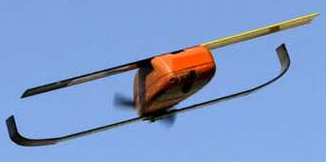
Turkish company STM describes its rotary-wing loitering munition KARGU as using deep-learning-based computer vision to detect, classify and track objects, as having swarming capability, and as operating in GNSS-denied environments thanks to the KERKES project. At the same time, the company stresses that the precision strike mission “is performed entirely by the operator in line with the human-in-the-loop principle”. The company’s website gives the mission range as about 10 kilometres.
KARGU-2 gained international notoriety after the report of the UN Panel of Experts on Libya (document S/2021/229, issued in March 2021) stated that retreating forces were “hunted down and remotely engaged” by combat drones or “lethal autonomous weapons systems such as the STM Kargu-2”, and that these systems “were programmed to attack targets without requiring data connectivity between the operator and the munition”. However, the report did not explicitly establish that these munitions killed people in fully autonomous mode, as later legal readings such as an analysis by the Lieber Institute at the US Military Academy have pointed out.
United States: Directive 3000.09
US Department of Defense Directive 3000.09, “Autonomy in Weapon Systems”, was first issued on 21 November 2012 and updated on 25 January 2023. The directive requires that autonomous and semi-autonomous weapons be designed to allow commanders and operators “to exercise appropriate levels of human judgment over the use of force”, that they undergo realistic verification, validation and testing, and that most of them pass a senior-level review before formal development and before fielding.
NATO: principles of responsible use
NATO adopted its AI strategy in October 2021 and published a summary of its revised version in July 2024. It includes six principles of responsible use: lawfulness, responsibility and accountability, explainability and traceability, reliability, governability, and bias mitigation.
The international framework and the Arab position
The “Political Declaration on Responsible Military Use of Artificial Intelligence and Autonomy” was launched in February 2023 at the REAIM summit in The Hague. The list of endorsing states published by the US State Department (updated to 27 November 2024) includes the following Arab states: Bahrain, Libya and Morocco, as well as Türkiye. Bahrain was among the co-chairs of the working groups that emerged from the declaration’s inaugural plenary meeting in March 2024. At the UN level, the debate on lethal autonomous weapons continues within the Convention on Certain Conventional Weapons (CCW), with no binding treaty so far.
A state’s absence from a list does not mean that it opposes its content; endorsement is a voluntary political step, and national positions should be read from official national documents.
Table: key documented milestones
| Milestone | Body | Date | Nature |
|---|---|---|---|
| Directive 3000.09 (first issue) | US Department of Defense | 21 November 2012 | National policy |
| Panel of Experts on Libya report S/2021/229 | UN Security Council | 8 March 2021 | UN report |
| NATO AI strategy | NATO | October 2021 (revised July 2024) | Alliance strategy |
| Update of Directive 3000.09 | US Department of Defense | 25 January 2023 | National policy |
| Political Declaration on Responsible Use | REAIM / US State Department | February 2023 | Voluntary political commitment |
| Launch of Group AI Accelerator | EDGE (UAE) | 19 May 2025 | Company announcement |
| EDGE–Anduril autonomous systems venture | EDGE and Anduril | 13 November 2025 | Company announcement; full production targeted by end-2028 |
Risks and limitations
- Data fragility: a model may fail in conditions it was not trained on, or in the face of deliberate camouflage and deception.
- Difficulty of explanation: many models do not explain why they reached a decision, which complicates accountability and the investigation of errors.
- Electronic and cyber warfare: sensors can be jammed, data poisoned or links hacked.
- Compliance with international humanitarian law: distinguishing between combatants and civilians, and proportionality, remain human responsibilities that do not pass to the algorithm.
- Dependence on suppliers: this is why states in the region, including the UAE, speak of the “sovereignty” of algorithms and data.
What do we not know yet?
Most militaries do not publish details of the AI models they use, nor their error rates in the field. Marketing phrases such as “AI-powered” should therefore be treated with caution, distinguishing between what is under development, what has been tested, what has actually entered service and what has been used in documented operations.
Frequently asked questions
Does military AI mean killer robots?
No. Most announced uses relate to data analysis, navigation, maintenance and decision support. Weapons that select and attack their targets without human intervention after activation are a limited and controversial part of this field.
What is the difference between an autonomous drone and a smart drone?
An autonomous drone can carry out its mission without real-time direction and may rely on fixed software rules. The description “smart” is generally used when it relies on machine-learning models, such as recognising targets in images.
Is there an international treaty banning autonomous weapons?
There is no binding treaty specific to them so far; the debate is ongoing within the framework of the Convention on Certain Conventional Weapons, alongside voluntary political commitments such as the 2023 Political Declaration.
Has a fully autonomous weapon been used in an actual conflict?
A UN report on Libya (2021) referred to the use of loitering munitions “programmed to attack without connectivity to the operator”, but it did not explicitly establish that deaths were caused by a fully autonomous engagement, so the question remains a matter of debate.
Which Arab states have endorsed the Political Declaration on Responsible Use?
According to the US State Department list as of 27 November 2024: Bahrain, Libya and Morocco.
Sources
- Presidency of Defence Industries of Türkiye (SSB), Glossary – SavunmaSanayii360: ssb.gov.tr
- US Department of Defense, Directive 3000.09 “Autonomy in Weapon Systems”, 25 January 2023: esd.whs.mil
- US Department of Defense, announcement of the update to Directive 3000.09: war.gov
- UN Security Council, report of the Panel of Experts on Libya S/2021/229: documents.un.org
- Lieber Institute – US Military Academy, “The Kargu-2 Autonomous Attack Drone: Legal & Ethical Dimensions”: lieber.westpoint.edu
- NATO, summary of the revised AI strategy (July 2024): nato.int
- US State Department, Political Declaration on Responsible Military Use of AI and list of endorsing states: state.gov
- US State Department, inaugural plenary meeting of the Political Declaration (March 2024): state.gov
- STM, KARGU system page: stm.com.tr
- EDGE Group, technologies and centres of excellence: edgegroup.ae
- EDGE Group, launch of the Group AI Accelerator (19 May 2025): edgegroup.ae
- EDGE Group, EDGE–Anduril joint venture (13 November 2025): edgegroup.ae
- EDGE Group, integration of autonomous systems in the UAE Navy demonstration: edgegroup.ae