
What is a mortar? How it works and why it fires at a high angle
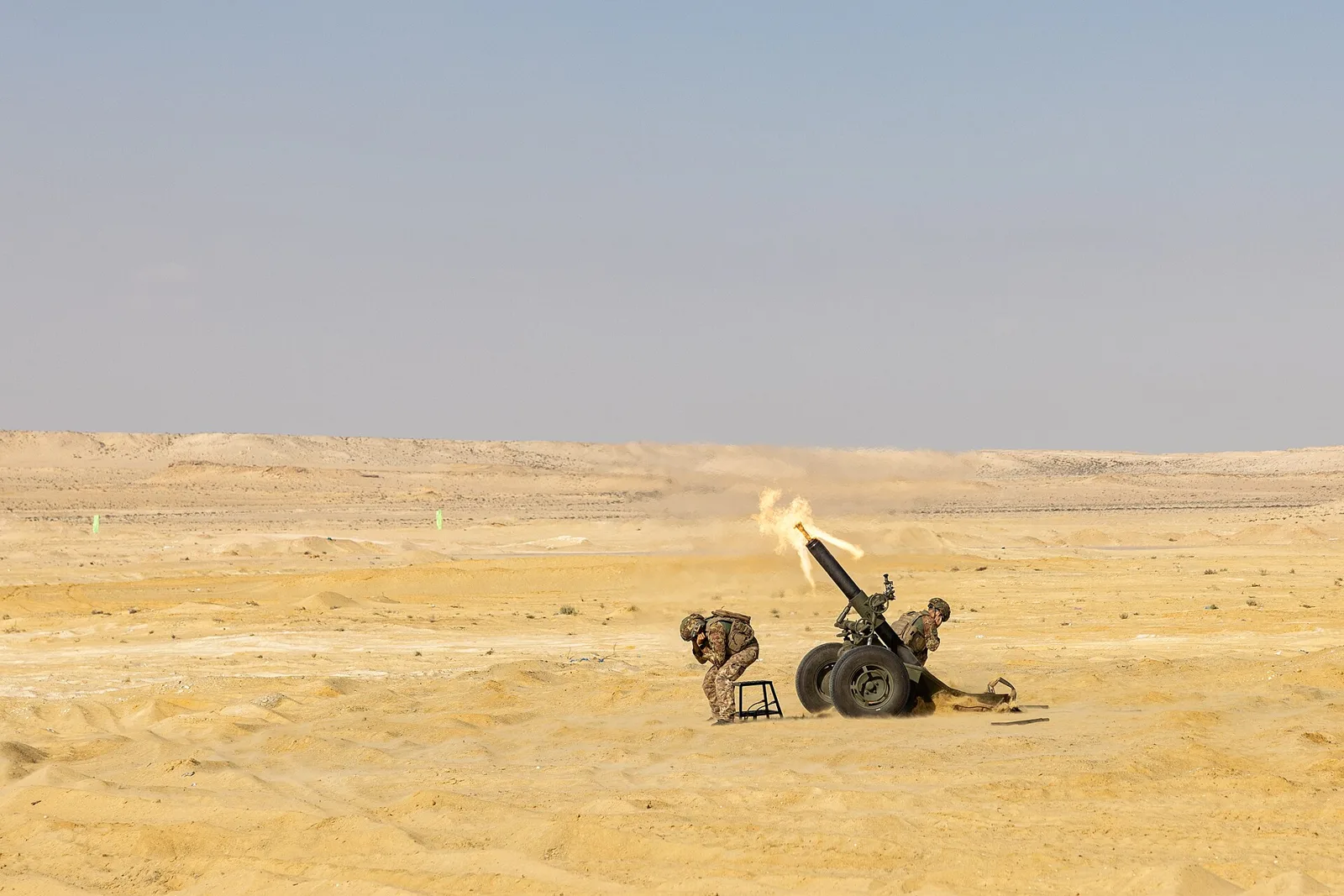
The direct answer: a mortar is a portable, short-barrelled artillery weapon that is loaded from the muzzle. It fires explosive projectiles at low velocity, over short range and on a high, arcing trajectory. The glossary of Türkiye’s Presidency of Defence Industries (SSB) defines it as a type of short-barrelled gun with high firepower.
How does a mortar work?
Encyclopaedia Britannica describes the modern mortar as a light tube resting on a baseplate and supported by a bipod. It is fired by dropping the bomb down the tube onto a firing pin, which ignites the propellant charge and sends the bomb towards the target. According to the encyclopaedia, infantry can carry mortars up to 81 mm calibre and use them as a substitute for short-range artillery on a small scale.
Advantages and limitations of the mortar
- Portability: its small size allows movement without major logistical support.
- Firing from protected positions: it can be fired from a trench or from behind cover that protects the crew from direct counter-fire.
- High trajectory: it allows trenches, gun emplacements and positions without overhead protection to be hit.
- Limitations: its range and projectile velocity are lower than those of heavy artillery, which fires at high velocities, over long distances and on low, direct trajectories.
Mortar and howitzer in brief
For a detailed comparison of the gun, the howitzer and the mortar, see our article on the self-propelled howitzer (Arabic). Here is a quick summary:
| Criterion | Mortar | Howitzer |
|---|---|---|
| Loading | Usually from the muzzle | From the breech |
| Barrel | Short and light | Longer and heavier |
| Trajectory | High and arcing | Flexible, from low to high |
| Range | Short | Much longer |
| Level | Fire-support weapon for infantry, companies and battalions | Field artillery weapon |
Historical overview
Britannica notes that the Ottomans used mortars as early as 1453 during the siege of Constantinople, and that some were huge, weighing about 4,500 kilograms and hurling projectiles of more than 100 kilograms. It adds that light mortars played a prominent role in the Second World War and later in Korea and Vietnam. The encyclopaedia also points out that guerrilla forces used the mortar effectively because it allows them to fire and then withdraw before counter-fire can be directed. This is one reason for the spread of artillery-locating radars and interception systems. See asymmetric warfare (Arabic).
The mortar in Arab exercises
The accompanying image shows live firing of a 120 mm MO-120 RT-F1 mortar by members of the Italian Navy’s San Marco Brigade during Exercise Bright Star 25 at Mohamed Naguib Military Base in Egypt in September 2025. For rocket artillery, see: What are MLRS rocket launchers? (Arabic), and for fuzes: the proximity fuze (Arabic).
Information status: the definitions and history are confirmed by Britannica and the SSB glossary. The comparison with the howitzer is a generalisation that varies by model.
Frequently asked questions
What is a mortar?
A portable, short-barrelled, muzzle-loaded artillery weapon that fires bombs on a high, arcing trajectory over short range.
Does a mortar need a vehicle to transport it?
According to Britannica, infantry carry mortars up to 81 mm calibre. Heavier calibres are usually transported by vehicles or mounted on them.
What are the most common mortar calibres?
Calibres such as 60, 81 and 120 mm are common. According to Britannica, infantry can carry mortars up to 81 mm calibre.
Why is a mortar fired at a high angle?
Because the arcing trajectory allows targets behind cover or inside trenches to be hit, and makes it possible to fire from protected positions.
More: Encyclopaedia of defence terms (Arabic).
Information verified on: 3 November 2026.
Sources
- Encyclopaedia Britannica – Mortar (weapon)
- Presidency of Defence Industries of Türkiye – Savunma Sanayii 360 glossary
- US Army / DVIDS – BRIGHT STAR 25 Mortar live fire (Wikimedia Commons)
Image: members of the Italian Navy’s San Marco Brigade fire a 120 mm MO-120 RT-F1 mortar during Exercise Bright Star 25 at Mohamed Naguib Military Base in Egypt, 7 September 2025 (photo: Joseph Kumzak / US Army, public domain via Wikimedia Commons).