For the third time, coalition intercepts 3 Houthi missiles over Riyadh amid Houthi threats to close air navigation and target Jeddah
Air defences of the Coalition to Restore Legitimacy in Yemen intercepted and destroyed three ballistic missiles launched by the Houthi militia towards the Saudi capital Riyadh in the early hours of Saturday, 21 November 2026, on the third consecutive night of emergency alerts in Riyadh, according to a coalition statement carried by Saudi and international media. There were no reports of casualties or damage from this particular incident, as coalition forces continued offensive operations against Houthi positions in Hodeidah and Sanaa.
The development comes just two days after the Public Investment Fund Tower (PIF Tower) in Riyadh’s King Abdullah Financial District was damaged by debris from a Houthi missile, as we reported in our report on the incident on Thursday, 19 November (Arabic), confirming that the Houthis are continuing their attempts to target the capital amid the Coalition to Restore Legitimacy’s ongoing campaign against the group’s positions in Yemen.
What did the coalition announce early on Saturday?
The official spokesman of the coalition forces, Staff Maj. Gen. Turki Al-Malki, said in a statement posted on X that air defences had dealt with a missile threat towards Riyadh and intercepted and destroyed three ballistic missiles launched by the terrorist Houthi militia. The statement did not specify the type of missiles or the interception system used, continuing the pattern of earlier statements issued by Saudi air defences this week. For an overview of the Houthi missile arsenal, see Houthi missiles guide: types, ranges and origin (Arabic).
Hours after the interception, the coalition announced the destruction of an additional Houthi drone heading towards the Kingdom’s Southern Region, an indication that Houthi attempts are continuing on two fronts at once.
Eight emergency alerts in 24 hours
According to Al Jazeera, the Saudi General Directorate of Civil Defense issued eight general emergency alerts within 24 hours, starting at 7:30 a.m. on Friday (0430 GMT), with the danger status lifted each time minutes after the national early warning platform was activated. Riyadh has thus entered its third consecutive night under alert, a notable escalation even compared with the pace of attacks we documented during the same week in our report on Wednesday’s operations, 18 November (Arabic).
Houthi threats to close air navigation and target Jeddah and Shuqaiq
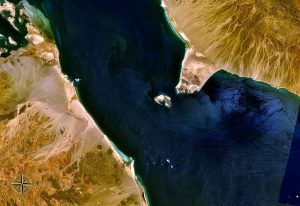
For their part, the Houthis escalated their threatening rhetoric: the group warned international airlines that Saudi airspace is unsafe and threatened to target Jeddah Islamic Port and other Red Sea ports, as well as renewing threats against the Riyadh financial centre and the Shuqaiq power station in the south-west of the Kingdom. These threats, or any actual capability of the group to carry them out beyond the missiles and drones it habitually uses, could not be independently verified, but they come amid verbal escalation paralleling the escalation on the ground.
These threats coincide with the operation the coalition announced against Hodeidah port and positions in Sanaa, Saada and Taiz, which we detailed in our report on Friday’s operations, 20 November (Arabic), in which Al-Malki said the strikes targeted “operational capabilities” at the port used by the Houthis to smuggle and transport Iranian weapons. The internationally recognised government of Yemen expressed support for the operation, while the coalition urged residents to evacuate the vicinity of the port in advance.
How does the Saudi air defence network work?

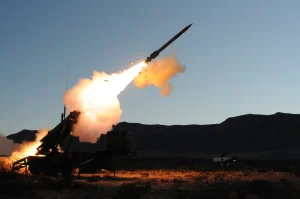
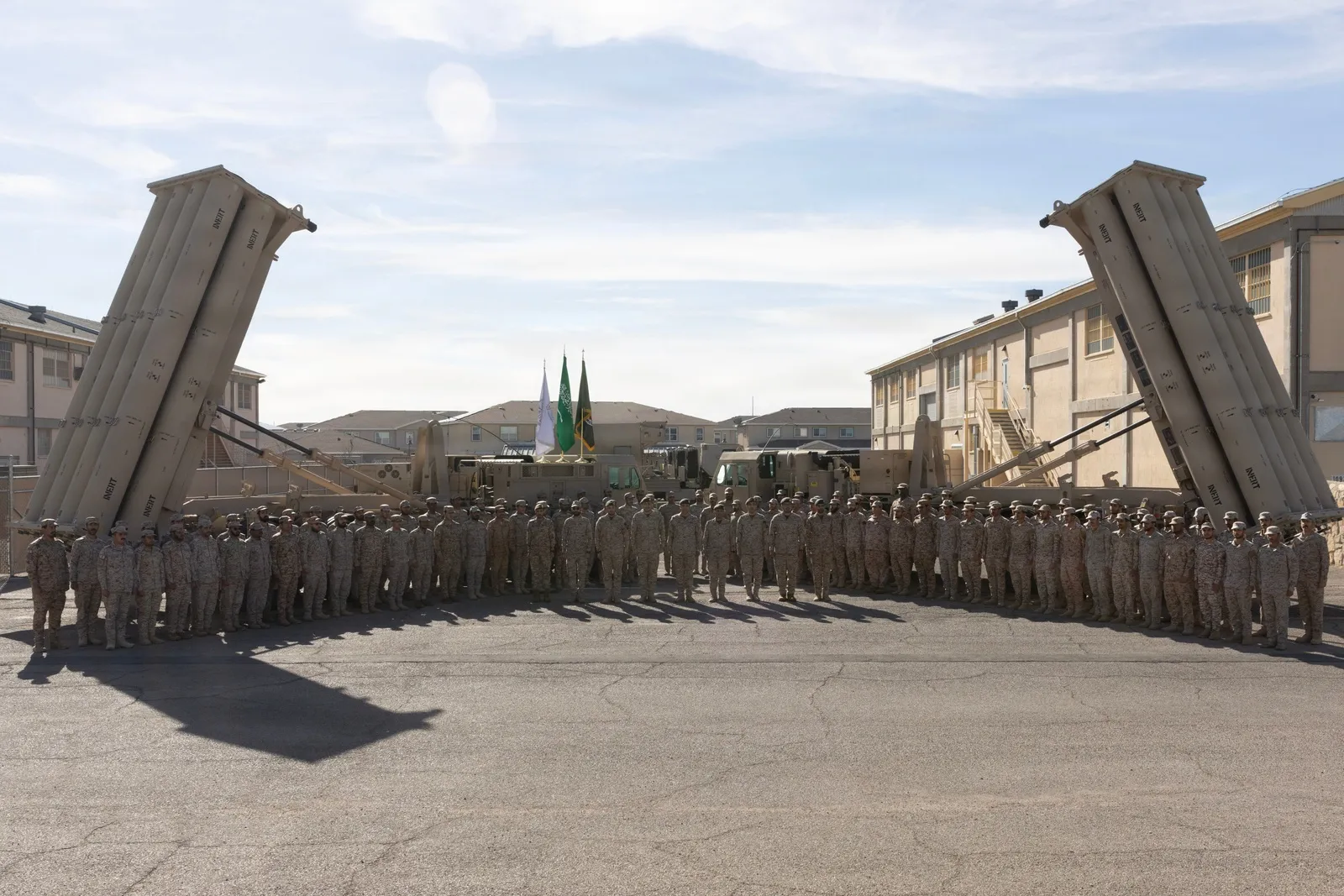
To intercept Houthi ballistic and cruise missiles, the Kingdom relies on a multi-layered network led by US-made Patriot PAC-2/PAC-3 batteries, alongside the THAAD system for defence in the upper layers of the atmosphere; Saudi Arabia and the UAE are the only two Gulf states that operate THAAD. The Royal Saudi Air Defense Forces, in cooperation with the Royal Saudi Air Force, are responsible for protecting the Kingdom’s skies from threats coming from Yemen, with air interception synchronised with pre-emptive strikes on launchers, as happened in Dhamar and Saada last week.
With targeting attempts recurring in recent weeks, specialist reports including Breaking Defense have said that Gulf states, among them Saudi Arabia, the UAE, Qatar, Kuwait and Bahrain, have shown growing interest in Turkish short- and medium-range air defence systems such as the Hisar-O+ and Hisar-A+, made by Aselsan and Roketsan, amid pressure on US interceptor missile stocks. Officials at the two companies stressed their readiness to transfer technology in line with Gulf localisation requirements, but this interest remains, according to available sources, at the discussion stage and has not yet turned into signed contracts with Riyadh.
Context: a campaign coinciding with wider regional escalation
This escalation comes as direct Iranian attacks on US bases in Bahrain and Kuwait continue in parallel, as part of the US–Iran war under way since late February 2026, although the Yemen–Saudi front retains its own dynamics linked to the Yemeni civil war. The United Nations has warned that continued military operations, whether on the ground in Hodeidah or in the air over Riyadh, could affect humanitarian aid corridors into Yemen, amid fears that the confrontation could spread to Red Sea ports vital to global trade.
For the Arab world, this pattern of repeated attacks over a major economic capital such as Riyadh highlights again the fragility of continued near-total reliance on US interceptor missile stocks, amid continuous depletion caused by multiple fronts stretching from Yemen to the Gulf. This explains the growing Gulf debate on diversifying air defence sources locally and regionally.
Summary of Friday–Saturday events (20–21 November)
| Event | Announced details | Source |
|---|---|---|
| Missile threat towards Riyadh | Three ballistic missiles intercepted and destroyed | Coalition / Turki Al-Malki |
| Civil defence alerts | 8 emergency alerts within 24 hours starting at 7:30 a.m. on Friday | Al Jazeera |
| Additional air threat | Houthi drone heading towards the Southern Region destroyed hours later | Coalition |
| Houthi threats | Warning to airlines; threats to Jeddah, the financial centre and the Shuqaiq power station | Saba / Houthi spokesman |
| Hodeidah operation | Operational capabilities at the port and positions in Sanaa, Saada and Taiz targeted | Coalition / our previous report |
Frequently asked questions
How many missiles did the coalition intercept early on Saturday, 21 November?
The coalition announced it had intercepted and destroyed three ballistic missiles launched by the Houthi militia towards Riyadh, in addition to destroying a drone later heading south.
Is this the first time Riyadh has been targeted this week?
No. This is the third consecutive night of emergency alerts in Riyadh, after the incident in which the PIF Tower was damaged early on Thursday, 19 November, and earlier interceptions on Wednesday, 18 November.
What air defence systems does Saudi Arabia use?
The Kingdom relies mainly on US-made Patriot PAC-2/PAC-3 batteries alongside the THAAD system, and it is one of only two Gulf states that have the latter system.
Have the Houthis demonstrated the capability to carry out their threats to close air navigation?
These threats could not be independently verified as of the time of publication of this report; they remain verbal statements that have not translated into an actual operation beyond the usual missiles and drones.
Sources
- TBS News – details of the interception of three ballistic missiles and eight civil defence alerts, and the Houthi threats regarding Jeddah and air navigation.
- Arab News – context of the incident on Thursday, 19 November, and statements by spokesman Turki Al-Malki.
- The National – additional details on the damage to the PIF Tower.
- Asharq Al-Awsat – the pattern of statements by coalition spokesman Turki Al-Malki in recent weeks.
- Breaking Defense – Gulf states’ interest in the Turkish Hisar-A+ and Hisar-O+ air defence systems.