Bahrain: two injured in Iranian attack on civilian industrial facility as Tehran claims strike on Patriot radars at Riffa and Awali
Bahrain’s Interior Ministry announced that two people were injured, one of them seriously, in a new Iranian attack that targeted a civilian industrial facility in Manama on Saturday evening, while Iran’s Islamic Revolutionary Guard Corps (IRGC) claimed to have struck two radars belonging to the US Patriot system inside two Bahraini bases. Manama rejected the Iranian account outright, stressing that the target was a purely civilian industrial site with no connection to any military activity.
The attack comes as part of the escalation under way since late February 2026, when Bahrain, which hosts the headquarters of the US Fifth Fleet, was drawn into the war between the United States and Israel on one side and Iran on the other, becoming one of the most frequently struck targets in the Gulf.
What happened on Saturday evening?
Bahrain’s Interior Ministry said the kingdom’s defences dealt with several Iranian air attacks on the evening of Saturday, 21 November 2026, and that the attack caused a fire at a civilian industrial facility. The ministry did not officially disclose the name or exact location of the site, but footage circulating on social media, carried by Reuters, indicated that the fire broke out at a facility on Sitra island, which hosts a number of industrial facilities and the refinery of the Bahrain Petroleum Company (Bapco).
The Interior Ministry said civil defence teams dealt with the fire, and that the attack was part of what it described as “the treacherous Iranian aggression”. According to the UAE newspaper The National, two people were injured: a Bahraini citizen with a disability, in a stable condition, and a Pakistani resident, in a serious condition; both were taken to hospital. The attack was preceded by the activation of sirens and a call for residents to head to the nearest safe place, before an “all clear” was announced and the alert was then repeated during the night.
The IRGC’s account: targeting Patriot radars at Riffa and Awali
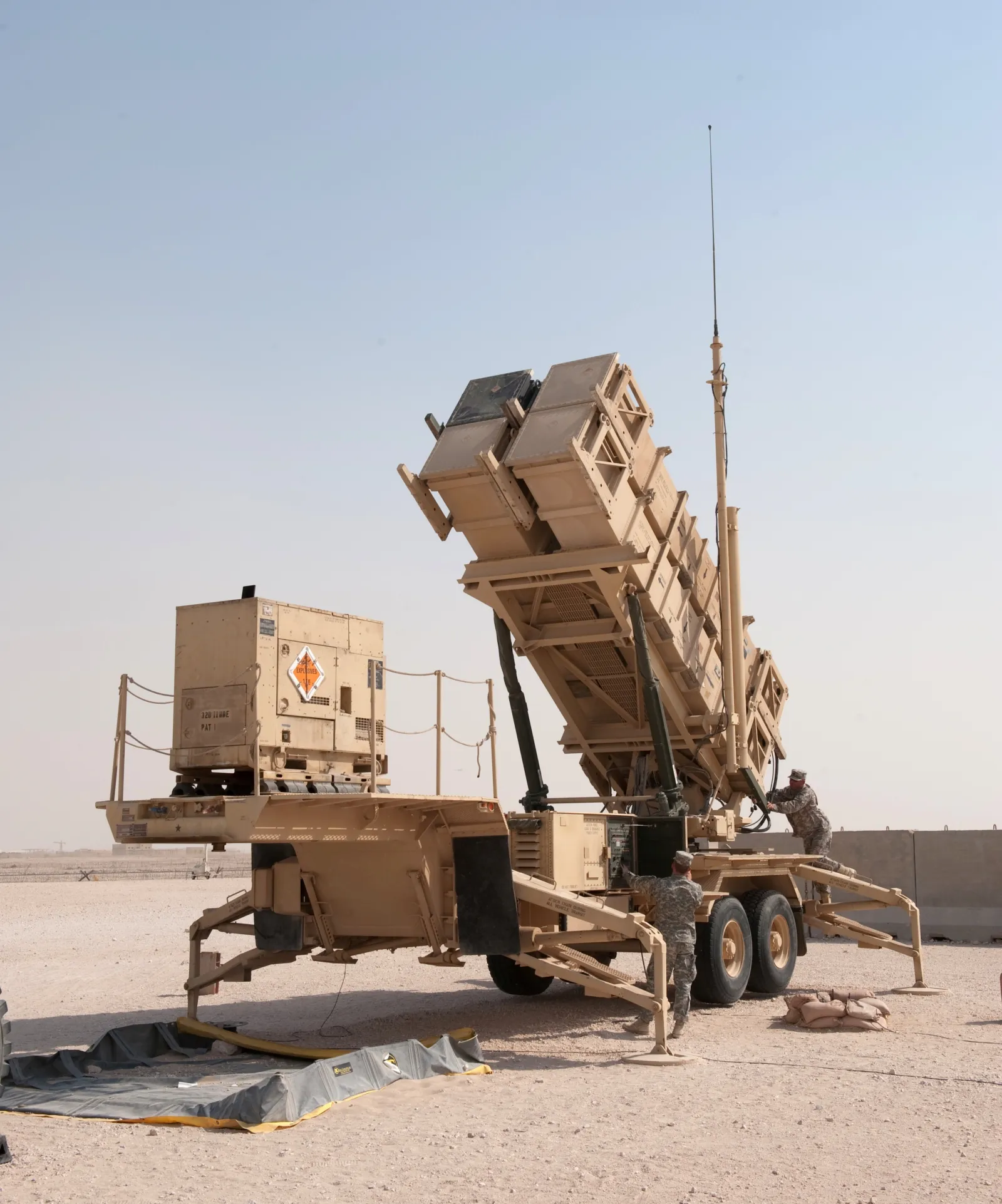
In a separate statement, the IRGC said its operations had targeted “American sites” at the Riffa and Awali bases in Bahrain using missiles and drones, hitting two radars belonging to the US Patriot air defence system. The IRGC justified the strike as a response to what it described as repeated violations of Iranian airspace by US MQ-1 and MQ-9 drones, and to an earlier strike on an Iranian radar facility on Hengam island.
The IRGC added that US air protection and escort operations in the region had “failed” and caused heavy losses in equipment and allied ships, warning that Iranian airspace is a “red line” and that any new violation would be met with a “decisive and harsh” response.
The two accounts did not match: while Tehran spoke of targeting military air defence radars, Manama stressed that what was hit was a purely civilian industrial facility. So far there has been no independent confirmation of whether the two bases mentioned suffered actual damage to Patriot radars, as neither US nor official Bahraini bodies have confirmed this part of the Iranian account.
Manama’s position: rejecting the Iranian account and signalling a response
Bahrain’s Foreign Ministry described the attack as “a direct threat to the lives of civilians” and a flagrant violation of the kingdom’s sovereignty, and rejected the IRGC’s justification for it, stressing that the target was a purely civilian industrial site unconnected to any military activity. The ministry announced that Bahrain “reserves its inherent right to take all necessary measures” under Article 51 of the UN Charter, and called on the UN Security Council to take “firm measures” to compel Iran to implement Resolution 2817, which the Council adopted on 11 March 2026 condemning Iranian attacks on the Gulf states and Jordan.
Successive Gulf and regional reactions
Gulf Cooperation Council Secretary-General Jasem Mohamed Albudaiwi announced “full solidarity” with Bahrain, affirming the Council’s support for all measures Manama may take in response to the attack. Jordan, for its part, condemned the strike as a violation of Bahrain’s sovereignty and a “dangerous escalation”. Qatar News Agency (QNA) also issued a statement in which Qatar announced its “strong condemnation” of the Iranian attack on the civilian industrial facility in Bahrain.
The Sitra attack was not the only event in those hours: according to the Saudi-led coalition, Saudi air defences intercepted and destroyed a drone launched by the Iran-backed Houthi militia towards Riyadh, in a recurring pattern reflecting continued pressure on more than one Gulf front at the same time (details of Riyadh’s latest interceptions (Arabic)).
Bahrain in the line of fire since February 2026
Bahrain hosts the headquarters of the US Fifth Fleet in the Juffair area, and since the outbreak of the US-Israeli war on Iran on 28 February 2026 it has become one of the main targets of Iranian strikes in the Gulf, alongside Kuwait, Qatar, Saudi Arabia and the UAE. In recent months the kingdom has seen repeated strikes on sites near oil and industrial facilities, including the Bapco refinery in Sitra and the Ma’ameer industrial area, along with repeated Iranian claims of targeting air defence radars and communications facilities linked to the US presence.
Saturday evening’s attack came a few days after a relative lull lasting several weeks, with Bahrain hit by three drone attacks in recent days according to Al Jazeera. These developments coincide with reports of attacks on oil tankers in the Strait of Hormuz and with a visit by a Qatari delegation to Tehran the previous night, during which Iranian Foreign Minister Abbas Araghchi called for giving regional negotiations a chance and for lifting the US counter-blockade on Iranian ports.
What is the Patriot system that Tehran claimed to have targeted?
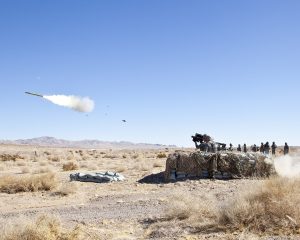
The US Patriot system, made by RTX (formerly Raytheon), is one of the pillars of air and ballistic missile defence in the Gulf. It relies on the AN/MPQ-65 radar to detect and track targets, with several generations of interceptor missiles, most notably the PAC-2 with an explosive warhead and the newer PAC-3 MSE, which relies on direct impact (hit-to-kill) and covers longer ranges against ballistic and cruise missiles and drones. US forces have deployed batteries of this system to protect their bases in Bahrain, including, according to earlier reports, around Riffa and Awali, which explains why the IRGC chose these two sites as the alleged target in its statement.
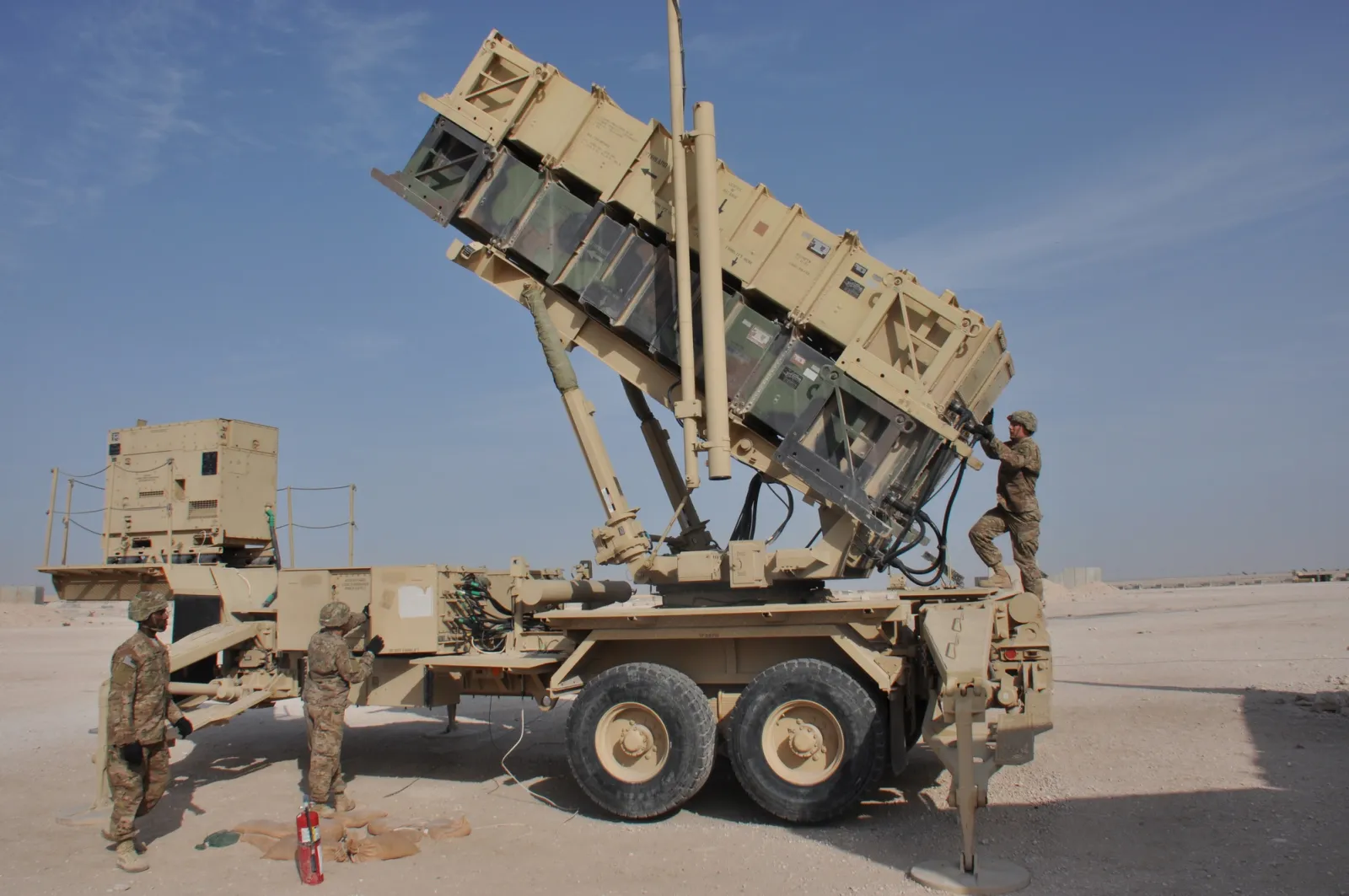
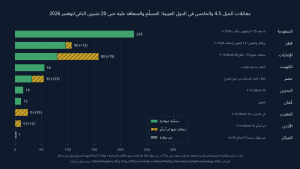
The incident falls within the wider context of the Gulf’s integrated air defence architecture, which increasingly relies on linking Patriot and THAAD radars with the IBCS command-and-control system, amid huge US deals to strengthen Kuwait, Qatar, Saudi Arabia and the UAE with these capabilities during 2026 (comparison of the Patriot PAC-3 MSE with alternative air defence systems (Arabic)).
What does this development mean for the Arab world?
The continued targeting of Bahrain, the smallest Gulf state in area and military capabilities, confirms that hosting US military bases and facilities has become a direct security burden for host states, not merely a guarantee of protection. The kingdom, whose army numbers only about 20,000 personnel (Bahrain’s military strength in detail (Arabic)), finds itself in direct confrontation with an Iranian missile and drone arsenal, while industrial and civilian infrastructure bears the highest cost of the attacks, a scene repeated at Qatar’s Al Udeid base and Kuwait’s Ali Al Salem base.
The incident also confronts other Gulf states hosting similar US bases, chiefly Qatar and Kuwait (Al Udeid Air Base in Qatar (Arabic) and Iran’s attack on Kuwait’s Ali Al Salem base (Arabic)), with the question of balancing involvement in the US alliance against exposure to direct strikes, which explains why Gulf leaders are pushing towards broader defence integration options, such as the GCC’s recent decision to establish an advanced military command in Kuwait.
Key facts of the Sitra attack
| Date | Saturday evening, 21 November 2026 (official announcement issued on Sunday, 22 November) |
| Target according to Manama | A civilian industrial facility, probably on Sitra island |
| Target according to Tehran | Two Patriot air defence radars at the Riffa and Awali bases |
| Casualties | Two people: a Bahraini citizen (stable condition) and a Pakistani resident (serious condition) |
| Perpetrator according to Tehran | Islamic Revolutionary Guard Corps (IRGC) |
| Reactions | Gulf solidarity from the GCC, and Jordanian and Qatari condemnation |
Sources
- Al Jazeera – details of the attack, statements by Bahrain’s Interior and Foreign Ministries, and the full IRGC account.
- The National – details of the two injuries and Bahrain’s Foreign Ministry position on Article 51.
- Arab News – linking the incident to developments in the Strait of Hormuz and the wider regional picture.
- Qatar News Agency (QNA) – Qatar’s statement condemning the Iranian attack on the industrial facility in Bahrain.
- Wikipedia – background on the sequence of Iranian attacks on Bahrain since February 2026.