
What Is an Active Protection System (APS) for Tanks?
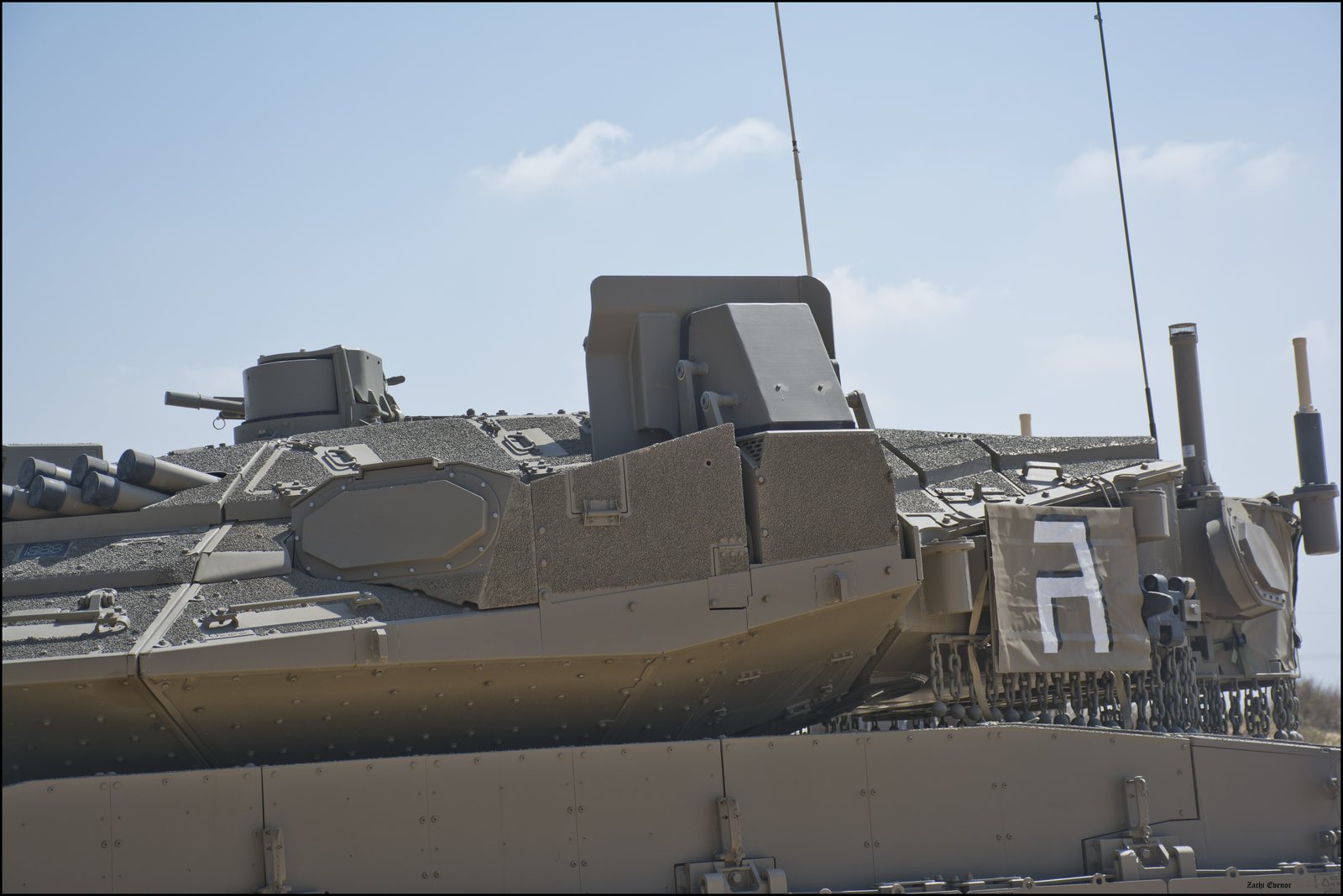
An active protection system (APS) is a system fitted to a tank or armoured vehicle to detect an incoming projectile and neutralise it before it reaches the armour. Instead of simply withstanding a hit, the vehicle becomes able to “see” the approaching missile and deal with it in mid-air. That is the fundamental difference between APS and every protection method that came before it: armour waits for the impact, while APS prevents it.
The idea emerged decades ago, but it did not become a widely deployed system until anti-tank guided missiles and RPGs proved that even the heaviest tanks were not immune to danger. Today these systems are fitted to Merkava, Abrams, and Leopard 2 tanks, Türkiye is developing its own system for the ALTAY tank, and several Arab armies are studying whether to retrofit their armoured fleets with them.
What Is an Active Protection System?
Traditional tank protection rests on a single principle: the thicker the steel or composite material, the harder it is to penetrate. But this path has reached its limits — modern tanks exceed sixty tonnes, yet warheads weighing only a few kilograms can still defeat them if they strike the side or roof. Explosive reactive armour (ERA) offered a partial solution with boxes that detonate on impact to disrupt the warhead’s jet, but it is consumed on first use and adds considerable weight.
An active protection system flips the equation. Instead of absorbing the blow, it engages the threat in the space surrounding the vehicle, a few metres out, before it ever touches the hull. That’s why engineers classify it as part of “layered protection,” forming the outer layer that precedes reactive and passive armour.
What’s the Difference Between Passive Armour, Reactive Armour, and Active Protection?
| Criterion | Passive Armour | Reactive Armour (ERA) | Active Protection (APS) |
|---|---|---|---|
| Principle | Absorbs and disperses energy through material thickness | Directed explosion disrupts the warhead jet on impact | Detects the projectile and intercepts or misleads it before arrival |
| What it counters | All projectile types within the limits of its thickness | Mainly shaped charges; some types partially counter kinetic rounds | Guided missiles and RPGs; limited against kinetic rounds |
| Weight | Heaviest, increasing with every upgrade | Medium — hundreds of kilograms up to over a tonne | Relatively lightest for its level of protection |
| Reusability | Permanent until penetrated | The struck box is consumed and must be replaced | Can engage multiple times depending on available countermunitions |
| Limitations | Doesn’t protect the roof and sides as efficiently | Risk to accompanying infantry; no help against a second hit in the same spot | Risk to nearby infantry; depends on power and electronics; limited reaction time |
How Does an Active Protection System Work?
The interception process runs through three sequential steps, all happening within a fraction of a second:
- Detection: Small radar antennas surround the vehicle, often alongside electro-optical or infrared sensors, monitoring the surrounding space in every direction. When an object approaching at high speed on a collision course appears, it is classified as a threat.
- Calculation: The central computer calculates the projectile’s trajectory and speed and the predicted impact point, determines whether it will actually strike the vehicle or pass nearby, then selects the response method and timing.
- Interception: The system launches its response. In physical (hard-kill) interception, a charge or small countermunition is fired toward the projectile to detonate or destroy it a few metres from the hull. In soft-kill interception, smoke grenades obscure thermal visibility, jamming signals confuse the missile’s guidance unit, or decoy sources draw it away.
The time window here is extremely narrow. A guided missile travelling at hundreds of metres per second leaves the system only a fraction of a second between detection and impact, which is why these systems are built for fully automated processing with no human intervention. The crew doesn’t press a button — they find out afterward that the interception has already happened.
What Threats Does It Counter?
- RPGs: The most widespread and cheapest threat, and its relatively low speed makes it the easiest target for most APS systems.
- Anti-tank guided missiles (ATGMs): Such as Russia’s Kornet and the American Javelin. The former flies a direct trajectory and can be intercepted through conventional methods. The latter climbs and then dives onto the roof (a top-attack), which complicates interception because antennas and launchers are usually designed to cover the horizontal perimeter.
- Kinetic tank rounds (APFSDS): A tungsten or depleted-uranium arrow-shaped penetrator travelling faster than a kilometre and a half per second. Most current APS systems have limited effectiveness against it, and some manufacturers claim only a partial ability to deflect its trajectory.
- Top-attack loitering munitions and FPV drones: The newest threat. Very slow compared to missiles, but arriving from a near-vertical angle and in large numbers. This has pushed several armies to fit improvised metal cages atop tanks as a stopgap, while manufacturers work on extending APS coverage upward. See our explainer on the difference between loitering and reconnaissance drones to understand the nature of this threat.
What Doesn’t an Active Protection System Mean?
- It’s not reactive armour: ERA detonates on impact, while APS acts before impact. Both systems are fitted together on many vehicles.
- It’s not immunity: No system intercepts everything. An attack by two consecutive projectiles from the same direction, from an uncovered angle, or by a fast kinetic round remains a real risk.
- It’s not safe for bystanders: The countermunition detonating a few metres out throws fragments that endanger infantry accompanying the tank, forcing a change in combined-arms advance tactics.
- It’s not unlimited: The number of countermunitions per launcher is limited, and reloading is done manually from outside the vehicle.
- It’s not an anti-aircraft system: Despite the similar principle, it doesn’t intercept drones hundreds of metres out the way dedicated C-UAS systems do.
What Are Its Advantages and Limitations?
The first advantage is breaking the “tonne for tonne” equation. A light or medium vehicle can now gain protection against guided missiles that previously required tonnes of additional armour. This matters especially for troop carriers and mine-resistant vehicles, like those we cover in our MRAP vehicles article, which by their nature cannot carry tank-level armour. The second advantage is that it protects from all horizontal directions at once, while passive armour is concentrated at the front.
As for the limitations, the first is cost: a single system adds a substantial sum to a vehicle’s price and needs continuous electronic maintenance. The second is its dependence on power and radar, which theoretically exposes it to electronic-warfare countermeasures. The third is turret weight, which affects an older tank’s balance if it wasn’t designed for it. The fourth is overhead coverage, which remains the main weak point against the new generation of threats.
Real-World Examples of Deployed Systems
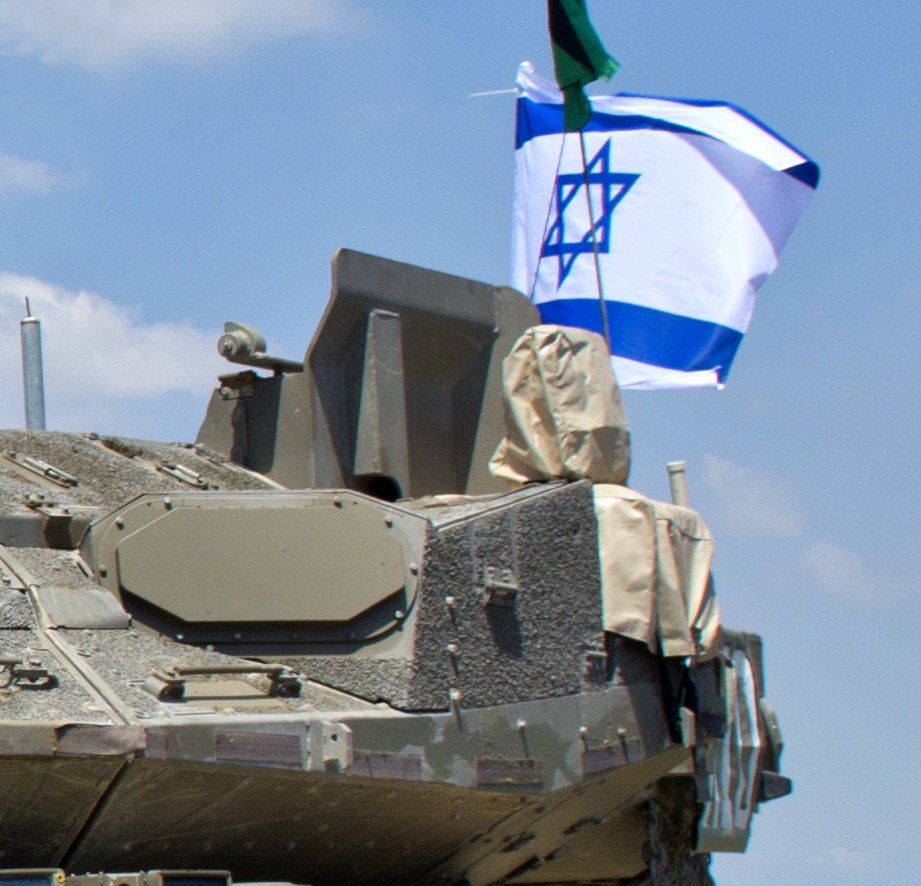
- Trophy: From Rafael, the most combat-proven hard-kill system in actual use. Fitted to Merkava tanks for about a decade and a half, then selected by the US Army for Abrams tanks, and adopted by the German Army for the Leopard 2A7A1 variant. It relies on radar and multi-charge countermunitions directed at the incoming projectile.
- Iron Fist: From Elbit Systems, using a small munition that detonates near the threat. Selected for upgrade programmes on US Bradley vehicles and the Dutch CV90, and offered in a lighter variant for medium vehicles.
- Arena-M: Russia’s system, developed for modern T-72 and T-90 tanks; Russia displays models of it at exhibitions, with limited information on its actual deployment.
- GL5: China’s system from Norinco, offered by the company for VT4 tanks and other export products.
Examples from Turkish and Arab Defence Industries
Turkish company ASELSAN is developing the AKKOR active protection system for the national ALTAY tank, combining physical and soft interception layers with a laser warning system that detects targeting attempts against the tank. In parallel, the PULAT system was developed through a partnership between ROKETSAN and ASELSAN, derived from Ukraine’s Zaslon technology, and fitted to upgraded M60T tanks in the Turkish Army as an urgent solution following combat experience in northern Syria. The two systems represent complementary tracks: a rapid fix for an existing fleet, and a long-term national solution for the new tank. For a technical profile of the PULAT system, see this report published by Envanter Medya.
In the Arab world, Gulf states operate large fleets of Abrams tanks in Saudi Arabia and Kuwait, and Leclerc tanks in the UAE, and these tanks found themselves in Yemen facing anti-tank guided missiles that inflicted tangible losses at several sites. That experience seriously reopened the question of active protection in modernisation discussions within the Saudi ground forces. Meanwhile, the Egyptian Army, which operates one of the largest Abrams fleets outside the United States and locally assembles part of it, is closely following the US programme to fit this tank with the Trophy system. For a broader analysis of this category of systems, see this report published by Envanter Medya.
Why Does This Matter Now?
The war in Ukraine has changed how the tank is viewed. Footage showing cheap FPV drones taking heavy tanks out of action, alongside guided missiles fired from long range, has pushed experts to question the future of armour. The answer most armies are converging on isn’t abandoning the tank, but equipping it with intelligent protection that can see and react. This has turned APS from an optional extra into a core requirement in new tank tenders and upgrade programmes for older ones, and roof coverage against slow-moving threats has become the next technological race in this field.