UAE Leclerc Tank in Yemen: What Did Combat Use Reveal?
Series: What Did It Do in the Field? — Systems tested in combat: successes, failures and lessons
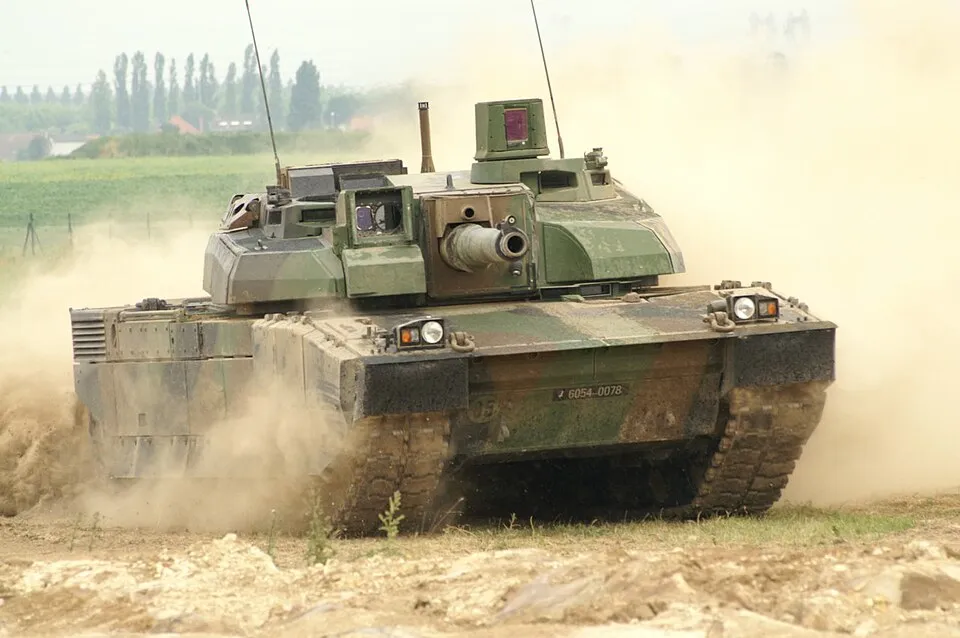
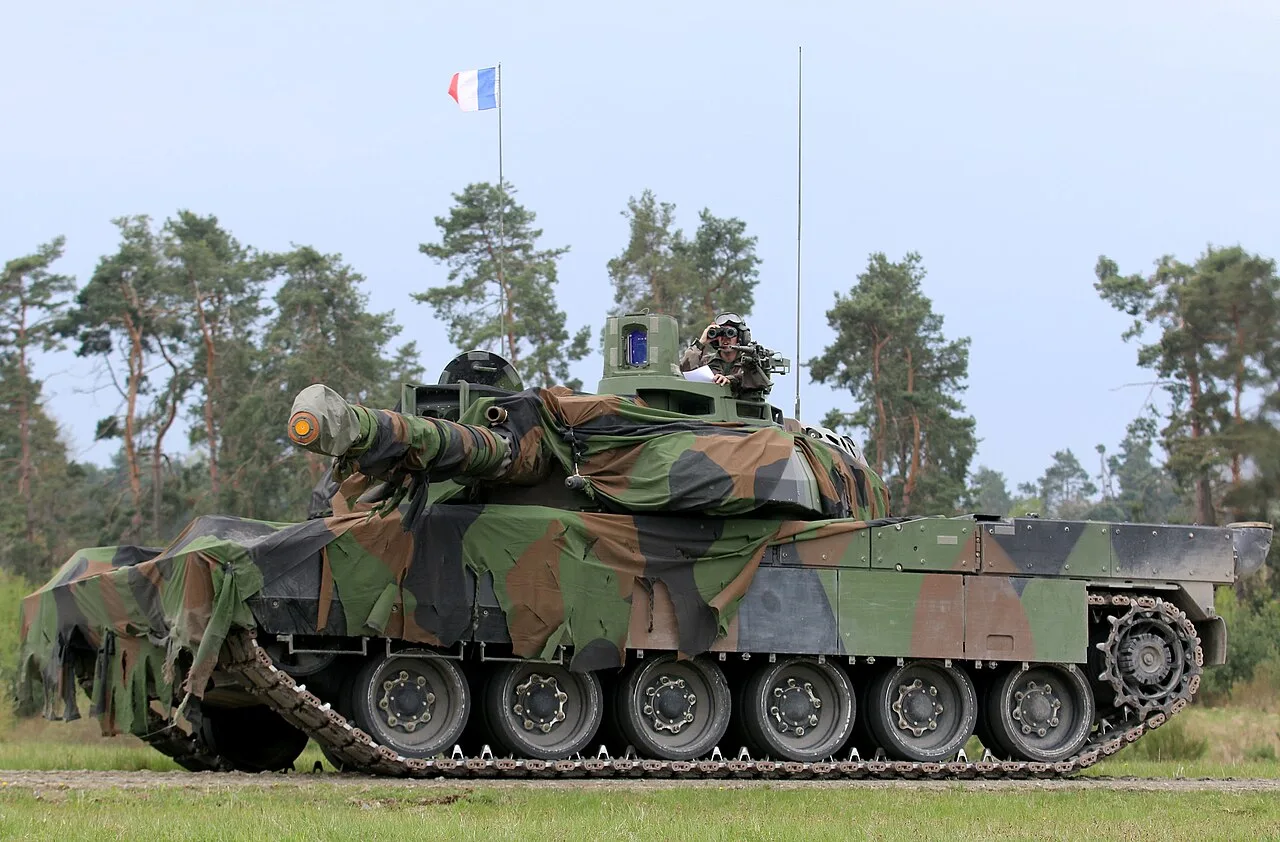
A French main battle tank in an export version adapted for the desert, called “Zayed” by the UAE military. Some are fitted with the AZUR kit for urban combat.
Aden, Al-Anad and Abyan in summer 2015, then Marib, Mocha in January 2017, and the west coast and Hodeidah in 2018, before the gradual Emirati withdrawal.
It began as an armoured breakthrough force in the Aden and Al-Anad offensive, then its role shifted to supporting local Yemeni forces with small tank detachments.
Seizure of the Al-Anad base on 3 August 2015 according to a Janes report, and photographically documented appearances in the battles of Mocha and the west coast.
Hits from guided missiles and mines in Marib and Mocha are shown in photographs and analyses; the UAE has not announced any figure for tank losses.
Additional reactive and cage armour since 2016–2017, tanks donated to Jordan in 2020, then the LLEM life-extension and upgrade programme with KNDS in 2025.
Background: the French deal of the century before it was a combat tank
In 1993 the UAE signed the largest export deal in the history of the Leclerc tank, estimated at 388 main battle tanks plus dozens of recovery and repair vehicles built on the same hull, valued at nearly 4 billion dollars according to Gulf press reports at the time. The Emirati version differed from the French one in a fundamental respect: it was fitted with a German-origin powerpack and cooling and air-conditioning modifications suited to Gulf heat, a technical detail that matters here because it explains the tank’s ability to move over long distances in a harsh Yemeni summer.
But the deal was not a pure commercial success for the manufacturer. An information report to the French National Assembly on GIAT Industries devoted an entire section to what it described as the “poorly negotiated” sale of Leclerc tanks to the UAE, after disputes over delivery and over free upgrades during the term of the contract. The page number and types of Leclerc tanks in the UAE sets out the numbers and variants in detail, while this article asks a different question: what happened when the tank left the parade grounds for war?
Before Yemen the Leclerc had not seen actual combat; its French use was limited to peacekeeping missions in Kosovo and Lebanon. For that reason the Emirati experience is the most important, and perhaps the only, source for understanding how this tank performs in a real war.
What happened in the field?
Aden and Al-Anad, July–August 2015: an armoured landing and baptism of fire
The UAE did not officially announce the deployment of its tanks, but photographs and video clips spotted BMP-3 armoured vehicles and a recovery vehicle from the Leclerc family in Aden in late July 2015. Janes reported in an article published on 7 August 2015 that by 3 August the UAE had landed Leclerc tanks, additional armoured vehicles and 155 mm self-propelled guns through the port of Little Aden, in what it described as an amphibious landing on a scale not seen in the region since the liberation of Kuwait in 1991.
The Emirati column moved north along the main road with pro-government Yemeni forces, and on the same day, 3 August 2015, the then Yemeni president Abd Rabbuh Mansur Hadi announced the recapture of the Al-Anad air base, located about 48 kilometres north-west of Aden. A video clip showed nine tanks leaving Aden, while a later image showed 23 tanks on the road; French sources estimate the total number deployed at between 70 and 80 tanks, equivalent to two battalions, an unofficial figure. By mid-August operations extended into Abyan governorate with limited announced losses.
Marib, September 2015: the first documented hits
On 4 September 2015 a Tochka ballistic missile fired by the Houthi group hit the Safer base in Marib, killing 45 Emirati soldiers in the largest single loss of life in the history of the UAE Armed Forces. Independent analyses indicate minor damage to a tank and a recovery vehicle in the strike, which is unconfirmed. During the subsequent offensive towards the Marib dam and Sirwah, French sources and circulated photographs indicate that a guided anti-tank missile penetrated one of the tanks, killing its driver and wounding its commander. This remains the clearest human loss linked to a Leclerc tank, but it has not been officially confirmed.
Mocha, January 2017: fighting inside the city
In the “Golden Spear” operation on the west coast, Leclerc tanks entered the city of Mocha in January 2017 as part of a small group that began with four tanks and a recovery vehicle and was later reinforced. Photographs show one tank lightly damaged by a guided missile with no crew casualties, according to an analysis by the Polish specialist site Defence24. It was the first time the AZUR kit, designed for combat in built-up areas, appeared in an environment for which it was actually used.
The west coast and Hodeidah, 2017–2018: the tank in the rear
As Emirati-backed Yemeni forces advanced towards Hodeidah, the tanks worked in small detachments providing fire support to local forces. They were photographed at Al-Durayhimi and Zabid in the summer of 2018, and the French organisation Disclose revealed in April 2019 satellite images dated 11 November 2018 showing Leclerc tanks about 5 kilometres from Hodeidah. Disclose relied on a confidential memo from the French military intelligence directorate dated 25 September 2018 that confirmed the use of the tanks in the war. The French government responded, according to Agence France-Presse, that French weapons held by coalition members are “mostly in defensive positions”.
Since July 2019 the UAE reduced its forces in Yemen in what it called a “strategic redeployment”, and on 9 February 2020 it announced the return of its forces, and Lieutenant General Issa Saif Al Mazrouei said that the land forces, the Presidential Guard and special operations took part with more than 15,000 soldiers. The announced figures contained no data on tanks.
What worked?
- Mobility and rapid deployment: Roughly two armoured battalions were moved by sea and landed in a civilian port, then the tanks advanced tens of kilometres within days. This is more a logistical achievement than a technical one, and it counts in favour of the Emirati army as much as of the tank.
- Suitability for desert conditions: The available reports contain no prominent complaints of engine or cooling system breakdowns in the Yemeni summer heat, which is among the main concerns for Western tanks in the region.
- Crew protection in most documented cases: In the hits shown in photographs at Mocha and elsewhere, the tanks and their crews survived, and there is no publicly documented record of a tank completely destroyed in an ambush.
- Fire support for local forces: A model based on small tank detachments supporting Yemeni forces trained by the UAE worked, and it reduced the exposure of Emirati crews to risk.
What did not work?
- The original protection was not sufficient for a guided-missile environment: Less than two years later the UAE turned to additional reactive and cage armour, which means the original protection level was not considered sufficient against infantry armed with anti-tank missiles.
- Mines and improvised explosive devices: Several tanks suffered damage from landmines according to independent analyses, and columns needed mine-clearance vehicles in front of them, an operational constraint rather than a design flaw.
- No armoured opponent: The tank did not face modern tanks or hostile aircraft, so no judgement can be drawn about its performance in a high-intensity war.
- Transparency: Neither the UAE nor the manufacturer published any official assessment, so the tank’s combat reputation rests on photographs, analyses and a leaked memo.
What evidence is available?
| Event | Source | Evidence level |
|---|---|---|
| Landing of Leclerc tanks in Aden by 3 August 2015 | Janes, 7 August 2015 (photographs and video clips) | Visually documented |
| Recapture of the Al-Anad base on 3 August 2015 | Yemeni president via Janes | Official announcement |
| Deployment of 70–80 tanks in Yemen | Estimates by French sources and independent analyses | Unconfirmed |
| Guided missile penetrates a tank in Marib and kills its driver, September 2015 | French sources and circulated photographs via Defence24 | Disputed |
| Light hit on a tank in Mocha with no casualties, January 2017 | Photographs and Defence24 analysis, July 2021 | Visually documented |
| Addition of reactive and cage armour since 2016–2017 | Photographs and Defence24 analysis | Independent report |
| Use of the tanks in the war according to French military intelligence | Confidential memo dated 25 September 2018 published by Disclose | Confirmed |
| Tanks near Hodeidah on 11 November 2018 | Satellite images analysed by Disclose | Visually documented |
| French weapons “mostly in defensive positions” | French government via Agence France-Presse, April 2019 | Official announcement |
| No tank completely destroyed in an ambush | Independent analyses, without official confirmation | Unconfirmed |
| Jordan receives UAE Leclerc tanks in October 2020 | Jordanian Armed Forces via Janes | Official announcement |
| LLEM programme to upgrade the Emirati fleet | KNDS France, 20 February 2025 | Official announcement |
Data limits: there is no official figure for the number of tanks deployed, hit or lost, and no survival or loss rate can be calculated. The absence of photographs of losses does not prove that none occurred, since the UAE has not published photographs or official data on the performance of its armour in Yemen.
What is still disputed?
- Scale of losses: The Houthi group published clips claiming hits on coalition armour, but their link to Leclerc tanks specifically has not been independently verified, and no Emirati tally is available.
- Type of missiles used: Analysts consider it likely that the hits came from older-generation missiles rather than the latest anti-tank missiles, which limits the value of comparison with other wars.
- Comparison with the Saudi Abrams: Some analyses say the Leclerc performed better than the Abrams in the Yemen war, but the missions, fronts, adversaries and armour differed, so the comparison is methodologically weak.
- Number of tanks donated to Jordan: Reports speak of 80 tanks, others of 70, and neither country has announced an official figure.
- Role of Yemen in the upgrade decision: Neither the manufacturer nor Abu Dhabi explicitly links the upgrade programme to the Yemen experience; the link is an analytical inference.
What changed afterwards?
- 1993: The UAE signs a contract to buy 388 Leclerc tanks with repair vehicles, the largest export deal for the type.
- August 2015: First combat use at Aden and Al-Anad within the Saudi-led coalition’s operations.
- 2016–2017: Additional reactive and cage armour appears on front-line tanks according to independent analyses.
- January 2017: Fighting in Mocha with tanks fitted with the AZUR kit.
- 25 September 2018: The French military intelligence memo confirms the use of the tanks, and Disclose publishes it on 15 April 2019.
- 8 July 2019: The UAE announces a reduction of its forces in Yemen as part of a “strategic redeployment”.
- 9 February 2020: Ceremony marking the return of Emirati forces from Yemen.
- 19 October 2020: The Jordanian Armed Forces announce the first use of “Zayed” Leclerc tanks in the “Saladin Fortress” exercise.
- February 2023: At the IDEX exhibition Nexter signs a teaming agreement with International Golden Group to prepare the modernisation of the Emirati fleet.
- February 2025: KNDS France announces the LLEM life-extension and upgrade programme with the local company BHE and EDGE companies, and Lacroix presents soft-kill protection against drones for the Emirati tanks.
- November 2026: By the evidence cut-off date, no final upgrade contract with a specific value or delivery schedule had been announced.
The most important point in this timeline is that the UAE did not abandon the tank after the war but decided to extend its life by another three decades according to KNDS. The programme promises to integrate new capabilities in electronic warfare, communications, protection and armament, and to localise most of the industrial work in Abu Dhabi and provide more than 400 jobs. The page KNDS and its products in the Gulf explains the background of the company, while the article Leclerc XLR or K2 Black Panther discusses Abu Dhabi’s future options.
What does this mean for Arab armies?
For the UAE: The Yemen experience is the tank’s only real combat record, and it is what justifies the decision to upgrade rather than replace outright. But the war the Leclerc fought in 2015 differs from the battlefield of today: small drones and loitering munitions have become the first threat to armoured vehicles, as the war in Ukraine has shown. For that reason the inclusion of anti-drone protection in the upgrade programme matters beyond the Yemen experience itself. The file on the strength of the UAE Army sets out the tank’s place in the land force structure.
For Jordan: Jordan has become the second Arab operator of the tank, and received it as a political and economic gift from a country that fought an actual war with it, meaning the tanks are battle-tested rather than new. This raises the question of long-term technical support and spare parts, which is addressed on the page Jordanian Armed Forces.
For the other Arab armies: The clearest lesson from Yemen is that a modern Western tank holds up against an irregular adversary if it operates within an integrated system that includes mine clearance, infantry, reconnaissance and air support, and that additional armour quickly becomes a necessity in an environment with many anti-tank missiles. The page best tank for the Arab desert compares the Leclerc with its competitors, while the article APS active protection system explains the next generation of protection that armies are seeking after Yemen and Ukraine.
Industrial lessons
- A large deal can be a losing one for the exporter: The French parliamentary report showed that the upgrade and delivery terms in the UAE contract placed heavy burdens on the manufacturer, a precedent that buyers and exporters study when negotiating long-term support contracts.
- Localisation has become a condition, not a perk: The LLEM programme moves maintenance and upgrade work to an Emirati company under French supervision, in line with industrial localisation policies in the Gulf states.
- Multinational supply chains: The Emirati version’s reliance on a German powerpack ties the fleet’s sustainment to more than one European supplier, a strategic rather than technical matter. The Envanter Medya analysis of the Rheinmetall–KNDS rivalry sets out the background of this European market.
- Combat reputation needs documentation: Neither the French company nor the operator invested in publishing an official assessment of the tank’s performance in Yemen, so its reputation remained weaker in marketing terms than tanks that fought less successful wars but are heavily documented.
- Upgrade instead of replacement: France itself is upgrading its tanks to the Leclerc XLR standard and the UAE is moving in the same direction, which means the platform’s industrial life will extend beyond 2040.
Frequently asked questions
See also: T-90 in combat: what have modern wars revealed about the Russian tank? · Which Arab countries have the largest number of tanks?
Sources
- KNDS France — thirty years of expertise for the UAE Armed Forces and the LLEM programme, 20 February 2025
- KNDS/Nexter — teaming agreement with International Golden Group to modernise Leclerc tanks, February 2023
- French Ministry of the Armed Forces — the renovated Leclerc XLR tank
- French National Assembly — information report no. 474 on GIAT Industries (chapter on the UAE contract)
- Disclose — “Made in France” investigation and the French military intelligence memo dated 25 September 2018
- Jeremy Binnie, IHS Jane’s (republished version) — Emirati armoured brigade spearheads the Aden breakout, 7 August 2015
- Janes — Jordan exercises new Leclerc tanks, 20 October 2020
- Janes — Lacroix says S-KAPS counter-UAV capability is good for Emirati Leclercs, 25 February 2025
- Defence24 — Armoured Yemen: Leclerc tanks in combat (analysis), 11 July 2021
- The Defense Post — confidential memo reveals use of French weapons in Yemen, 15 April 2019
- Euronews — military intelligence memo confirms use of French weapons in Yemen, 15 April 2019
- Associated Press (via The Washington Times) — UAE draws down troops in Yemen in a “strategic redeployment”, 8 July 2019
- Al Jazeera Net — UAE announces return of its forces and reveals tally of its participation in Yemen, 9 February 2020
- European Security & Defence — Nexter and IGG to upgrade UAE Leclerc tanks, February 2023
- Shephard — Nexter extends UAE partnership to tank fleet upgrade, February 2023
- Amnesty International (France) — Leclerc tank among the ground offensive in Yemen