What Is a No-Fly Zone? Iraq, Bosnia and Libya Explained
A no-fly zone is a defined airspace in which the aircraft of a given party, usually the military aircraft of a state in conflict, are prohibited from flying, enforced by an outside power using fighter aircraft and early-warning aircraft. The most prominent no-fly zones of recent decades were imposed over Iraq between 1991 and 2003, over Bosnia and Herzegovina between 1993 and 1995, and over Libya in 2011 under Security Council Resolution 1973. Arab states took part in enforcing some of them, including Saudi Arabia in Iraq and Qatar, the United Arab Emirates, Jordan and Morocco in Libya.
What is a no-fly zone?
A no-fly zone is a military and political instrument aimed at denying a party the use of its air power in a defined area. It is often used to protect civilians from aerial bombardment, or to prevent a party from attacking its neighbours or groups inside its borders.
The scope of the ban varies from case to case. It may cover both fixed-wing aircraft and helicopters, as in southern Iraq, or all flights except humanitarian ones, as in Libya. The legal mandate usually determines what is permitted and what is prohibited.
A no-fly zone does not necessarily mean striking ground targets. But practical experience has shown that enforcing the ban often turns into strikes against air defences and ground forces.
How is a no-fly zone enforced?
Enforcing the ban requires an integrated air system operating around the clock:
- Airborne early warning and control aircraft (AWACS): monitor the airspace, detect violating aircraft and direct fighters.
- Fighters: fly air patrols and intercept violating aircraft.
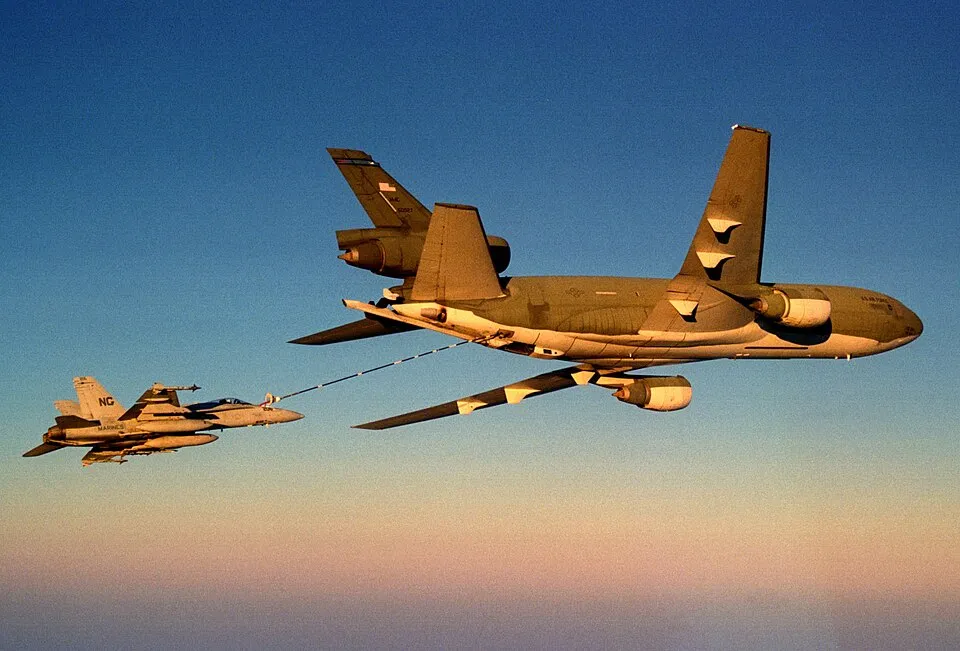
- Aerial refuelling aircraft: extend patrols over long periods above distant areas, as we explain in What is an aerial refuelling aircraft.
- Electronic warfare and suppression of enemy air defence aircraft: protect the patrols from surface-to-air missiles.
The Canadian government says that early-warning aircraft in Operation Southern Watch over Iraq monitored the airspace inside the no-fly zone and to its north, and tracked attempts by Iraqi forces to breach the ban or to lure coalition aircraft into surface-to-air missile “traps”.
The legal basis for no-fly zones
Enforcing the ban is usually based on a United Nations Security Council resolution under Chapter VII of the UN Charter, which authorises military measures to maintain international peace and security. The strength of the legal basis differs from case to case:
- Bosnia: Resolution 816 was adopted on 31 March 1993 under Chapter VII and asked member states to take “all necessary measures” in the airspace of Bosnia and Herzegovina in the event of violations.
- Libya: Resolution 1973 on 17 March 2011 imposed a ban on all flights in Libyan airspace and authorised “all necessary measures” to protect civilians.
- Iraq: The Canadian government cites Resolution 688 of 5 April 1991 and Resolution 949 of 15 October 1994 as authorising Operation Southern Watch. However, Resolution 688 did not explicitly provide for a no-fly zone, which made the legal basis for the ban over Iraq a subject of debate.
The main no-fly zones in history
| Zone | Operation | Period | Basis | Main participants |
|---|---|---|---|---|
| Northern Iraq | Provide Comfort, then Northern Watch | April 1991 – March 2003 | Security Council resolutions after the Gulf War | United States, United Kingdom, Turkey, France |
| Southern Iraq | Southern Watch | 26 August 1992 – 19 March 2003 | Resolutions 688 and 949 | United States, United Kingdom, France, Saudi Arabia |
| Bosnia and Herzegovina | Deny Flight | 12 April 1993 – 20 December 1995 | Resolution 816 | NATO |
| Libya | Unified Protector | March – 31 October 2011 | Resolution 1973 | NATO and partners including Qatar, the UAE, Jordan and Morocco |
Iraq 1991 – 2003: the longest no-fly zone experience
The north: from Provide Comfort to Northern Watch
Operation Provide Comfort began in April 1991 and delivered more than 12,400 tons of food, supplies, medical aid and fuel to more than one million Kurdish refugees on the Turkish-Iraqi border, according to the US Air Force. It was then replaced by Operation Northern Watch on 1 January 1997, to enforce Security Council resolutions north of the 36th parallel.
The US Air Force says the United States, the United Kingdom and Turkey contributed to the operation more than 1,400 personnel and about 50 aircraft at any given time. It adds that coalition forces came under Iraqi fire on almost every mission, but did not lose a single aircraft to hostile fire over Iraq. The last combat patrol flew on 17 March 2003.
The south: Southern Watch and Saudi participation
On 26 August 1992, US President George H. W. Bush announced the establishment of a no-fly zone south of the 32nd parallel, which was moved in 1996 to the 33rd parallel. All Iraqi fixed-wing aircraft and helicopters were barred from flying in it.
The Canadian government says the participating countries included the United States, the United Kingdom, France and Saudi Arabia, with support from 22 other countries. France withdrew from early-warning operations after 15 December 1996, and the operation ended with the start of the invasion of Iraq on 19 March 2003.
Bosnia 1993 – 1995: NATO’s first combat operation
The Security Council adopted Resolution 781 on 9 October 1992 to ban unauthorised flights over Bosnia and Herzegovina. After more than 500 unauthorised flights were recorded in under six months, Resolution 816 was adopted, giving member states authority to use force.
Operation Deny Flight began at midday on 12 April 1993. On 28 February 1994, NATO aircraft shot down four of six Bosnian Serb aircraft that had dropped bombs on Bosnian territory, according to the Canadian government.
The operation ended on 20 December 1995, after 100,420 sorties, including more than 23,000 fighter sorties, 27,000 close air support and strike sorties, and more than 29,000 early-warning and support sorties.
Libya 2011: the role of the Arab League
The Security Council adopted Resolution 1973 on 17 March 2011 by 10 votes with no opposition and 5 abstentions: Brazil, China, Germany, India and Russia. The resolution imposed a ban on all flights in Libyan airspace, excluding humanitarian flights, flights evacuating foreign nationals, and flights enforcing the ban.
The resolution recognised the “important role” of the League of Arab States in maintaining peace and security in the region, and asked its member states to cooperate with other states in implementing the no-fly zone.
NATO decided to enforce the no-fly zone on 24 March 2011 and assumed sole command of the international military effort on 31 March 2011. The Alliance says it consulted throughout the crisis with the United Nations and the League of Arab States.
NATO data state that the partners supporting the operation included Qatar, the United Arab Emirates, Jordan and Morocco. Aircraft of the Alliance and its partners flew more than 26,000 sorties, at a rate of 120 sorties a day, 42% of them strike sorties that hit or destroyed about 6,000 military targets. The operation ended on 31 October 2011 after 222 days.
The aircraft that enforced no-fly zones
No-fly zone operations relied on heavy long-range fighters. The US Air Force fact sheet states that F-15 fighters deployed after the 1991 Gulf War in Operation Southern Watch over southern Iraq and Operation Provide Comfort from Turkey, as well as in other operations in the Balkans, Afghanistan and Iraq.
Early-warning aircraft play an equally important role. The Canadian government said that NATO early-warning aircraft were “essential” in tracking violating aircraft, detecting surface-to-air missile and anti-aircraft artillery sites, and coordinating aircraft activity over Bosnia. The specifications of one of these fighters can be found in our profile of the F-15EX fighter.
Can a no-fly zone be imposed today?
Today’s conditions differ from the experiences of the 1990s. Earlier no-fly zones were imposed on states with limited or relatively outdated air defences, and under a clear air superiority of the enforcing powers.
For states with modern long-range air defence systems, imposing a ban over them becomes a major military operation that first requires destroying those systems. This relates to our discussion of systems such as modern radars, which have changed the equation of air control.
The spread of drones adds a new dimension. A no-fly zone was traditionally designed to prevent manned aircraft and helicopters, while small drones are hard to detect and intercept by the same methods. This remains an editorial reading not based on a documented practical precedent.
The limits and risks of a no-fly zone
Past experience reveals several limitations of this instrument:
- It does not stop ground fighting: in southern Iraq, Iraqi forces continued to target the population despite the ban, according to the Canadian government’s account of the 1991 uprising and what followed.
- It slides toward wider intervention: in Bosnia and Libya, the ban mission turned into strikes on ground targets.
- It is costly and prolonged: the ban over Iraq lasted about 12 years and required a permanent air deployment.
- The air defence threat: enforcing the ban often requires destroying air defence networks first, which is an act of war in itself.
By contrast, supporters of the instrument argue that it provides air protection for civilians without deploying ground forces. NATO stated that there were no forces under its command on the ground in Libya at any time.
No-fly zone FAQ
What does no-fly zone mean?
It is an airspace in which the aircraft of a given party are prohibited from flying, enforced by an outside power using fighters and early-warning aircraft.
Who enforces a no-fly zone?
It is usually enforced by states or alliances such as NATO, often on the basis of a Security Council resolution under Chapter VII.
When was the no-fly zone over Libya imposed?
Under Security Council Resolution 1973 on 17 March 2011, and operations continued until 31 October 2011.
Did Arab states take part in enforcing no-fly zones?
Yes. Saudi Arabia took part in Southern Watch over Iraq, and Qatar, the United Arab Emirates, Jordan and Morocco supported the NATO operation in Libya.
How long did the no-fly zone over Iraq last?
About 12 years, from 1991 in the north and 1992 in the south until March 2003.
What is the difference between a no-fly zone and air strikes?
A no-fly zone aims to prevent a party’s aircraft from flying, while air strikes target forces or facilities on the ground. But enforcing the ban in Bosnia and Libya developed into strikes on ground targets.
Main image: the crew of a US F-15E Strike Eagle prepares for take-off from RAF Lakenheath in the United Kingdom as part of Operation Odyssey Dawn over Libya, 19 March 2011. Source: Tech. Sgt. Lee Osberry / US Air Force via Wikimedia Commons (public domain).
Sources
- United Nations, “Security Council Approves ‘No-Fly Zone’ over Libya” (SC/10200, 17 March 2011) — press.un.org
- NATO, “NATO and Libya (February – October 2011)” — nato.int
- Department of National Defence of Canada, “Operation Southern Watch” — canada.ca
- Department of National Defence of Canada, “Operation Deny Flight” — canada.ca
- US Air Force, “F-15 Eagle” (fact sheet) — af.mil
- US Air Force, “Ceremony ends Operation Northern Watch” (2 May 2003) — af.mil