Royal Moroccan Air Force: Fighter, Helicopter and Drone Fleet 2026
Last updated: 25 November 2026
The Royal Moroccan Air Force today fields about 70 front-line fighters distributed among F-16C/D, Mirage F1 and F-5E/F types, alongside 25 new F-16 Block 72 fighters in the process of delivery, and 19 AH-64E Apache Guardian attack helicopters out of 24 contracted with the United States. This fleet is operated by the Moroccan air arm, which was founded in 1956 and is under the supreme command of King Mohammed VI. This update comes at a time when the pace of air armament in North Africa is accelerating against the background of competition with Algeria.
- Founded: 1956, as the “Royal Air Force” (Forces Royales Air – FRA)
- Supreme commander: King Mohammed VI, Chief of Staff of the Army
- Fighters in service: about 70 (23 F-16C/D, 25 upgraded Mirage F1, 22 F-5E/F)
- New order: 25 F-16 Block 72 (F-16V) fighters, with a programme value of about 3.787 billion US dollars
- First test flight of a Moroccan Block 72 fighter: 6 October 2026, from the Lockheed Martin plant in Greenville, South Carolina
- Attack helicopters: 19 of 24 AH-64E Apache Guardian helicopters (as of 26 October 2026), with a contractual option for 12 more
- Transport fleet: C-130H/KC-130H (about 16), C-27J Spartan (4), C295W (2 or more), CN-235 (5)
- Trainer aircraft: Alpha Jet E (about 19), T-6C Texan II (about 24)
- Airborne early warning: two Gulfstream G550 CAEW aircraft in service, and two more on order
- Armed Turkish drones: Bayraktar TB2 and Bayraktar Akıncı, alongside US MQ-9 Sea Guardian and Chinese Wing Loong drones (a UAE donation)
- Defence budget (SIPRI estimate for 2025): about 6.33 billion US dollars
- Main base: 1st Air Base Mohammed V, Kenitra
The fighter fleet: three generations operating side by side
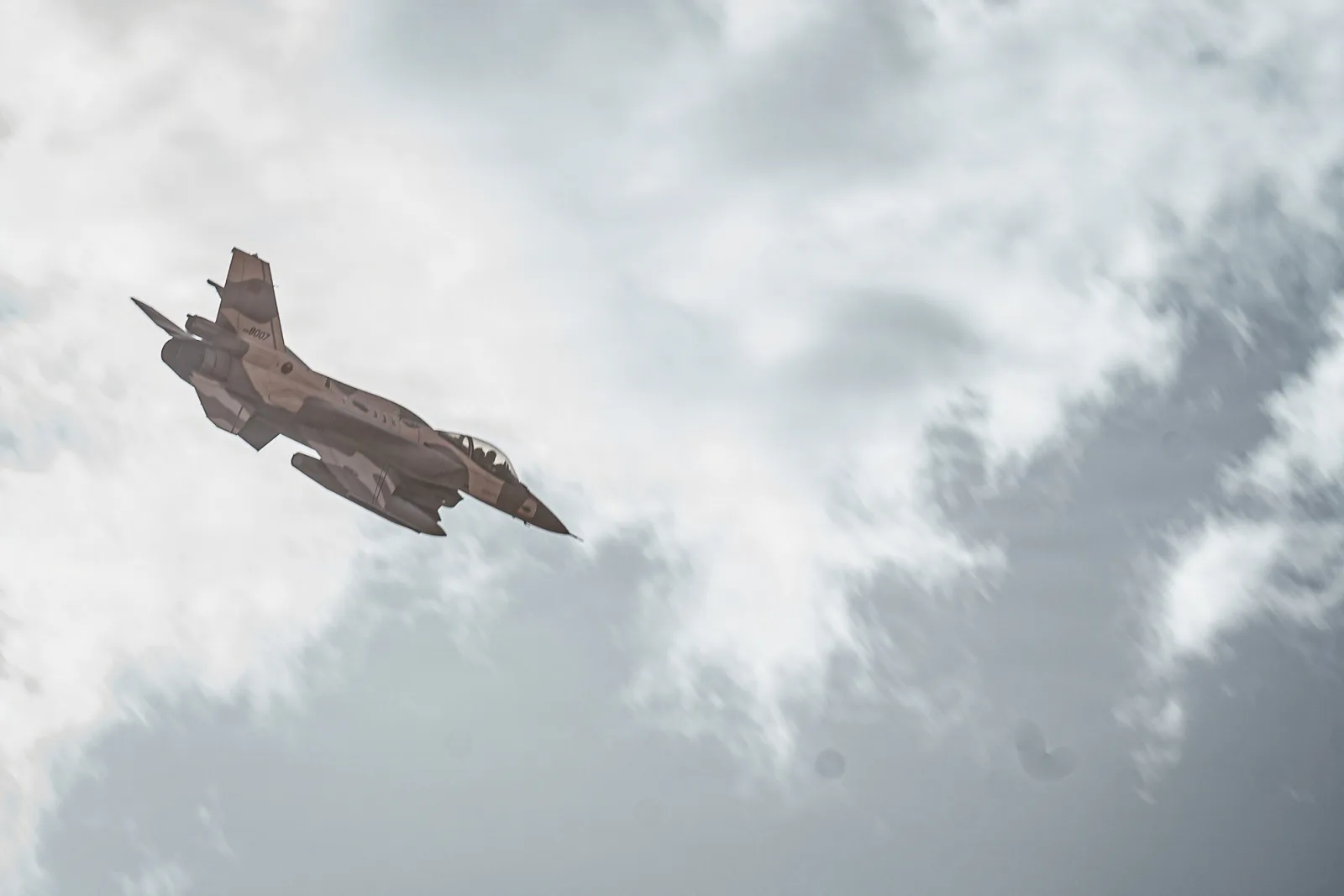
The backbone of the Moroccan air force currently rests on three fighter types of differing age. The most recent is the F-16C/D Block 52+, which entered service in the first decade of the 2000s and is estimated at about 23 aircraft according to Wikipedia data compiled from multiple sources, as the Moroccan command does not publish an official inventory of its fleet. As for the French Mirage F1, a large part of it (about 25 aircraft) underwent a French upgrade programme known as ASTRAC that raised navigation and armament standards, while the older US F-5E/F Tiger III aircraft (about 22 aircraft) remain in service in combat training and support roles rather than as a first line of defence.
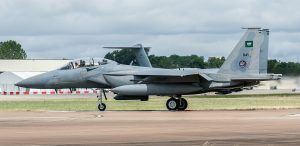
The most prominent file in recent years is the deal for 25 F-16 Block 72 fighters (known commercially as the F-16V), which the US State Department approved in 2019 within a programme valued at an estimated 3.787 billion US dollars. On 6 October 2026, Lockheed Martin announced that the first Moroccan aircraft of this type, a two-seat F-16D, completed its first test flight from the company’s plant in Greenville, South Carolina, in a step it described as “an important milestone in the flight test programme before the first delivery”, with the aircraft to undergo further flight tests before being formally taken over by the Moroccan side. In parallel, the US Air Force awarded CAE a contract worth up to 42.1 million US dollars to supply Morocco with two Full Mission Trainer flight simulators for the Block 72 fighter, running until April 2029, with the aim of enabling Moroccan pilots to train for high-risk combat missions without consuming additional actual flight hours.
Comprehensive table of the aircraft and helicopter fleet
| Category | Type | Country of origin | Approximate number | Notes |
|---|---|---|---|---|
| Multirole fighter | F-16C/D Block 52+ | United States | ~23 | In service since the first decade of the 2000s |
| Multirole fighter (new) | F-16C/D Block 72 (F-16V) | United States | 25 (on order) | First test flight October 2026, delivery has not begun |
| Multirole fighter | Mirage F1 (MF2000 standard) | France | ~25 | Upgraded under the ASTRAC programme |
| Light fighter / combat trainer | F-5E/F Tiger III | United States | ~22 | Older type, support roles |
| Airborne early warning | Gulfstream G550 CAEW | United States / Israel (the system) | 2 (+2 on order) | Airborne radar and command-and-control system |
| Tactical transport / aerial refuelling | C-130H / KC-130H / EC-130H Hercules | United States | ~16 | Includes two aerial refuelling aircraft and one electronic reconnaissance aircraft |
| Tactical transport | C-27J Spartan | Italy | 4 | – |
| Tactical transport | C295W | Spain | 2 or more | Additional orders whose number has not been officially announced |
| Light transport / liaison | CN-235 | Spain / Indonesia | 5 | – |
| Jet trainer / light attack | Alpha Jet E | Germany / France | ~19 | Successor to the Magister and T-37 aircraft |
| Advanced trainer | T-6C Texan II | United States | ~24 | – |
| Attack helicopter | AH-64E Apache Guardian | United States | 19 (of 24) | Last batch arrived 26 October 2026; option to buy 12 more |
| Reconnaissance / anti-armour helicopter | SA342 Gazelle | France | ~19 | – |
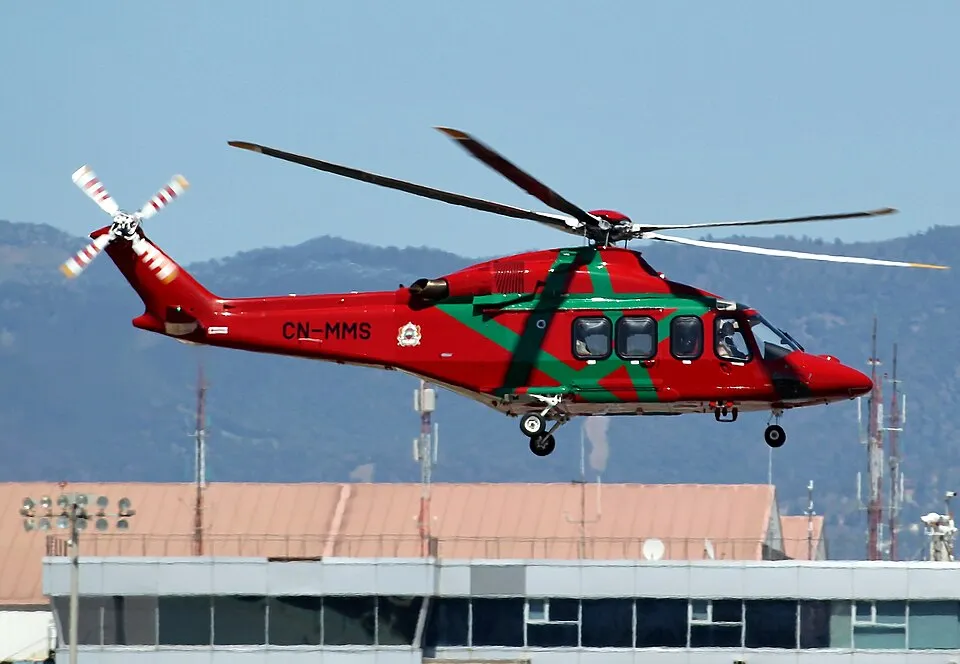
| Medium transport helicopter | SA330 Puma / EC635 (H135M) | France / Europe | 24 / 6 | – |
| Heavy transport helicopter | CH-47D Chinook | United States | 10 | Aircraft converted from US Army surplus |
| Medium-altitude armed drone (MALE) | Bayraktar TB2 | Türkiye | ~19 (figure conflicts between sources) | In service since 2021 |
| Heavy armed drone | Bayraktar Akıncı | Türkiye | Not disclosed | First batch arrived February 2025 |
| Reconnaissance and strike drone | MQ-9 Sea Guardian | United States | 4 | – |
| Medium-altitude drone | CAIG Wing Loong | China (via the UAE) | 3 | UAE donation |
Main source for the figures on the older fleet: the English Wikipedia page “Royal Moroccan Air Force”, compiled from multiple sources (Morocco does not publish an official military inventory); data on recent batches come from Army Recognition, The Aviationist and Stars and Stripes, as set out in the sources section below.
Source: compiled estimates (Wikipedia, Army Recognition) as of November 2026. The numbers are approximate because no official inventory has been published.
Defence budget: two different figures that should not be confused
Reports often confuse three different figures: actual spending as measured annually by SIPRI (6.33 billion US dollars in 2025, up from 5.52 billion US dollars in 2024), the actual operating appropriations within the 2026 finance law (about 55.3 billion dirhams, roughly 5.5 billion US dollars depending on the exchange rate), and the ceiling of multi-year commitments (157.17 billion dirhams) that covers deals paid in instalments over coming years, such as the F-16 Block 72 and AH-64E deals. This distinction is necessary to understand why the figures circulated in the media on the “Moroccan defence budget” differ by source and reference year.
Where does Morocco obtain its air arm?
Morocco relies on a clear diversification of sources of air armament: the United States for heavy fighters (the F-16 in both its generations, the AH-64E Apache, the C-130 and the MQ-9) and within the US FMS programme, France for the Mirage F1 fighters and the Gazelle and Puma helicopters, Spain and Italy for tactical transport (C295, C-27J and CN-235), and Türkiye for armed drones (TB2 and Akıncı), which have become a core part of reconnaissance and precision-strike capabilities since 2021, in addition to Chinese-designed and Israeli-designed platforms and donations (Wing Loong, Heron and Hermes 900 drones) that arrived through regional partnerships, most notably with the UAE’s EDGE group. This diversification gives Rabat negotiating flexibility, but in return raises the cost of training, maintenance and logistic compatibility among systems of multiple origins.
For wider detail on Morocco’s military supply channels, see the file Where does Morocco buy its weapons? The full supplier map, and the file The UAE’s EDGE group, which has become a growing industrial partner of Rabat.
Turkish drones: from the TB2 to the Akıncı
The Turkish Bayraktar TB2 drone was Morocco’s first real entry into the world of armed medium-altitude drones, entering service in 2021 under a deal that began with limited numbers and then expanded, while sources conflict over the current total (between 13 and 19 or more depending on the source). Later, the Royal Armed Forces announced in February 2025 the receipt of a first batch of the heavier, longer-range Bayraktar Akıncı drone, without disclosing the number. This progression, from the TB2 to the Akıncı, repeats a pattern common in several Arab and African armies that first relied on the TB2 as a relatively low-cost entry platform, then moved to heavier platforms for longer-range missions and larger payloads.
For those who want the full technical details of this platform, the file Bayraktar TB2: specifications, range, price and Arab operators covers the specifications and comparisons in detail. The Turkish magazine Envanter Medya also covers the spread of the Akıncı drone in the region in the file Bayraktar Akıncı: deployment in the Gulf, Egypt and Morocco. The background of the Turkish-Emirati industrial rapprochement that facilitated part of these deals is explained in the file Why did the UAE choose Turkish Bayraktar drones?.
Operational record: African Lion exercises and the southern border
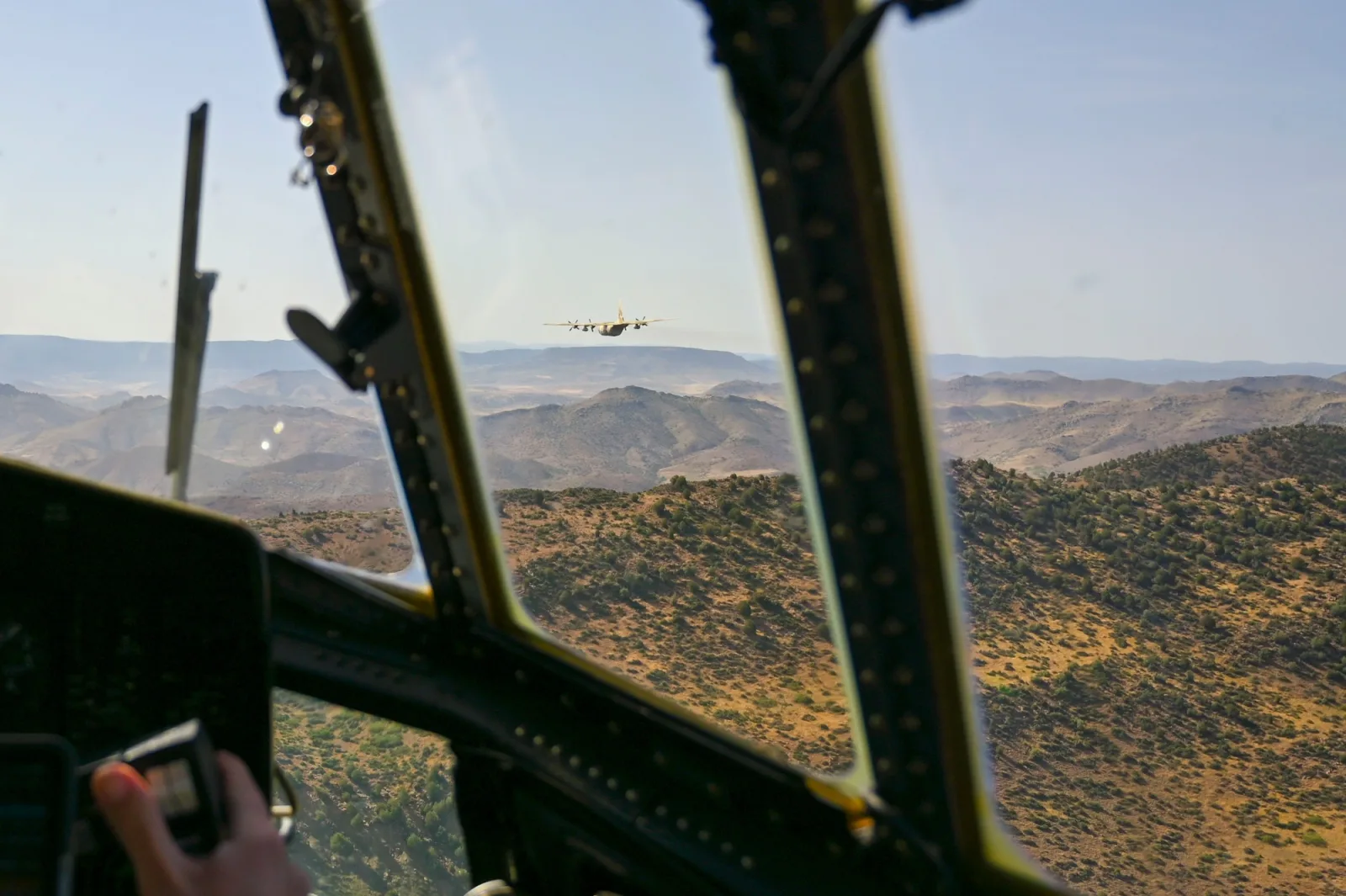
The Moroccan air force gains its most prominent operational experience from its annual participation in the African Lion exercise, held jointly with the United States, the largest annual US military exercise on the African continent. In the 2026 edition, Moroccan F-16 fighters flew alongside US B-52H bombers over the Cap Draa area near Tan-Tan, on an occasion in which Morocco launched the first nationally accredited course for joint terminal attack controllers (JTAC), with American, Canadian and Hungarian instructors taking part. Moroccan pilots also trained in aerial refuelling operations with KC-135 tankers of the US Air National Guard in Ohio. Alongside these exercises, the Moroccan air force uses its fleet in air support missions for ground operations along the security wall in the Sahara, a mission that requires long operational endurance more than advanced air-to-air combat capabilities.
Limits of the fleet and its optimal scope of use
Despite the ongoing modernisation, the Moroccan fleet faces structural challenges shared by many fleets in the region: the large technical gap between a modern-generation Block 72 aircraft and an F-5 fighter that has passed forty years of service raises the complexity of training and maintenance and produces a gap in combat capability within a single fleet. Reliance on four main supplier sides (the United States, France, Spain/Italy, Türkiye) also means multiple systems of spare parts, munitions and software, which raises operating costs compared with a single-source fleet. The actual capability of the new Block 72 fighters will not be tested in the field before actual delivery is complete, for which no precise date had been announced as of the date of this update. These limits are not specific to Morocco alone, but a general feature of fleets that adopt diversification as a negotiating strategy instead of relying on a single supplier.
Morocco and Algeria: an air arms race in North Africa
Morocco’s air modernisation programme cannot be read in isolation from the military competition with Algeria, which has a larger defence budget (estimated at about 25.4 billion US dollars in the latest available estimate for 2025, making it the largest military spender in Africa) and an air fleet that is mostly of Russian design. However, figures alone do not settle the balance of air power, as factors such as quality of training, integration of guided munitions and logistic support systems play a role no less important than the size of the budget. For a detailed comparison of the two fleets, see the files Morocco or Algeria: who is stronger in the air? A comprehensive air power comparison and Algeria and Morocco: a comprehensive military power comparison 2026, which address broader dimensions of the arms competition between the two countries. These deals also form part of a wider path of local defence manufacturing that Rabat recently revealed in the royal roadmap for localising 40% of the defence industry by 2035.
Frequently asked questions
The Moroccan air force currently has about 70 fighters in service, distributed among 23 F-16C/D, 25 upgraded Mirage F1 and 22 F-5E/F aircraft, in addition to 25 new F-16 Block 72 fighters being delivered that have not yet formally joined the operational fleet.
The first Moroccan Block 72 fighter completed its first test flight on 6 October 2026 from the Lockheed Martin plant in South Carolina, but as of the date of this update no precise date has been announced for the first actual delivery to Morocco, as the aircraft is still undergoing additional flight tests.
As of 26 October 2026, Morocco had received a total of 19 AH-64E Apache Guardian helicopters in three batches (the first in March 2025, the second in April 2026 and the third in October 2026), out of an order for 24 helicopters signed with Boeing in 2020, with a contractual option to buy 12 more.
Yes. The Moroccan air force has operated the Bayraktar TB2 drone since 2021, and added to it in February 2025 a first batch of the heavier, longer-range Bayraktar Akıncı drone, without announcing the exact number of either type.
Morocco’s actual military spending was about 6.33 billion US dollars in 2025 according to SIPRI estimates, a figure separate from the ceiling of future multi-year commitments of 157.17 billion dirhams contained in the 2026 draft finance law.
There is no definitive answer; Algeria has a larger defence budget and a relatively more modern fleet of Russian types, while Morocco is betting on diversifying its supply sources and on gradual modernisation through American and Turkish deals. The full details of the comparison are available in the Morocco or Algeria file linked above.
Sources
- The Aviationist (date of the first test flight of the Moroccan F-16 Block 72 and deal information)
- Army Recognition (the CAE flight simulator contract and details of the value of the F-16 Block 72 programme)
- Army Recognition (the second batch of Apache helicopters, raising the total to 12 aircraft)
- Stars and Stripes (the third batch of Apaches, raising the total to 19 of 24 aircraft)
- Army Recognition (confirmation of the arrival of the first batch of Apaches in March 2025)
- The Defense Post (receipt of the first batch of the Bayraktar Akıncı drone in February 2025)
- Wikipedia – Royal Moroccan Air Force (a compiled general inventory of the aircraft and helicopter fleet)
- Trading Economics (SIPRI data) (Morocco’s actual military spending figures for 2024 and 2025)
The Moroccan command does not publish an official military inventory of its air fleet, so most of the numbers in this file remain compiled estimates from open sources that may differ among themselves by a few units, except for figures linked to events documented with specific dates (such as the Apache delivery batches and the first test flight of the Block 72 fighter). This file will be updated whenever new delivery data or additional official confirmations arrive.