Katmerciler HIZIR II 4×4: Türkiye’s New-Generation Mine-Resistant Tactical Vehicle
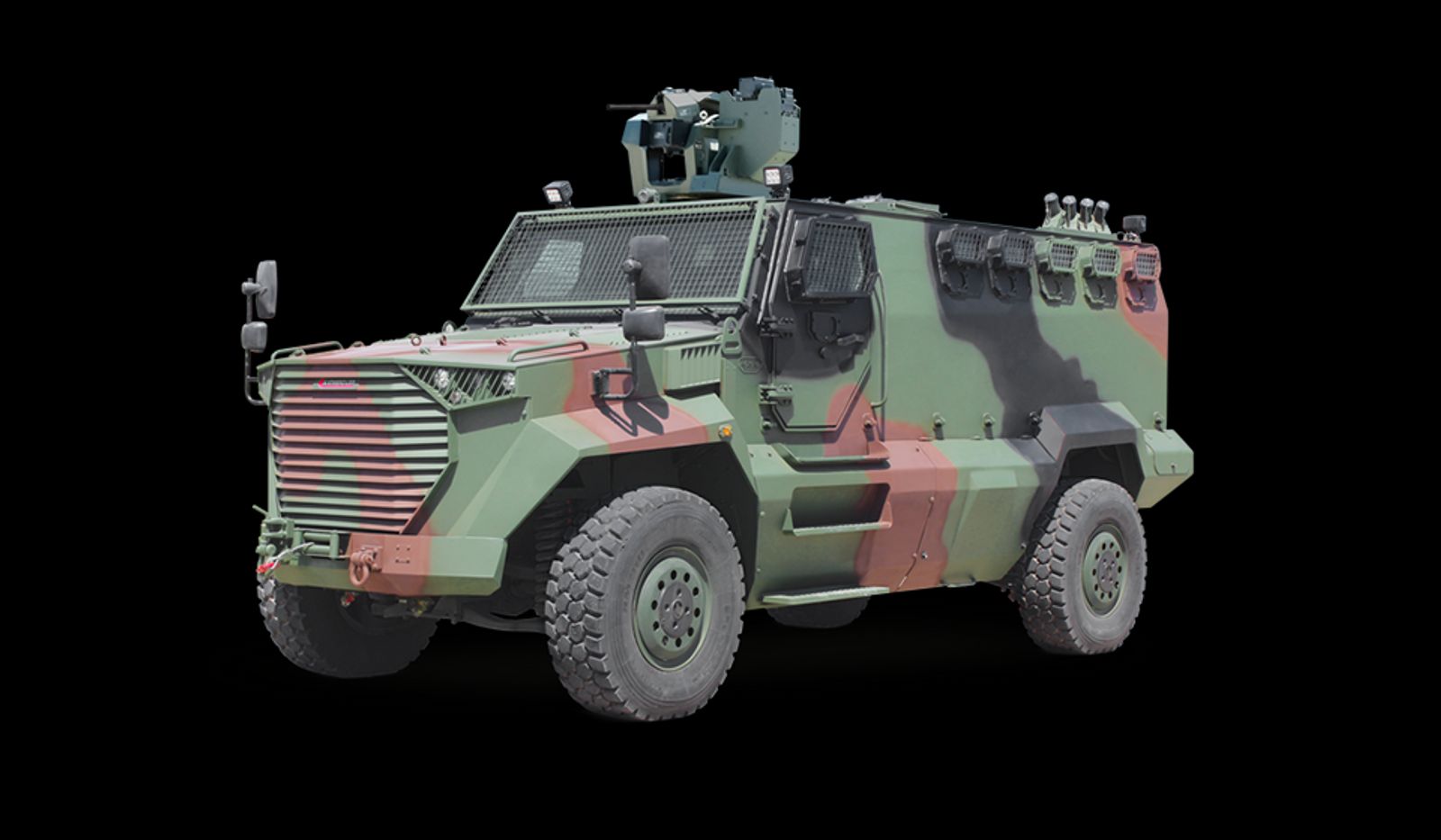
The Katmerciler HIZIR II is the new-generation member of the mine-resistant tactical wheeled armoured vehicle family developed by the Izmir-based Turkish manufacturer Katmerciler, and it has now moved from exhibition stand to serial service with the Turkish Armed Forces. Built around a 400 PS turbocharged diesel powerpack, an Allison fully automatic transmission, an indigenous blast-optimised hull and the Aselsan SARP remote controlled stabilised weapon system, the HIZIR II 4×4 is positioned as a survivable, high-mobility platform for convoy escort, border security, internal security and rapid-reaction tasks. The first delivery batch to the Turkish Armed Forces was completed as of 31 May 2026, with the remainder of the contracted vehicles scheduled to follow by the end of the year.
What the Katmerciler HIZIR II represents
The HIZIR II belongs to a vehicle category that has defined land forces procurement for two decades: the mine-resistant, ambush-protected wheeled platform. Vehicles in this class exist because of a specific operational problem. Conventional light tactical trucks and lightly armoured cars offered acceptable ballistic protection against small arms but almost none against buried explosive charges and roadside bombs, which became the dominant casualty producer in counter-insurgency and counter-terrorism operations. The engineering response was a purpose-designed hull that deflects blast energy away from the crew compartment, generous ground clearance to increase the standoff distance between the charge and the floor, energy-absorbing seating that decouples occupants from the structure, and a drivetrain robust enough to carry the resulting mass at useful road speeds.
The Katmerciler HIZIR II applies that formula within a compact 4×4 footprint. It is not a heavy infantry fighting vehicle and does not attempt to be one. Its design point is a protected mobility vehicle that can escort a logistics convoy, patrol a border sector, deliver a small dismounted element to a contact point, and carry a stabilised remote weapon station capable of suppressive fire, all while remaining road-legal in behaviour and manageable for units that operate large mixed fleets.
Position within the Turkish defence industry
Türkiye occupies an unusual position in this segment. Few countries of comparable size support four or more domestic manufacturers competing in the same protected wheeled vehicle category, but sustained operational demand from counter-terrorism campaigns in the south-east, border security requirements along the Syrian and Iraqi frontiers, and an aggressive national localisation policy have produced exactly that. The Turkish defence industry now fields the Nurol Makina Ejder Yalcin and NMS, the BMC Kirpi and Vuran, the Otokar Cobra II, and the Katmerciler HIZIR and HIZIR II. Each has found its niche, and the competition has driven a rapid maturation of hull design, blast test methodology and systems integration across the whole national supplier base.
Katmerciler entered this field from an unconventional direction. The company built its industrial base in vehicle-mounted equipment and special-purpose bodies, then translated that fabrication and integration competence into armoured platforms. The result is a manufacturer that is listed on Borsa Istanbul, exposed to public financial disclosure, and dependent on winning competitive programmes rather than on a legacy position in the national order of battle. The HIZIR family is the clearest expression of that strategy.
Programme history of the HIZIR family
The 2016 baseline
The original HIZIR was launched in 2016, at a moment when Turkish security forces were absorbing hard lessons about improvised explosive devices in urban and rural counter-terrorism operations. The programme timing matters, because it means the first-generation vehicle was conceived against a live threat picture rather than a theoretical requirement document. Since that launch, the HIZIR family has entered Turkish inventories and secured international export sales, giving Katmerciler a service-proven baseline from which to develop a successor rather than a clean-sheet gamble.
IDEF 2021 and the introduction of HIZIR II
The HIZIR II was unveiled at IDEF 2021 alongside the EREN 4×4, at a launch event attended by President Recep Tayyip Erdogan. Katmerciler presents the HIZIR II as the enhanced version of the original HIZIR, with a more imposing and aggressive external appearance. That change in external form is not purely cosmetic in a vehicle of this class. The shape of the front end, the arrangement of glacis and windscreen surfaces, the positioning of doors and hatches, and the way the hull sides meet the running gear all interact with blast deflection, ballistic obliquity, crew egress time and field of view. A visibly different silhouette on a second-generation mine-resistant vehicle normally reflects revised structural and protection choices underneath.
The dual launch with EREN also signalled Katmerciler’s intent to cover more than one point in the protected vehicle market simultaneously, offering customers a family of related 4×4 platforms rather than a single product.
Serial deliveries to the Turkish Armed Forces
The decisive milestone for any armoured vehicle programme is not the launch event but the delivery schedule. New-generation HIZIR deliveries to the Turkish Armed Forces reached a significant point when the first delivery batch was successfully completed as of 31 May 2026, with the remaining deliveries scheduled to be completed by the end of the year. That places the Katmerciler HIZIR II firmly in the serial production phase, with an established production rate and a validated acceptance process behind it.
Katmerciler Executive Board Deputy Chairman Furkan Katmerci stated that the company will continue serving the armed forces while completing the planned deliveries, and that international contracts are anticipated within the year. For a publicly listed manufacturer, that forward-looking statement about export prospects is significant, because export orders in this segment typically follow domestic acceptance: foreign customers treat service entry with the originating country’s own armed forces as the primary quality reference.
Design and hull architecture of the Katmerciler HIZIR II
Indigenous three-door hull
The configuration delivered to the Turkish Armed Forces uses a three-door indigenous hull design with a five-person transport capacity. The indigenous hull is the most important single element of the specification. In the mine-resistant vehicle sector, the hull is the product. Engine, transmission, axles and electronics can all be procured from established international suppliers, but the load-bearing armoured structure determines whether the vehicle survives a mine strike and whether the occupants survive with it. A manufacturer that owns the hull design owns the intellectual property that matters, controls the certification data, and can modify the structure for new customers without renegotiating a licence.
The three-door layout is a considered compromise. Fewer apertures in an armoured hull mean fewer weak points, simpler sealing against blast overpressure and chemical agents, and a stiffer structure overall. More apertures mean faster dismount under fire. A three-door arrangement on a five-person vehicle gives the driver and commander their own access while routing the dismount element through a dedicated door, which suits a compact protected mobility platform rather than a section carrier.
Crew layout and internal volume
Five-person capacity puts the HIZIR II 4×4 in the protected patrol and command vehicle bracket rather than the troop transport bracket. In practice that means a crew of driver, commander and weapon station operator plus a small dismounted element, or a command team with communications equipment. Vehicles configured this way are typically used as convoy escorts, patrol leaders, reconnaissance elements, forward observer platforms and command nodes. The reduced occupant count also allows more internal volume per person for equipment, radios, ammunition and the mounting hardware of the remote weapon station, and it eases the blast engineering problem, because fewer seats must be isolated from the floor structure.
Protection: mine resistance and ballistic survivability
Mine-resistant design philosophy
Katmerciler specifies high mine and ballistic protection for the HIZIR II, with NATO-standard compatibility. The mine-resistant vehicle discipline rests on a small number of physical principles that every credible design in the class must respect. Blast energy from a buried charge expands as a rapidly growing gas bubble; a flat floor plate captures that energy and transmits it directly into the structure and the occupants, while a shaped or blast-optimised underbody redirects it outward. Standoff distance is the second lever, and the HIZIR II answers it with 410 mm of ground clearance, a figure that also serves cross-country mobility. The third lever is decoupling: seats mounted from the walls or roof rather than the floor, with energy-absorbing mounts, so that the vertical acceleration transmitted to the spine stays below injury thresholds.
Beyond the primary blast case, mine-resistant vehicle design must handle secondary effects. Wheels and axles are treated as sacrificial, designed to separate without tearing open the crew cell. Fuel and hydraulic lines are routed away from the likely rupture zones. Interior surfaces avoid loose fittings that become secondary projectiles. Doors and hatches must remain operable after a strike, because a survivable vehicle that cannot be evacuated is only partly survivable.
Ballistic protection and standardisation
Alongside mine protection, the HIZIR II offers ballistic protection with NATO-standard compatibility. Standardisation is the practical part of that statement. Protection levels defined against a common testing standard let a procurement authority compare offers from different manufacturers on a like-for-like basis, and let an operator understand exactly what threat the vehicle defeats. For an exporting manufacturer, testing to an internationally recognised standard is effectively a market access requirement, since foreign customers rarely accept protection claims that cannot be referenced to a shared benchmark.
The armoured glass apertures are a permanent design tension in this class. Situational awareness demands generous vision blocks; protection and mass demand small ones. Transparent armour that matches the protection level of the surrounding steel is thick, heavy and expensive, and every window is a discontinuity in the armour envelope. The way a designer resolves that trade-off, and where the resulting glass is placed, tells much about the intended mission profile.
Powerpack: 400 PS diesel and Allison automatic transmission
Engine
The HIZIR II is powered by a turbocharged direct-injection diesel engine of 8.9 litres displacement, producing 400 PS maximum power and 1,550 Nm of torque, to Euro-3 emissions standard. Several details in that specification are worth reading carefully. An 8.9-litre displacement in the medium-duty commercial band delivers its output at modest specific loading, which is what an armoured vehicle needs: the engine is not stressed at its limits during sustained high-load operation, and durability in heat and dust improves accordingly. The 1,550 Nm torque figure is arguably more important than peak power for a vehicle of this type, because gradient climbing, obstacle negotiation and acceleration from a standing start under armour weight are all torque problems.
The Euro-3 emissions standard is a deliberate military choice rather than a shortfall. Later emissions tiers require selective catalytic reduction, diesel particulate filters, urea dosing systems and tighter fuel quality tolerances, all of which add complexity, add failure modes, and assume a fuel supply chain that expeditionary and export operations frequently cannot guarantee. Fielding a Euro-3 powerpack means the vehicle tolerates the variable-quality diesel available in austere theatres and does not carry an aftertreatment system that can immobilise it when a sensor fails far from a workshop.
Transmission and drivetrain
Power is transmitted through an Allison 3000 series fully automatic transmission with six forward gears and one reverse. The Allison 3000 is one of the most widely fielded automatic transmissions in the protected vehicle world, and its selection carries practical consequences beyond the gear ratios. Global parts availability, an established worldwide service network, and a very large body of accumulated reliability data all transfer to any vehicle that uses it, which matters greatly for export customers who need to sustain a small fleet without building a bespoke support infrastructure.
The functional argument for a fully automatic transmission in this class is equally strong. Driver workload in a mine-resistant vehicle is high: restricted visibility through armoured glass, substantial mass, and terrain that demands constant attention. Removing gear selection from that workload reduces fatigue on long patrols, shortens the training pipeline for new drivers, and eliminates the driveline shock loads that manual shifting imposes on a heavy vehicle in difficult terrain.
The drivetrain is a permanent 4×4 arrangement with differential locks. Permanent all-wheel drive removes the decision point at which a driver must engage four-wheel drive, which is precisely the decision most often made too late when traction is lost unexpectedly. Differential locks provide the recovery capability that permanent drive alone cannot: with locks engaged, torque continues to reach wheels that still have grip when others are unloaded or spinning, which is what allows the vehicle to extract itself from soft ground, ditch crossings and cross-axle situations without external assistance.
Mobility of the HIZIR II 4×4
Speed, range and strategic reach
The HIZIR II reaches a maximum speed of 120 km/h and offers a range of more than 1,000 km. Both figures are operationally consequential. A 120 km/h top speed means the vehicle can move with civilian traffic on motorways and keep pace within mixed military convoys, avoiding the situation where the protected element becomes the constraint on the whole column. It also supports the rapid-reaction role, where the ability to cross a province by road in hours rather than by transporter over a day changes the tempo of a response.
Range beyond 1,000 km is the more strategically significant number. It permits sustained patrol cycles without a refuelling tail, self-deployment between operational areas, and extended border surveillance tasks in regions where fuel points are sparse. Refuelling operations are a known vulnerability in counter-insurgency environments, because they are predictable in place and time. A vehicle that needs fewer of them is measurably safer.
Terrain performance
Gradient climbing capability is quoted at 70 per cent, with ground clearance of 410 mm. A 70 per cent gradient is a demanding figure that stresses torque delivery, traction management, weight distribution and cooling simultaneously, and it reflects the mountainous terrain characteristic of eastern and south-eastern Türkiye. The 410 mm ground clearance serves the dual purpose noted earlier, increasing blast standoff while allowing the vehicle to clear rocks, ruts and debris that would ground a lower hull.
Suspension is independent with telescopic dampers. Independent suspension is the more sophisticated and more expensive choice compared with beam axles, and it is chosen for specific reasons. It allows each wheel to follow terrain without transmitting displacement across the axle to the opposite wheel, which improves ride quality, keeps tyres in contact with the ground over broken surfaces, and reduces the shock loads transmitted into the hull and its occupants. Better ride quality is not a comfort argument in this context; crew fatigue over a long patrol degrades alertness, and alertness is a survivability factor. Independent suspension also permits higher cross-country speeds for a given level of crew tolerance, which directly supports the rapid-reaction mission.
Armament and mission systems: the Aselsan SARP
Remote controlled stabilised weapon system
The configuration delivered to the Turkish Armed Forces mounts the Aselsan SARP remote controlled stabilised weapon system. Armament options across the family include a remote controlled stabilised weapon station armed with a 12.7 mm heavy machine gun, a 7.62 mm machine gun, or a 40 mm automatic grenade launcher.
The shift from a manned turret or a roof hatch mount to a remote weapon station is one of the most consequential changes in protected vehicle design of the past two decades. A gunner exposed in a hatch is vulnerable to precisely the threats the vehicle exists to defeat: blast overpressure, fragmentation and sniper fire. A remote station keeps the operator inside the protected volume, working through a stabilised sight with day and thermal channels. Stabilisation allows accurate engagement while the vehicle is moving, which changes convoy escort tactics fundamentally, because the escort no longer has to stop to shoot effectively.
The choice of Aselsan SARP has industrial as well as tactical significance. SARP is Türkiye’s most widely fielded remote controlled weapon station, and selecting it keeps integration, training, spares and support inside the national industrial base. For the Turkish Armed Forces, commonality with weapon stations already installed across many other platforms simplifies operator training, maintenance and ammunition management. For export customers, an Aselsan SARP fitted to a Katmerciler hull is a fully national solution that avoids third-country export licence dependencies, which has become a decisive purchasing consideration in several markets.
Optional mission equipment
The HIZIR II can be specified with a range of optional equipment: a recovery winch, a weapon turret, a central tyre inflation system, CBRN air filtration, fire detection and suppression, an intercom system and GPS navigation. Each addresses a distinct operational requirement. The recovery winch provides self-extraction and the ability to recover another vehicle without a dedicated recovery asset. The central tyre inflation system lets the crew adjust pressure from inside the vehicle to match the surface, lowering pressure for sand and mud to increase the contact patch and raising it for hard roads, which extends both mobility and tyre life. CBRN air filtration maintains overpressure in the crew compartment and is a standard requirement for any vehicle expected to operate in a contaminated environment. Fire detection and suppression addresses the post-penetration threat inside the hull, where reaction time is measured in fractions of a second. Intercom and GPS navigation are the baseline of crew coordination and situational awareness in a closed-down vehicle with restricted external visibility.
Key characteristics of the Katmerciler HIZIR II
| Characteristic | Specification |
|---|---|
| Class | Tactical wheeled armoured vehicle, mine-resistant (MRAP class) |
| Manufacturer | Katmerciler Arac Ustu Ekipman Sanayi ve Ticaret A.S., Izmir, Türkiye |
| Drive configuration | Permanent 4×4 with differential locks |
| Engine | Turbocharged direct-injection diesel, 8.9 litres, Euro-3 |
| Maximum power | 400 PS |
| Maximum torque | 1,550 Nm |
| Transmission | Allison 3000 series fully automatic, 6 forward and 1 reverse |
| Suspension | Independent, with telescopic dampers |
| Maximum speed | 120 km/h |
| Range | More than 1,000 km |
| Gradient climbing | 70 per cent |
| Ground clearance | 410 mm |
| Protection | High mine and ballistic protection, NATO-standard compatibility |
| Hull (Turkish Armed Forces configuration) | Three-door indigenous design |
| Transport capacity (Turkish Armed Forces configuration) | 5 personnel |
| Armament (Turkish Armed Forces configuration) | Aselsan SARP remote controlled stabilised weapon system |
| Armament options | Remote controlled stabilised weapon station with 12.7 mm, 7.62 mm or 40 mm automatic grenade launcher |
| Optional equipment | Recovery winch, weapon turret, central tyre inflation system, CBRN air filtration, fire detection and suppression, intercom, GPS navigation |
Configurations and mission roles
The Turkish Armed Forces standard
The delivered Turkish Armed Forces configuration is a specific and coherent package: a three-door indigenous hull, five-person transport capacity, the 400 hp engine, automatic transmission and the Aselsan SARP remote controlled stabilised weapon system. Read as a whole, that specification describes a protected patrol and escort vehicle optimised for internal security and border operations rather than for mechanised manoeuvre warfare. It carries a small team under high protection, moves quickly on roads, climbs steep terrain, and delivers accurate stabilised fire without exposing a crew member.
Adaptability of the platform
The breadth of the options list indicates that the HIZIR II is offered as a configurable base rather than a fixed product. Armament can be scaled from 7.62 mm through 12.7 mm to a 40 mm automatic grenade launcher, changing the vehicle’s effect from point suppression to area suppression. The presence of a weapon turret among the optional items alongside the remote station suggests alternative armament architectures are available for customers with different doctrinal preferences or budget constraints. Recovery winches, central tyre inflation and CBRN filtration can be specified according to theatre. This flexibility is characteristic of a manufacturer whose commercial position depends on winning competitive tenders across multiple countries, each with its own requirement set.
Operators and export prospects
Domestic service
The primary operator is the Turkish Armed Forces, with the first delivery batch of new-generation HIZIR vehicles completed as of 31 May 2026 and the remainder due by year end. The HIZIR family more broadly has been in Turkish inventories since 2016, which means the type has accumulated real operational experience in the demanding environments of Turkish counter-terrorism and border-security operations. That record is the most valuable asset any armoured vehicle manufacturer can hold, because it converts specification claims into demonstrated performance.
Export markets
Katmerciler states that the HIZIR family has achieved international exports since 2016, and Furkan Katmerci has indicated that further international contracts are anticipated within the year. There is also a reported claim, which remains unconfirmed, that Katmerciler HIZIR 4×4 vehicles were exported to Ethiopia. That report should be treated as a claim rather than an established fact, and Katmerciler has not published a confirmation of it. Export destinations in this segment are frequently subject to confidentiality clauses, and end-user details often emerge only through parade footage or operational imagery well after delivery.
The addressable markets for a vehicle of this type are Africa, Central Asia and the Middle East. In each, the requirement profile aligns closely with the HIZIR II specification: high mine threat, poor road infrastructure, long distances between logistic nodes, limited maintenance depth, and a strong preference for suppliers who will transfer technology and avoid political conditionality. A vehicle combining an internationally supported Allison transmission with a nationally produced hull and a nationally produced weapon station fits that profile well.
International comparison
The Turkish competitive field
Within Türkiye, the HIZIR II competes against the Nurol Makina Ejder Yalcin and NMS, the BMC Kirpi and Vuran, and the Otokar Cobra II. This is a crowded field by any international measure, and it has had a clear effect: Turkish protected vehicles have been refined against each other in repeated domestic tenders, then tested against real threats in operational service. Manufacturers who could not meet blast test requirements or delivery schedules did not survive that process. The concentration of capability also means Turkish suppliers frequently encounter one another in the same export competitions, which sharpens pricing and offset packages for the customer.
Global equivalents
Internationally, the closest analogues to the Katmerciler HIZIR II are the Oshkosh JLTV, the Iveco LMV, the Textron Survivor R and the Paramount Marauder. Each represents a different balance of the same trade-offs. The JLTV emerged from a United States requirement to combine protection with the tactical mobility of a light utility vehicle, and it is procured at a scale no other programme in the category approaches. The Iveco LMV took a lighter, more road-oriented European approach and has been widely adopted across NATO members. The Textron Survivor R sits at the heavier, more heavily protected end of the band and has found a niche in policing and specialised security roles. The Paramount Marauder is built explicitly for export markets with severe mine threats and limited maintenance infrastructure.
The HIZIR II positions itself between these poles. It is more heavily protected than a light tactical vehicle, more compact and more road-capable than the heaviest MRAP designs, and it carries a stabilised remote weapon station as standard in its delivered Turkish configuration rather than as a premium option. Its 400 PS engine and 1,550 Nm of torque give it a favourable power-to-weight ratio for the class, its range beyond 1,000 km exceeds what many competitors in the segment offer, and its 410 mm ground clearance is competitive at the protected end of the category. Where it differentiates most clearly is in the completeness of its national supply chain for the mission systems, which lowers both cost and export licence risk relative to designs that depend on third-country optics and weapon stations.
Katmerciler’s industrial position
From equipment integrator to armoured vehicle manufacturer
Katmerciler Arac Ustu Ekipman Sanayi ve Ticaret A.S. is headquartered in Izmir and listed on Borsa Istanbul. The company’s origins in vehicle-mounted equipment gave it a foundation in steel fabrication, hydraulics, electrical integration and the discipline of building bodies to customer specification on a variety of chassis. Those competences translate directly into armoured vehicle production, where the core industrial tasks are cutting and welding armour steel to tight tolerance, integrating a powertrain into a purpose-built structure, and installing complex electrical and weapon systems.
The listed status imposes a discipline that is worth noting. A publicly traded defence manufacturer must report order intake, backlog and delivery performance to shareholders, which creates visibility into programme health that privately held competitors do not provide. It also means the company must win work continuously, since it does not have a guaranteed share of national procurement to fall back on.
Contribution to national localisation
The indigenous hull design is the strategic core of the HIZIR II from a national industrial perspective. Combined with the Aselsan SARP weapon station, it means the elements of the vehicle that are most subject to export control and most difficult to substitute are produced domestically. The powertrain draws on established international suppliers, which is standard practice across the entire global protected vehicle industry, and which brings the sustainment advantages described earlier. The resulting balance, national content where it counts strategically and proven international components where they reduce lifecycle risk, is characteristic of how the Turkish defence industry has approached localisation across multiple vehicle programmes.
Outlook for the Katmerciler HIZIR II
The near-term picture is defined by the delivery schedule. Completing the remaining Turkish Armed Forces deliveries by the end of the year would close out the current contract and establish a production rate that Katmerciler can present to export customers as evidence of industrial capacity, which is often as decisive in a tender as the technical specification itself. The stated expectation of international contracts within the year is the second variable, and success there would validate the strategy of pairing an indigenous hull with nationally produced mission systems.
Over a longer horizon, the segment faces evident pressures. Loitering munitions and small armed drones have added a threat vector from above that mine-resistant designs were never optimised against, and the industry response, involving roof protection, jammers, and detection systems, is still consolidating. Electrification is moving from concept to trials in tactical vehicles, promising reduced thermal and acoustic signature and silent watch capability at the cost of energy density and charging infrastructure. Uncrewed and optionally crewed configurations, and increasing degrees of autonomy in weapon station cueing and route management, will change what a protected patrol vehicle is expected to do.
Against that backdrop, the HIZIR II 4×4 is a mature, conventionally engineered answer to a threat that has not gone away. Buried explosive charges and small arms ambushes remain the everyday reality of border security and counter-terrorism operations, and vehicles that protect against them will be required for as long as those operations continue. With a service-proven family behind it, serial deliveries under way to a demanding domestic customer, and a mission systems suite drawn from the national industrial base, the Katmerciler HIZIR II is well placed both in Turkish service and in the export markets that Katmerciler has identified.
Frequently asked questions about the Katmerciler HIZIR II
What kind of vehicle is the Katmerciler HIZIR II?
The Katmerciler HIZIR II is a tactical wheeled armoured vehicle in the mine-resistant, ambush-protected class, produced by Katmerciler of Izmir, Türkiye. It is the enhanced, new-generation version of the original HIZIR that was launched in 2016, and it was unveiled at IDEF 2021 alongside the EREN 4×4. It combines an indigenous hull with high mine and ballistic protection, a permanent 4×4 drivetrain, and a remote controlled stabilised weapon station, and it is intended for convoy escort, patrol, border security, internal security and rapid-reaction tasks rather than for mechanised manoeuvre operations.
What engine and transmission does the HIZIR II 4×4 use?
The HIZIR II 4×4 uses a turbocharged direct-injection diesel engine of 8.9 litres displacement, developing 400 PS of maximum power and 1,550 Nm of torque to Euro-3 emissions standard. Drive is transmitted through an Allison 3000 series fully automatic transmission with six forward gears and one reverse, to a permanent 4×4 drivetrain with differential locks. Suspension is independent with telescopic dampers. The combination yields a maximum speed of 120 km/h, a range of more than 1,000 km, a gradient climbing capability of 70 per cent and 410 mm of ground clearance.
What weapons can the HIZIR II carry?
The configuration delivered to the Turkish Armed Forces carries the Aselsan SARP remote controlled stabilised weapon system, which allows the operator to engage targets from inside the protected crew compartment using a stabilised sight, including while the vehicle is moving. Armament options across the family include a remote controlled stabilised weapon station fitted with a 12.7 mm heavy machine gun, a 7.62 mm machine gun, or a 40 mm automatic grenade launcher. A weapon turret is also listed among the optional equipment, alongside a recovery winch, central tyre inflation system, CBRN air filtration, fire detection and suppression, intercom and GPS navigation.
Who operates the HIZIR family and has it been exported?
The Turkish Armed Forces are the principal operator, and the first batch of new-generation HIZIR vehicles was delivered as of 31 May 2026, with the remaining deliveries scheduled for completion by the end of the year. Katmerciler states that the HIZIR family has entered Turkish inventories and achieved international exports since 2016, and Executive Board Deputy Chairman Furkan Katmerci has indicated that further international contracts are anticipated within the year. There is an unconfirmed report claiming that HIZIR 4×4 vehicles were exported to Ethiopia; that claim has not been officially confirmed and should be treated with caution.