Peninsula Shield Force: founded in 1982, headquartered at Hafr Al-Batin, its missions and its link to the Unified Military Command
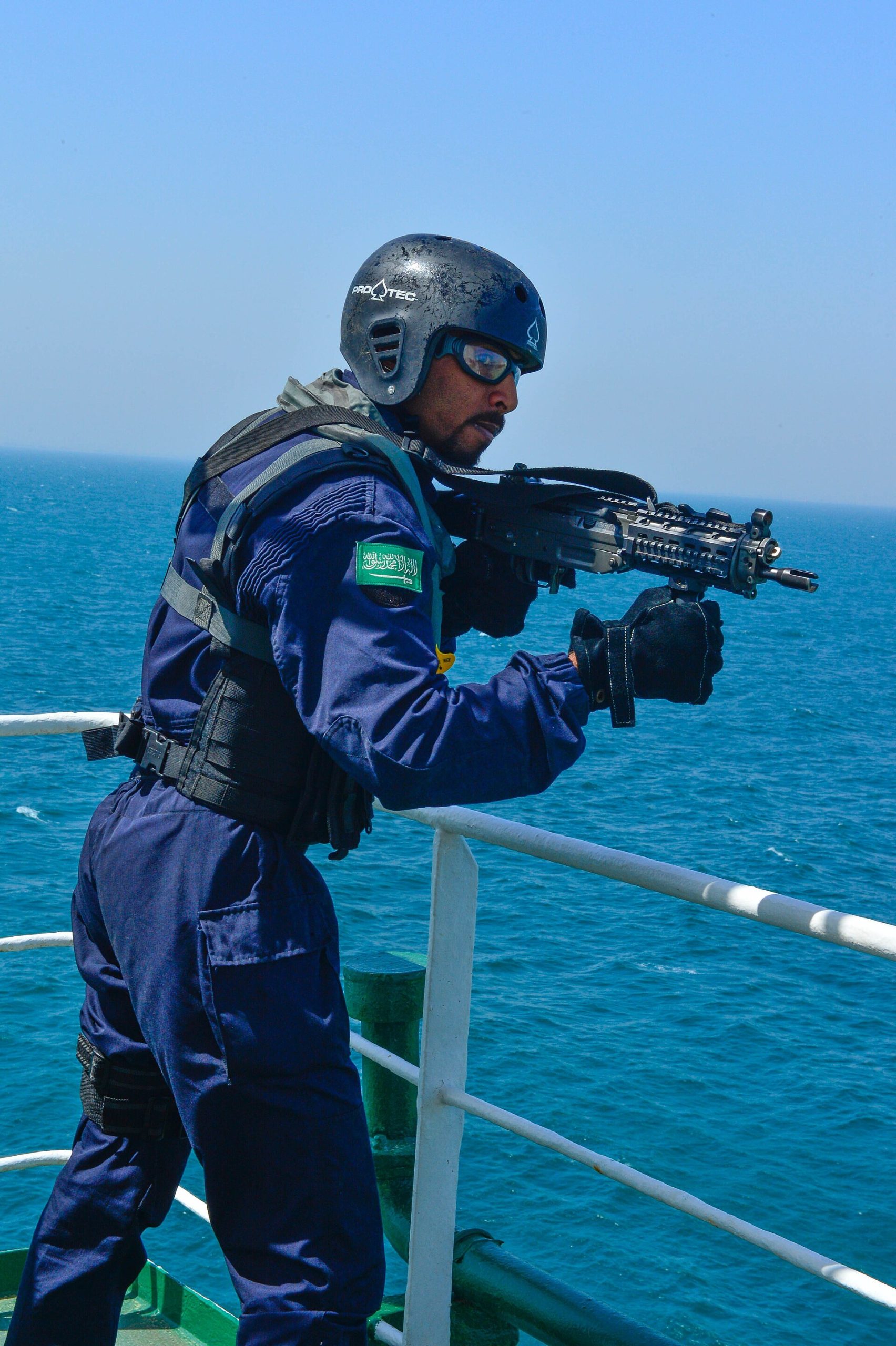
The Peninsula Shield Force is a joint Gulf military force that the leaders of the Gulf Cooperation Council (GCC) decided to establish in November 1982 at the third session of the Supreme Council in Manama. Since 1986 it has been based at Hafr Al-Batin in north-eastern Saudi Arabia, and its headquarters today is located in King Khalid Military City. It evolved from a mechanised infantry division-sized force into the “Joint Peninsula Shield Forces” in 2006, and since the decision of the Kuwait summit in December 2013 it has become the land command of the GCC Unified Military Command.
Fact file
| Current name | Peninsula Shield Force Command (land command of the Unified Military Command) |
|---|---|
| Founding decision | 1982, third session of the GCC Supreme Council (Manama) |
| Member states | Saudi Arabia, the UAE, Kuwait, Qatar, Bahrain, Oman |
| Headquarters | King Khalid Military City – Hafr Al-Batin (Saudi Arabia) |
| Officially stated size | The size of a mechanised infantry division with full combat and administrative support, reinforced with naval and air elements since 2006 |
| Legal framework | Joint Defence Agreement (Manama, December 2000) |
Founding and key stages
Joint Gulf military work began just one year after the Council was established: the first meeting of the chiefs of staff of the armed forces was held in Riyadh in 1981 at the request of the Ministerial Council. The following year, the decision was taken to establish the “Peninsula Shield Force” as the first step towards forming joint military forces, according to the GCC Secretariat General. According to the Al Jazeera Net encyclopedia, the force’s first exercise was held on UAE territory in 1983, and it was then stationed at Hafr Al-Batin in 1986 with a strength at the time of around five thousand troops.
| Year | Milestone |
|---|---|
| 1981 | First meeting of chiefs of staff in Riyadh |
| 1982 | Decision to establish the Peninsula Shield Force |
| 1983 | The force’s first exercise in the UAE |
| 1986 | Stationed at Hafr Al-Batin with around 5,000 troops |
| December 2000 | Joint Defence Agreement signed in Manama |
| 2006 | Transformed into the “Joint Peninsula Shield Forces” with added naval and air elements |
| 2009 | Forces reinforced with a rapid intervention force |
| March 2011 | Units of the force enter Bahrain at Manama’s request to secure strategic facilities |
| December 2013 | Decision to establish the Unified Military Command and turn the Shield command into its land command |
Missions: reinforcement and support, not replacing national armies
The GCC Secretariat General describes the aim of developing the force as raising its combat effectiveness “so as to ensure the full performance of reinforcement and support missions for the national armed forces of the GCC states”. In other words, the force is designed as a collective reserve to be sent to a threatened member state, not as a substitute for national armies. This is consistent with the principle of “integrated collective security” set out in the 2000 Joint Defence Agreement, which considers any aggression against a member state to be aggression against all member states. More on this principle: Gulf foreign ministers: an attack on one member state is an attack on all (Arabic).
- Deterrence: demonstrating a collective commitment to defend any member state.
- Rapid reinforcement: sending units to a member state at its request, as happened in Bahrain in 2011.
- Joint training: conducting regular exercises with each state’s armed forces to improve interoperability.
From Peninsula Shield to the Unified Military Command
At its 34th session (Kuwait, December 2013), the Supreme Council decided to establish the GCC Unified Military Command to plan and manage joint military operations; at the same session, the Joint Peninsula Shield Forces Command was developed into its “Unified Land Command” under the name “Peninsula Shield Force Command”. The Secretariat General notes that work is under way to complete its manpower and armament establishment. In June 2024, the Assistant Secretary-General for Military Affairs visited the command headquarters in King Khalid Military City at Hafr Al-Batin as part of scheduled visits “to the units of the Gulf Unified Military Command”. In November 2026, the Joint Defence Council approved a forward military command headquarters in Kuwait; read: Gulf Joint Defence Council approves forward command headquarters in Kuwait (Arabic).
Other joint Gulf systems
| Project | Decision or entry into service | Description |
|---|---|---|
| Secure communications | Approved 1995, operational 2000 | A secure military communications network linking the armed forces |
| “Cooperation Belt” | Approved 1997, first phase end of 2001 | Linking the operations centres of the air forces and air defence |
| Unified Maritime Operations Centre | Decision November 2014, opened 4 February 2016 | Based in Bahrain to coordinate maritime security |
| Defence Strategy | December 2009 (Kuwait) | A framework for coordinating defence integration |
Size and capabilities: what is declared and what is not?
The Secretariat General does not publish detailed figures on the force’s personnel or armament, describing it only as “the size of a mechanised infantry division”. Sources cite varying figures: defence ministers announced in Muscat in 2002 their intention to raise the force to 22,000 men, while the Al Jazeera Net encyclopedia quoted a Saudi commander as estimating its strength at more than 30,000 troops. Because these figures do not come from a recent official document, we present them as statements and estimates rather than confirmed data.
Editor’s note: The force has been the subject of debates about its future, including a Saudi proposal in late 2005 to dismantle it and have each state take over its assigned units, then a Saudi proposal in November 2006 to expand its capabilities, and an agreement in May 2008 to station its units in their home countries, according to Al Jazeera Net.
The 2011 Bahrain intervention
March 2011 represents the most prominent public use of the force, when Bahrain called on the Peninsula Shield Forces to secure strategic facilities following opposition protests; the forces began entering Bahraini territory on 14 March. This provided a practical example of the “reinforcement” concept at a member state’s request, while also sparking political controversy over the force’s role in internal crises.
Related links
How strong is the Saudi army? – How strong is the Qatari army? – How strong is the UAE army? – What is the Mecca defence alliance? (all in Arabic)
Frequently asked questions
When was the Peninsula Shield Force founded?
The decision to establish it was taken in 1982 at the third session of the GCC Supreme Council in Manama.
Where is the Peninsula Shield Force headquartered?
In King Khalid Military City at Hafr Al-Batin in north-eastern Saudi Arabia.
What is the relationship between Peninsula Shield and the Unified Military Command?
Since the December 2013 decision, the Peninsula Shield Force Command has been the land command of the GCC Unified Military Command.
How large is the Peninsula Shield Force?
There is no recent official figure; the Secretariat General describes it as the size of a mechanised infantry division, and estimates in circulation range from 22,000 to more than 30,000 troops.
Has the Peninsula Shield Force intervened in any crisis?
Yes, some of its units entered Bahrain on 14 March 2011 at Manama’s request to secure strategic facilities.
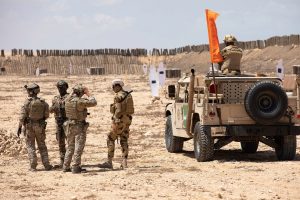
Main image: GCC and US special forces personnel simulate a raid on a hijacked tanker in Kuwaiti waters in 2017 (illustrative image). Source: Master Sgt. Timothy Lawn / US Army via Wikimedia Commons – public domain.