What is the difference between Hard-Kill and Soft-Kill in protection and air defence systems?
The short answer: Hard-Kill means destroying the incoming threat, such as a missile, projectile or drone, by hitting it directly with a countermeasure munition. Soft-Kill means diverting the threat from its target or disabling it without destroying it, through jamming, deception or obscuration. The glossary of Türkiye’s Presidency of Defence Industries (SSB) defines the former as destroying the threat, or defeating its penetration mechanism, at the moment it is struck by a countermeasure munition. It defines the latter as diverting the threat from its target with deceptive or obscuring screens of smoke or particles around the combat vehicle, or with deceptive signals against infrared- or laser-guided missiles.
Quick comparison
| Criterion | Hard-Kill | Soft-Kill |
|---|---|---|
| Principle | Destroying the threat or defeating its warhead | Deceiving the threat or disrupting its guidance |
| Examples | Active protection systems, interceptor missiles and CIWS systems | Chaff and flares, smoke and electronic jamming |
| Advantages | Eliminates the threat permanently | Often cheaper, and leaves no fragments near friendly forces |
| Limitations | Higher cost, risk of collateral damage and a limited number of rounds | May fail against advanced, deception-resistant seekers, and does not destroy the threat |
Hard-Kill: the example of active protection systems
Leonardo DRS describes the Trophy system as neutralising anti-armour threats in four stages: detecting the threat, tracking it, activating the countermeasure and neutralising it. The system uses multiple explosively formed penetrator (MEFP) technology and engages only threats that pose a real danger to the vehicle. The company says it has been in operational use with the Israeli army since August 2009; we mention this here for comparison only. For details: What is an active protection system (APS)?.
Soft-Kill: deception and jamming
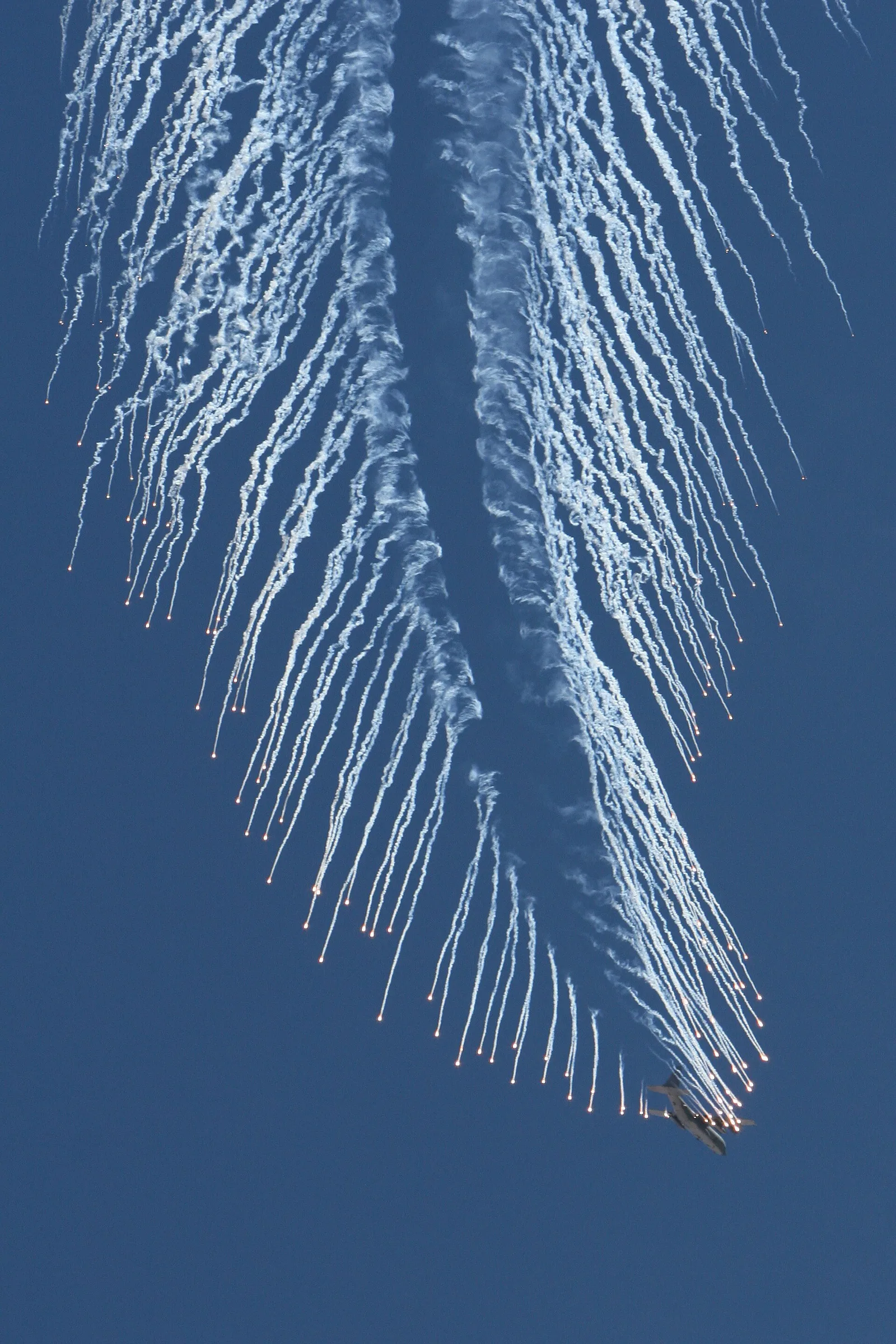
The accompanying image shows an AC-130 aircraft releasing flares and chaff. Flares generate a heat signature that deceives infrared-guided missiles, while chaff generates radar echoes that mislead radars and radar-guided missiles. In counter-drone defence, jamming control and navigation links is an example of Soft-Kill, while interception with guns, missiles or lasers is an example of Hard-Kill. See C-UAS counter-drone systems.
Why do armed forces combine both approaches?
Modern defences rely on multiple layers. They usually begin with the Soft-Kill approach because it is cheaper and protects against large numbers of threats, and keep the Hard-Kill approach for threats that get past the deception. The importance of this mix is evident in the Arab region with the spread of cheap drones and missiles that make missile interception alone expensive. See What is missile interception? and electronic warfare.
Information status: the definitions are confirmed from the SSB glossary. Trophy’s characteristics come from the manufacturer, and the advantages and limitations of the two approaches are general analysis.
Frequently asked questions
What is the difference between Hard-Kill and Soft-Kill?
The former destroys the threat by hitting it directly; the latter diverts it from its target or disrupts its guidance through jamming or deception without destroying it.
Is jamming drones Soft-Kill?
Yes, because it disrupts control or navigation without physically destroying the drone.
Is the Trophy system a Hard-Kill system?
Yes. According to the manufacturer, the system neutralises the incoming threat with a physical countermeasure before it reaches the vehicle.
What are flares and chaff?
Decoys released by aircraft. Flares mislead heat-seeking missiles, and chaff misleads radars.
Read more: Encyclopedia of defence terms.
Information verified on: 3 November 2026.
Sources
- Presidency of Defence Industries of Türkiye – Savunma Sanayii 360 glossary
- Leonardo DRS – TROPHY Active Protection System
Image: an AC-130 aircraft releasing flares and chaff (US Department of Defense photo by Lawrence Crespo / US Air Force, public domain via Wikimedia Commons).