Spike Missile: Specifications, Range, Price and Operators
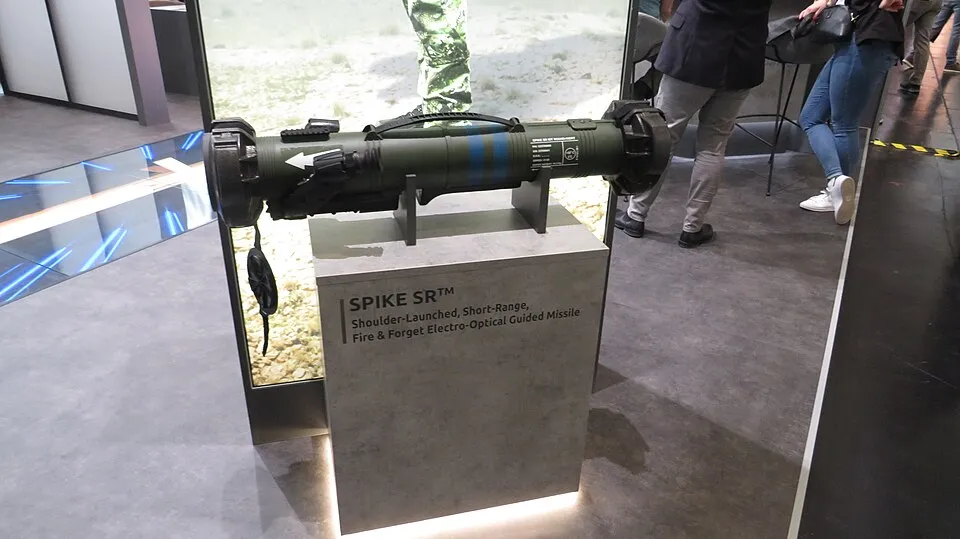
The Spike missile is a family of multirole anti-armour guided missiles developed by Israel’s Rafael Advanced Defense Systems. The maximum range of family members runs from 2 to 50 km, from the man-portable Spike SR to the Spike NLOS, which strikes targets beyond line of sight. EuroSpike says the missile is in service in more than 40 countries, including 22 European countries.
What is the Spike missile?
Spike belongs to the class of anti-tank guided missiles (ATGM), but it was designed to go beyond the task of defeating armour alone. EuroSpike says the family can hit armoured vehicles such as tanks and combat vehicles, as well as infantry and unprotected targets.
The company adds that the missile can penetrate fortified positions such as concrete fortifications and engage low-flying aircraft such as helicopters and unmanned aircraft. Some variants can also engage naval targets, including fast boats.
To understand where Spike sits among the generations of these weapons, see our explainer on the anti-tank missile, its generations and guidance methods.
Who makes the Spike missile?
The family is developed by Rafael Advanced Defense Systems, which we cover in our profile Rafael: country, products and revenue. Together with the German companies Diehl Defence and Rheinmetall, Rafael set up a joint venture called EuroSpike to market and produce the missile in Europe.
EuroSpike is headquartered in Roth, near Nuremberg in Germany. The company states that the missile’s deployment across NATO-compatible forces eases joint operations through shared logistics frameworks and operating procedures.
In Australia, the joint venture Varley Rafael Australia handles the supply of missiles, after the Australian Defence Force selected the Spike LR2 for the Boxer Combat Reconnaissance Vehicle in August 2018, according to Army Technology.
The Spike family: variants and ranges
EuroSpike publishes the maximum ranges of the family’s variants as shown in the following table:
| Variant | Maximum range | Main use |
|---|---|---|
| Spike SR | 2 km | Short-range individual infantry weapon |
| MELLS | 4 / 5.5 km | German designation of the medium-range Spike system |
| Spike LR2 | 5.5 km | Infantry and vehicles, with longer range from helicopters |
| Spike ER2 | 10 / 16 km | Vehicles, helicopters and ships |
| Spike NLOS | 32 / 50 km | Beyond-line-of-sight strikes from land, air and naval platforms |
The company says the family was designed to operate from land, air and naval platforms, with maximum ranges of 2 to 50 km.
Spike LR2 specifications
The Spike LR2 is the latest variant of the family in the medium-range class, and Army Technology classifies it as a fifth-generation missile. The following table brings together its main published specifications:
| Manufacturer | Rafael Advanced Defense Systems |
|---|---|
| Type | Multirole anti-armour guided missile |
| Length | 1.2 m |
| Diameter | 130 mm |
| Missile weight | About 13 kg |
| Ground launcher weight | 12 kg |
| Range from the ground | 5.5 km |
| Range from a helicopter | Up to 10 km |
| Seeker | Electro-optical, with an uncooled infrared sensor and a high-resolution colour daylight sensor |
| Data link | Fibre optic or radio frequency (RF) |
| Warhead | Tandem high-explosive anti-armour, or multipurpose blast |
| Attack angle | Up to 70 degrees to counter active protection systems |
Army Technology says the tandem warhead increases armour penetration by 30% compared with the previous version. The blast warhead carries a delay-action fuze so that it detonates inside the target, which increases the effect on fortified structures, vehicles and ships.
How does the Spike missile work?
The missile acquires its target through electro-optical and infrared sensors, which allows precise tracking by night and day, according to EuroSpike. It operates in two main modes:
- Fire and Forget: the missile tracks the target on its own after launch, so the operator can move to another position or load a new missile.
- Fire and Update: the operator guides the missile through a live video feed during flight and can change the target or correct the point of impact.
The second mode allows engagement of targets beyond direct line of sight (BLOS), as the missile flies a high trajectory and then dives onto the target from above. This approach targets the top of the tank, which is usually its most lightly armoured point.
Army Technology states that the LR2 seeker relies on artificial intelligence to track targets intelligently and maintain lock in difficult conditions. The missile contains an inertial measurement unit that supports target designation from third parties, and the mission can be aborted in mid-flight.
Spike ER2 and NLOS: long range
The two longest-range variants in the family are intended for platforms larger than infantry. For the ER2, EuroSpike publishes a maximum range of 10 km or 16 km depending on the platform, and for the NLOS a range of 32 km or 50 km.
The company says the Spike NLOS provides precise long-range strike capability against targets beyond line of sight, such as command posts and artillery positions. This places the variant in an intermediate area between anti-armour missiles and precision tactical missiles.
These ranges give attack helicopters and small ships the ability to engage from relatively safe distances, beyond the reach of many short-range air defence systems.
Spike and active protection systems
Modern tanks field active protection systems that detect and intercept incoming missiles. To counter this, Army Technology states that the Spike LR2 has a counter-active protection system capability (CAPS), which allows it to hit targets at angles of up to 70 degrees.
This relies on the missile’s high trajectory, which allows a steep attack angle against targets both within and beyond line of sight. A missile becomes harder to intercept when it attacks the target from above rather than horizontally.
Strengths and limitations
The following table presents an editorial reading of the family’s main advantages and limitations, based on the published specifications:
| Strengths | Limitations |
|---|---|
| A range of 2 to 50 km within a single family | High acquisition cost compared with older missiles |
| Fire-and-forget and fire-and-update modes | The update mode relies on a data link that may be affected by electronic warfare in RF variants |
| Launch from land, air and sea | The medium-range variant weighs about 25 kg with its launcher |
| Common components reduce training and maintenance costs | The absence of official published prices makes comparison harder |
Spike launch platforms
The family is distinguished by the variety of platforms it can be launched from:
- Infantry: a tripod launcher with a command and launch unit.
- Vehicles: light tactical vehicles, armoured personnel carriers and combat vehicles, through turrets and weapon stations.
- Aircraft: attack helicopters and some fixed-wing aircraft.
- Ships: naval weapon stations on boats and small ships.
Army Technology says the commonality among the family’s missiles reduces production, acquisition, maintenance and training costs. The system includes indoor and outdoor training devices for gunners.
Training on the Spike missile
The manufacturer provides dedicated gunner training systems, including an indoor training device (IDT) and an outdoor field training device (ODT), according to Army Technology. These devices allow crews to train on engagement scenarios without expending costly live missiles.
Training is particularly important in the fire-and-update mode, which requires the operator to read the video image transmitted from the missile and make quick decisions within seconds. Immediately after firing a missile, the operator can load another missile into the launcher in preparation for the next engagement.
Countries operating the Spike missile
EuroSpike says the missile is in service in more than 40 countries around the world, including 22 European countries. Army Technology had reported in March 2020 that more than 33,000 Spike missiles were in service with 33 countries.
Examples of documented deals include:
- Slovakia: ordered LR2 missiles and advanced launch units through the NATO Support and Procurement Agency in March 2020.
- Australia: selected the LR2 for the Boxer vehicle in August 2018.
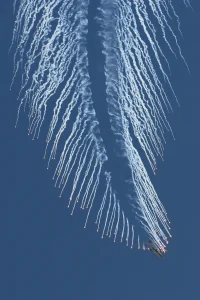
- Poland: the Polish 6th Airborne Brigade uses the missile, as the image of this article shows.
- Germany: uses the missile under the name MELLS. Army Recognition reported in October 2025 that Germany concluded a framework contract through the NATO Support and Procurement Agency with EuroSpike for LR2 missiles worth about 2 billion euros, covering missiles, launchers, training and support. We have not seen a German government announcement confirming the figure.
How much does the Spike missile cost?
Neither Rafael nor EuroSpike publishes an official price list for the missile. The cost of deals varies according to the variant, the number of missiles, launchers, training devices, logistic support packages and technology transfer.
The reported German contract worth about 2 billion euros illustrates this difficulty, as it covers launchers, training, documentation and lifecycle support, not the missiles alone. For this reason it is hard to speak precisely of a “price per missile”. The total contract value usually includes many elements besides the missile itself, such as command and launch units, simulators and spare parts.
Spike compared with missiles used by Arab armies
Arab armies mostly rely on American and Russian anti-armour missiles, such as TOW, Javelin and Kornet. The Spike LR2 differs from them by combining the fire-and-forget and fire-and-update modes in a single missile, and by the possibility of engaging beyond line of sight.
The options available to Arab armies can be compared in our analysis TOW, Javelin or Kornet-EM, and in our profile of the UMTAS missile.
Spike missile FAQ
What is the range of the Spike missile?
The maximum range runs from 2 km for the SR variant to 50 km for the NLOS variant, and is 5.5 km for the LR2 from the ground.
Who makes the Spike missile?
Israel’s Rafael, and it is marketed in Europe by EuroSpike, the joint venture with Diehl and Rheinmetall.
How many countries use the Spike missile?
More than 40 countries, including 22 European countries, according to EuroSpike.
What is the difference between Spike and Javelin?
The Javelin operates in fire-and-forget mode, while Spike adds the fire-and-update mode, which allows the operator to guide the missile and change its target in flight.
How much does the Spike LR2 weigh?
The missile weighs about 13 kg and the ground launcher 12 kg, according to Army Technology.
Can the Spike missile hit helicopters and drones?
EuroSpike says the family is capable of engaging low-flying aircraft such as helicopters and unmanned aircraft, alongside armour, fortifications and boats.
Main image: a Spike missile launched by the Polish 6th Airborne Brigade, 29 March 2023. Source: Jarosław Wolski via Wikimedia Commons (CC BY-SA 4.0 licence).
Sources
- EuroSpike, “Our Systems: the Spike missile family” — eurospike.com
- Army Technology, “Spike LR2 Anti-Tank Guided Missile” (9 March 2020) — army-technology.com
- Army Recognition, “Germany Orders €2B Spike LR2 Anti-Tank Missiles from EuroSpike to Rebuild Stockpiles” (October 2025) — armyrecognition.com
- Rafael Advanced Defense Systems, official website — rafael.co.il