TOW 2B anti-armour missiles for Oman
 Oman ←
 United States
Deal progress
Current status: Sale approved — latest milestone in 2023. Not every deal goes through every stage; a government sale approval, for example, applies only in some supplier countries.
Deal details
Oman is acquiring TOW 2B anti-armour missiles from the United States, with Raytheon named as the manufacturer. It is classed under munitions and missiles. The announced quantity is 301 missiles, and the value is put at $70 million (DSCA estimate).
The supplier government approved the sale in 2023. Approval is not a signed contract, and the quantity and value may change once one is concluded.
Details: Approved in October 2023.
What is the TOW 2B anti-tank missile?
The TOW 2B belongs to the American TOW family of anti-armour missiles, whose name stands for tube-launched, optically tracked, wire-guided. The family dates back to the 1960s and was built first by Hughes, then Raytheon, and today by RTX. It has become one of the most widely used anti-tank guided missiles in the world, in service with the armies of more than 40 countries. Missiles in the family carry designations beginning BGM-71, and the 2B corresponds to the BGM-71F.
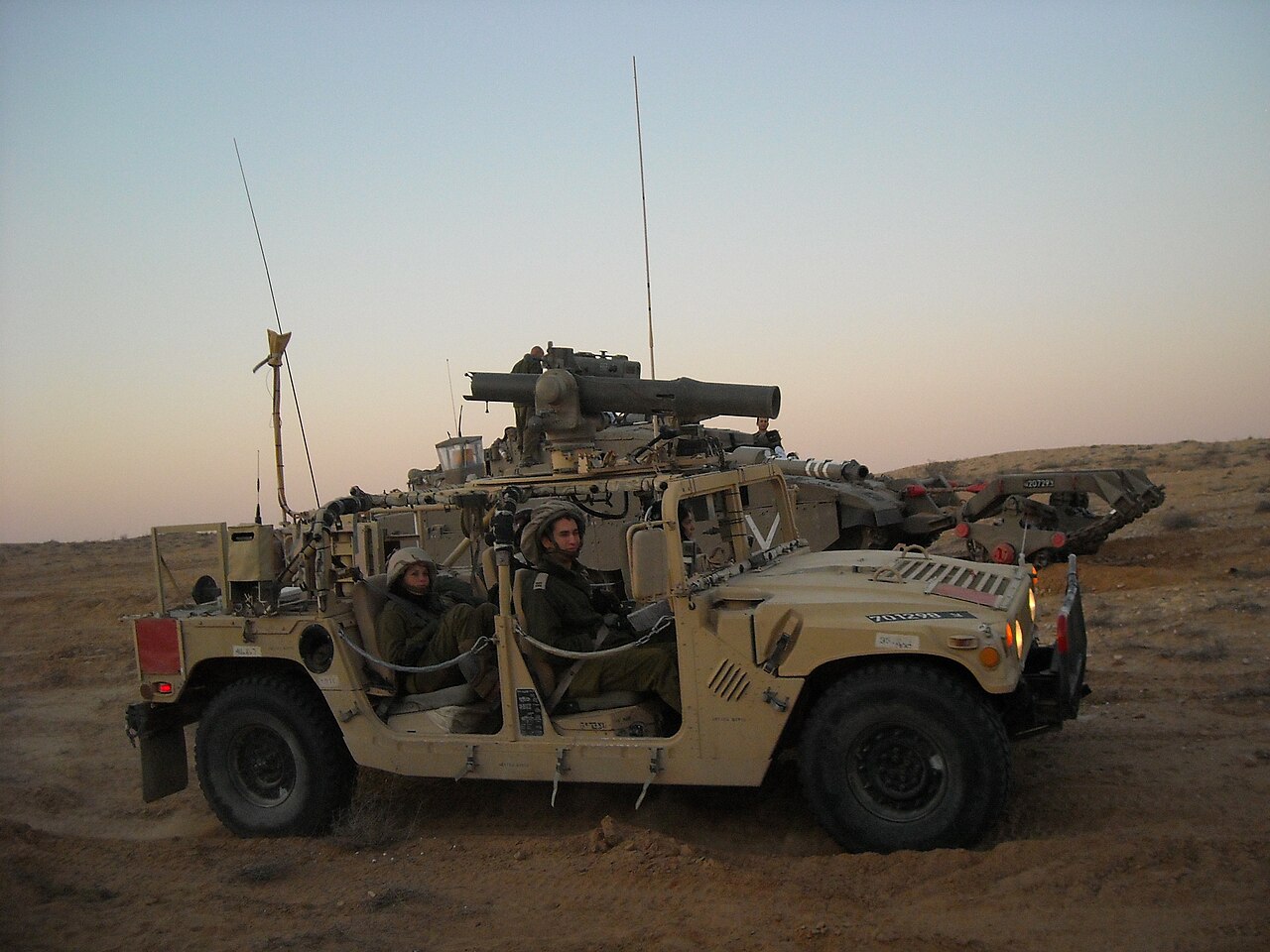
The 2B entered production in 1991 to deal with tanks fitted with reactive armour and thick frontal protection, followed by the longer-range TOW 2B Aero, whose production contract was awarded in February 2004. More than 40,000 2B missiles have been delivered. They are fired from ground tripods, from vehicles such as the Bradley, Humvee and LAV, and from Cobra helicopters.
How it works and what sets it apart
The missile uses semi-automatic command to line of sight guidance: the gunner keeps the crosshairs on the target, while the launcher measures the missile’s deviation and sends correction commands through two wires that pay out behind it in flight. The key difference on the 2B is its fly-over, top-attack profile. Instead of hitting the front of the tank, the missile passes just above it, and when its sensors detect the target below they fire two downward-pointing warheads, each launching an explosively formed tantalum penetrator through the roof, the most thinly armoured part of a tank. One warhead is slightly offset from the other to improve the chance of a hit. The Aero version stretched range from 3,750 m to 4,500 m with a slight increase in flight time, and a later variant receives its guidance commands by radio instead of wire.
Key specifications
| Role | Anti-armour guided missile |
|---|---|
| Manufacturer | RTX Raytheon (United States) |
| Production start | 1991 (TOW 2B) |
| Guidance | Wire-guided semi-automatic command to line of sight |
| Attack mode | Fly-over, top attack |
| Warhead | Two warheads with explosively formed tantalum penetrators |
| Range | 3,750 m (2B), 4,500 m (2B Aero) |
| Launch weight | 22.9 kg |
Related news
 Southern Forces withdraw from Dhubab and the Bab al-Mandab area towards Aden as the Houthis claim control
 Coalition destroys 60 Houthi targets in four Yemeni governorates and intercepts two cruise missiles heading for Riyadh
 How does laser guidance work? Laser-guided bombs and missiles
 Egyptian Sa’ka (Thunderbolt) Forces: history since 1955, Unit 777, missions and development