Offre Maroc: Royal Roadmap to Localise 40% of Defence Industry by 2035
On Wednesday 18 November 2026, the Moroccan Royal Cabinet unveiled a new roadmap for developing a national defence industry in Morocco, under the name “Offre Maroc”, aiming to cover 40% of the equipment needs of the Royal Armed Forces and security services locally by 2035. The announcement came during a working session held by King Mohammed VI at the Royal Palace in Rabat, accompanied by an allocation of 4 billion dirhams (about 400 million dollars) from the Hassan II Fund for Economic and Social Development to finance the first steps of the project.
What happened?
According to the Royal Cabinet statement, covered by several Moroccan agencies and websites including Hespress, Asharq and LeDesk, the Moroccan monarch held a working session devoted to reviewing what was described as a “structural royal initiative” to build a national defence industrial base. According to some reports, Crown Prince Moulay Hassan attended the session. The Cabinet statement contained no direct quotations attributed to the King; it came in the form of royal directives drafted by the Cabinet in press style.
The announcement comes in the context of a growing Moroccan drive to reduce dependence on military imports, after Morocco licensed ten defence projects in 2025 with investments of about 260 million dollars, which helped create about 2,500 jobs, according to Majalla magazine.
Plan targets by 2035
The roadmap set four main targets by 2035:
- Local coverage of about 40% of the equipment and systems needs of the Royal Armed Forces and security services.
- Achieving more than 65% of the defence sector’s revenue through exports.
- Creating about 50,000 direct and indirect jobs.
- Building an integrated industrial base covering the stages of design, manufacturing, testing, maintenance and storage, paving the way for Morocco to position itself as a regional platform for defence production and export.
Institutional structures and industrial zones
The plan provides for the creation of a specialised agency to lead the national strategy and support investors, alongside an industrial holding company tasked with structuring production systems and mobilising public and private financing. The plan also includes a specialised academy to train technical talent and support scientific research and innovation in the defence field, in parallel with a programme for early guidance of young talent and expansion of vocational training in this sector.
In terms of industrial real estate, the plan will create two new defence industrial zones in Ben Guerir and Benslimane, in addition to the two defence industrial acceleration zones launched previously. The King was briefed on developments in these zones and on the interest of foreign investors in locating there, particularly for export purposes.
King Mohammed VI directed that implementation of the plan be accelerated, starting with the governance mechanisms and the financing plan, simplifying investment procedures, and mobilising the national private sector and Moroccan talent at home and abroad, alongside strengthening strategic partnerships and integrating the emerging industry into global value chains.
Priority sectors
The roadmap identified six priority sectors, based overall on Morocco’s accumulated industrial expertise in the automotive, aerospace and electronics industries:
- Drones and autonomous systems.
- Land platforms.
- Naval platforms.
- Defence electronics.
- Cybersecurity.
- Artificial intelligence.
The plan gives priority to industrial integration and dual-use (military-civilian) applications, allowing investors to market their products in both the civilian and defence markets.
Benslimane: a zone already hosting foreign defence partners
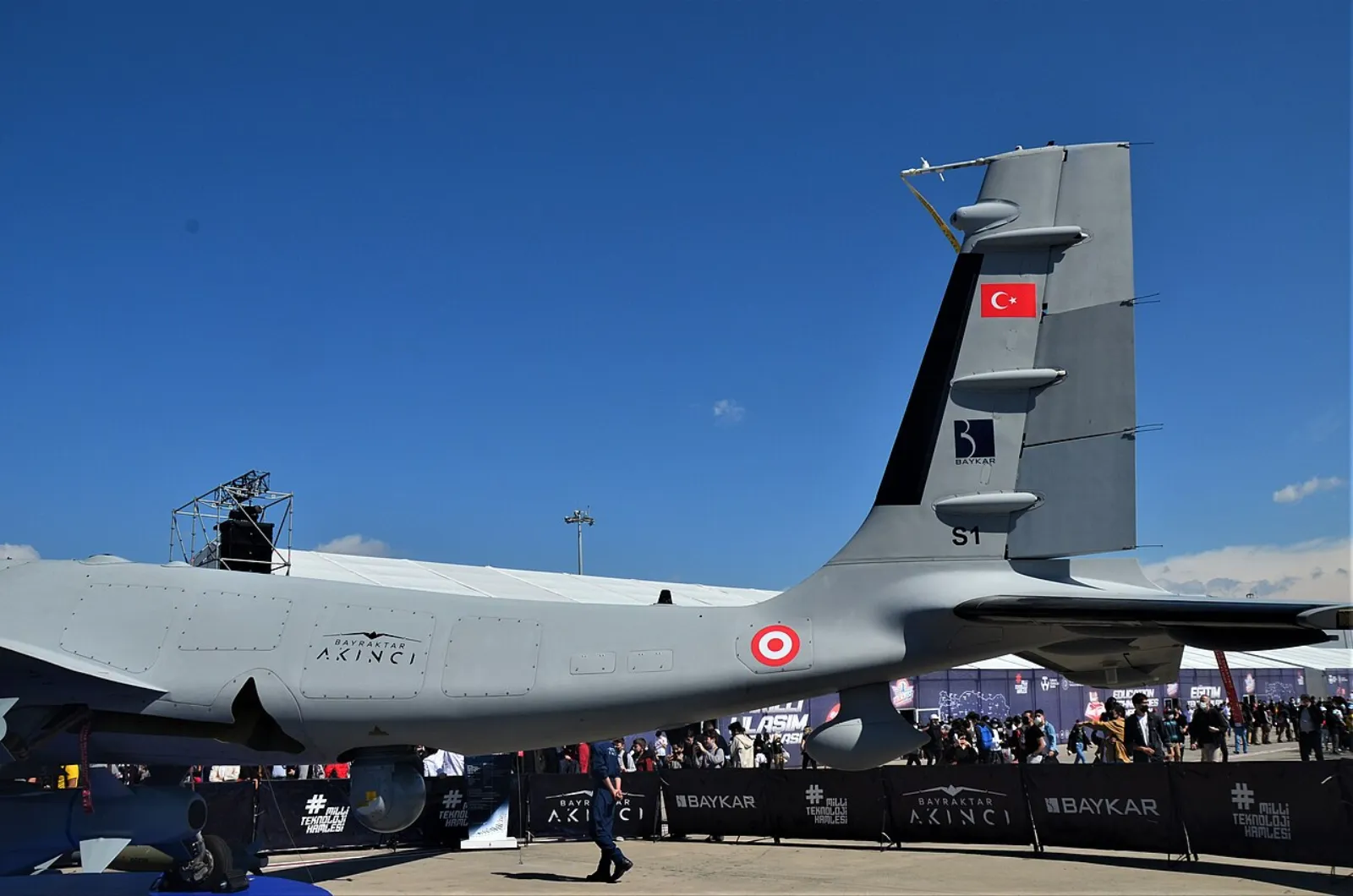
Notably, the Benslimane zone, which the new roadmap nominated as one of the hubs of Morocco’s defence industry, has since late 2024 hosted a Moroccan subsidiary of the Turkish drone company Baykar under the name “Atlas Defense”. According to reports by Hespress French, North Africa Post and Morocco World News, the company was entered in the Moroccan commercial register on 5 December 2024. It is owned in equal shares by the brothers Haluk Bayraktar and Selcuk Bayraktar, with capital of 2.5 million dirhams, and its declared mission is the design, manufacture and maintenance of drones, spare parts and related technical systems.
According to Middle East Eye and Army Recognition, the company’s limited capital suggests that its current activity centres on maintenance and after-sales support, and full production of complete platforms in Morocco has not yet been confirmed. This positioning follows Morocco’s earlier contract with Baykar for the supply of 13 Bayraktar TB2 aircraft worth about 70 million dollars, the first batch of which arrived in September 2021.
In the same Benslimane zone, Morocco has also begun local production of SpyX loitering munitions, a system originally developed by the Israeli company BlueBird, in which Israel Aerospace Industries (IAI) holds a 50% stake, under an industrial localisation agreement that predates the new roadmap.
Regional context: why this development matters to the Arab world
The “Offre Maroc” plan comes at a time when several Arab states are moving to adopt similar strategies to localise defence industry and reduce import dependence, most notably Saudi Vision 2030, which aims to localise a large share of military spending through the General Authority for Military Industries (GAMI) and Saudi Arabian Military Industries (SAMI), the UAE’s experience with EDGE Group, and the historical role of the Arab Organization for Industrialization in Egypt.
For North Africa specifically, the Moroccan project places Rabat in a new competitive position vis-a-vis Algeria, which so far relies more heavily on direct imports of Russian and Chinese equipment, compared with the industrial localisation path Morocco is following in cooperation with Turkish, Israeli, European and American partners. The target of exporting more than 65% of revenue also gives Morocco an opportunity to position itself as a potential exporter of defence equipment to other African and Arab markets, at a time when several Arab states are seeking more diversified sources of arms away from exclusive dependence on a single supplier.
The plan also stands out as a further example of the widening presence of Turkish defence industries, represented by Baykar, in Arab and African markets, as the Turkish company has become present through supply contracts or localisation agreements in a number of Arab and African countries in recent years.
Earlier Moroccan steps in defence manufacturing
The new roadmap does not start from scratch. It was preceded by several industrial localisation steps in Morocco, including local production of “WhAP” armoured vehicles in cooperation with India’s Tata in the Berrechid area, alongside maintenance agreements for F-16 aircraft and C-130 transport aircraft with the American company Lockheed Martin. According to Majalla, these projects form part of a broader Moroccan plan aimed at achieving a degree of self-sufficiency in certain strategic defence industries, foremost among them the air sovereignty sector.
FAQ
What is “Offre Maroc”?
It is the name adopted by the Moroccan Royal Cabinet for the national roadmap for developing the defence industry, announced by King Mohammed VI on 18 November 2026.
How much is the announced investment?
The Hassan II Fund for Economic and Social Development allocated 4 billion dirhams (about 400 million dollars) as an initial tranche to finance the plan, without a final total cost of the project being announced.
Is the plan directly linked to the Turkish company Baykar?
The Royal Cabinet statement does not link the plan to any particular company, but Baykar’s Turkish subsidiary “Atlas Defense” is already present in the Benslimane zone, which is one of the new defence industrial zones the plan identified for the drone sector.
When are tangible results of the plan expected?
The King set 2035 as the horizon for achieving the main targets (localisation, exports and employment), with the first institutional steps, such as creating the specialised agency and the financing plan, to begin in the near term according to the royal directives.
Which sectors will receive investment priority?
Drones and autonomous systems, land and naval platforms, defence electronics, cybersecurity and artificial intelligence, with a particular focus on dual-use applications.
Sources
- Hespress FR – details of the royal session and the official targets of the roadmap.
- Asharq – Arabic translation of the details of the royal announcement and the industrial zones.
- North Africa Post – details of the registration of Baykar’s “Atlas Defense” company in Benslimane.
- Middle East Eye – an assessment of the actual scale of Baykar’s investment in Morocco.
- Majalla – background on Morocco’s transformation into a regional drone manufacturing hub and details of SpyX production.