KuMRFS counter-drone radars for Jordan
 Jordan ←
 United States
Deal progress
Current status: Sale approved — latest milestone in 2026. Not every deal goes through every stage; a government sale approval, for example, applies only in some supplier countries.
Deal details
The deal covers KuMRFS counter-drone radars for Jordan, supplied by the United States; Raytheon is listed as the manufacturer. It is classed under air defence. The quantity has not been specified, and the value is put at $280 million (official estimate).
The supplier government approved the sale in 2026. Approval is not a signed contract, and the quantity and value may change once one is concluded.
Details: Congress notified in February 2026.
What is the KuRFS radar?
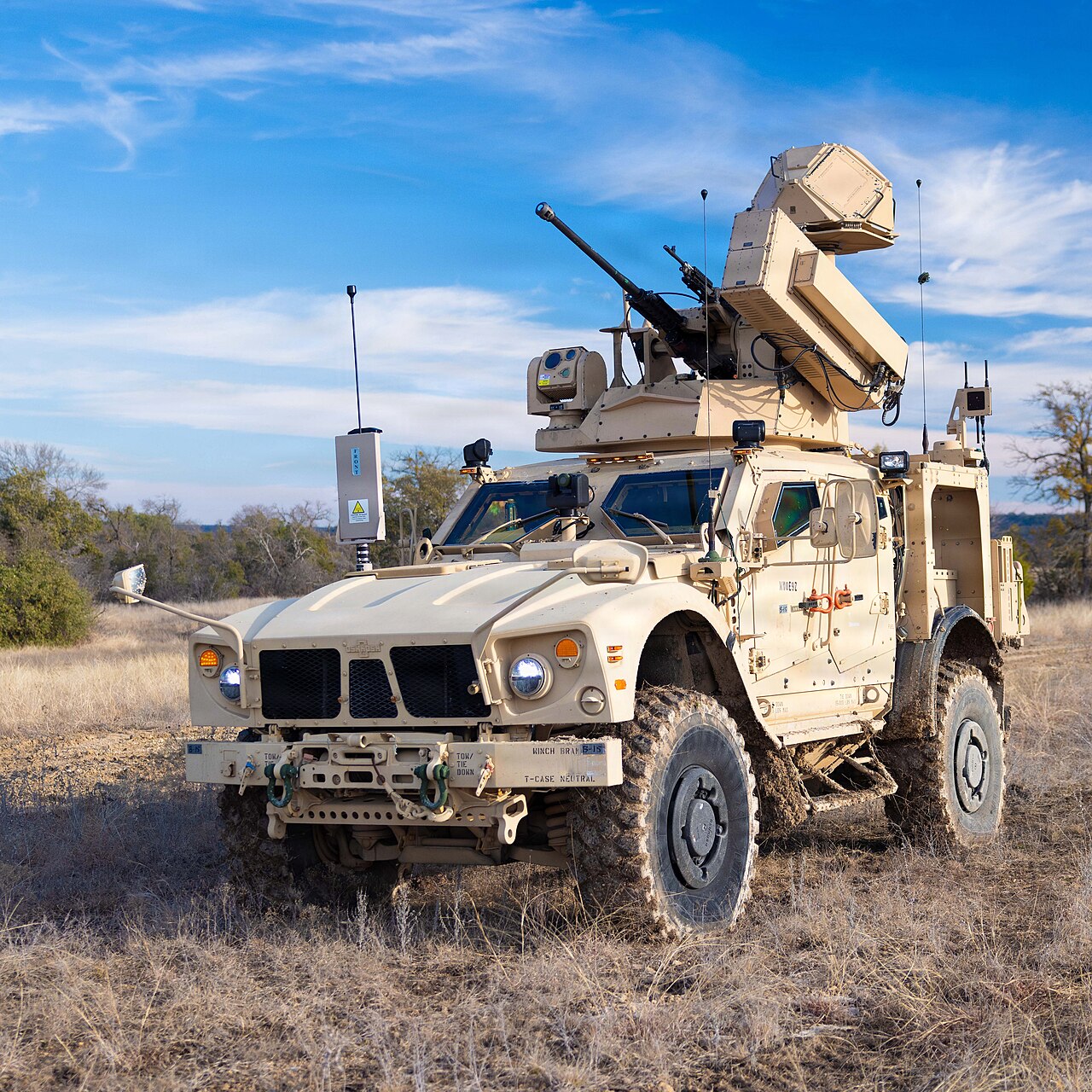
KuRFS is a Ku-band active electronically scanned array radar built by Raytheon, part of US group RTX. It was originally developed to protect US Army troops in Iraq and Afghanistan from rockets, artillery and mortars: it detects a projectile as soon as it is fired and either cues interceptors or warns the troops. The notification of the sale to Jordan lists it as KuMRFS.
As drones spread, the radar became the main detection element in LIDS, the system the US Army uses against small, slow and low-flying drones. In 2022 trials at Yuma Proving Ground it detected and tracked more than 100 drones from Groups 1 to 3. Since then the Army has issued a stream of contracts to equip combat divisions and deploy fixed and mobile versions for US Central Command in the Middle East.
How it works and what sets it apart
The Ku band gives the radar finer resolution than lower bands. Raytheon says it can detect an object the size of a 9 mm bullet and tell birds apart from man-made targets, a long-standing problem for counter-drone radars. It covers 360 degrees and can be set up in 30 minutes at a fixed site or on a vehicle.
The radar has no weapon of its own. It passes track data to the FAAD C2 command and control network, which in turn hands it to the interceptors. It is closely paired with Raytheon’s Coyote interceptor drone, and also works with land-based Phalanx, heavy machine guns, 30 mm cannon and high-energy laser weapons. In October 2022 Raytheon received a contract to equip two US Army divisions with the radar, followed in early 2023 by a $237 million contract for fixed and mobile versions for Central Command; the mobile version is designated Ku720.
Key specifications
| Role | Detecting drones, rockets, artillery and mortars |
|---|---|
| Manufacturer | Raytheon (RTX, United States) |
| Frequency band | Ku |
| Antenna type | Active electronically scanned array (AESA) |
| Coverage | 360 degrees |
| Configuration | Transportable fixed site or vehicle-mounted |
| Set-up time | About 30 minutes |
| Linked interceptors | Coyote, land-based Phalanx, 30 mm cannon, lasers |