Iran says oil tankers ablaze after hitting naval mines in Strait of Hormuz; JMIC: mine claims unconfirmed
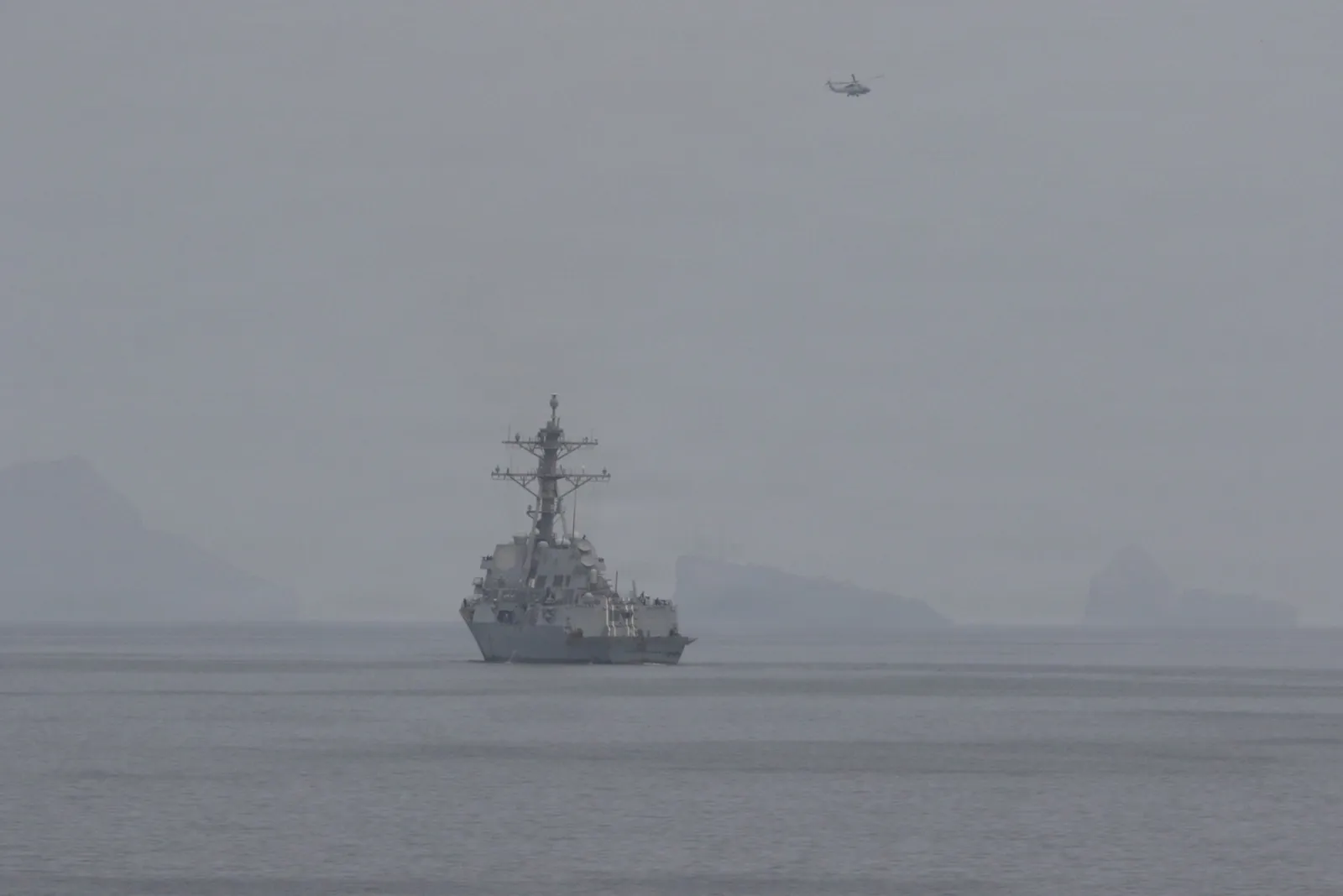
The naval forces of Iran’s Islamic Revolutionary Guard Corps (IRGC) said on the evening of Monday, November 23, 2026, that three oil tankers suffered powerful explosions and fires after striking naval mines in the Strait of Hormuz, one day after the Iranian Army’s Navy announced that two oil tankers had caught fire after hitting mines in a “restricted area” east of the strait. None of the tankers’ names, flags or the extent of casualties have been disclosed, while the Joint Maritime Information Center (JMIC) says Iranian claims of mine strikes on tankers “have not been confirmed by any official or national authorities.”
What the IRGC said
According to the statement carried by Iran’s IRNA and Tasnim news agencies, one of the three tankers was hit near the southern coast of the strait, while the other two were hit in its eastern part. The statement claimed the three tankers were sailing “under extensive aerial cover and escort by the US military” and that this escort “failed to prevent the incidents.”
The IRGC warned shipowners, captains and shipping companies that “US military protection and escort cannot replace compliance with maritime regulations and the instructions of the IRGC Navy’s maritime traffic control center,” adding that any passage through “unauthorized” routes would be treated as a violation and “cooperation with invading forces.” According to Anadolu Agency, it also said it would release footage of the explosions and fires; no such footage had been published at the time of writing.
Iranian Army statement: two tankers east of the strait
On Sunday, November 22, the public relations office of the Iranian Army’s Navy said two oil tankers caught fire in the morning after striking naval mines in the restricted area east of the Strait of Hormuz. Mehr News Agency reported that the statement described them as “supertankers” that exploded and were immobilized.
The statement said the two tankers entered the area “despite previous warnings” after switching off their identification and navigation systems, and held shipowners, operators and navigators “directly responsible” for any consequences or damage. Al Arabiya, citing a later IRGC Navy statement carried by Sepah News, reported that the two tankers came to a halt north of Oman’s Ghanam Island and east of the strait.
What independent sources confirm
As of publication, no independent body has confirmed that the incidents announced by Tehran were caused by naval mines, and the tankers’ names, nationalities or any crew injuries have not been announced. The figures and details above remain attributed to Iranian military statements.
Separately, JMIC’s Update 116, issued on November 22, said three outbound tankers in the Strait of Hormuz were struck by “unknown projectiles” 8 to 17 nautical miles from Khasab, Oman, within about 15 hours on November 20–21, with fires on board two of them. They included a tanker identified by navigation authorities as TORKEL and another named ARINA, which was hit in the engine room; no crew casualties were reported. JMIC said seven tankers have been struck in the strait since November 16 and stressed that “Iranian claims of mine strikes on tankers have not been confirmed by any official or national authorities.” It is not known whether these are the same incidents described in the Iranian statements.
The UK Maritime Trade Operations (UKMTO) also reported, on November 22, “an incident involving a tanker and military forces” in the Gulf of Oman near Chabahar, without naming the vessel or the party involved.
Escalation context in Hormuz
The announcements are part of an escalating series of maritime incidents; Iran has announced several similar incidents in November involving tankers it said struck mines in or east of the strait. Tehran announced it had closed the Strait of Hormuz again on July 12 after US strikes resumed on July 8, and has threatened to target ships using routes other than those it designates, saying only the northern lane is approved for safe passage.
The United States, for its part, continues to enforce a naval blockade of Iranian ports, and CNBC reported that Washington deployed the aircraft carrier USS Theodore Roosevelt last week as the third carrier in the region. According to JMIC, AIS-visible commercial transits remained very low compared with 2025 levels, with about 38 US-assisted transits per day recorded on November 19–21.
The strait is critical to Gulf economies and global markets: according to the US Energy Information Administration (EIA), oil flows through it averaged about 20 million barrels per day in 2024, equivalent to about 20% of global petroleum liquids consumption.
What it means for Arab states
A large share of Gulf oil and gas exports depends on transit through Hormuz, so any threat to navigation there puts direct pressure on energy revenues and marine insurance costs. The location of incidents near Khasab and Ghanam Island also places Omani waters at the heart of the confrontation, as maritime security bodies warn that the threat level in the strait remains “severe.”
Editor’s note: details of the mines, the number of tankers and their locations are based on Iranian military statements that could not be independently verified. This report will be updated as further information emerges from maritime or official authorities.
Sources
- JMIC / UKMTO – Update 116, Nov 22, 2026: tankers struck by unknown projectiles near Khasab; mine claims unconfirmed.
- UKMTO – Advisory 217-26: tanker and military forces incident in the Gulf of Oman.
- U.S. Energy Information Administration (EIA) – Oil flows through the Strait of Hormuz in 2024.
- Tasnim News Agency – IRGC Navy statement on the three tankers.
- Mehr News Agency – Iranian Army Navy statement on the two tankers east of the strait.
- CNBC – IRGC statement via IRNA and US naval deployment.
- Al Arabiya – Location of the two tankers north of Ghanam Island, per Sepah News.
- Anadolu Agency – IRGC pledge to release footage and strait closure context.