AIM-120C AMRAAM missiles for the UAE
 UAE ←
 United States
Deal progress
Current status: Sale approved — latest milestone in 2026. Not every deal goes through every stage; a government sale approval, for example, applies only in some supplier countries.
Deal details
The UAE is acquiring AIM-120C AMRAAM missiles from the United States, with Raytheon named as the manufacturer. It is classed under munitions and missiles. The announced quantity is 400 missiles, and the value is put at $1.22 billion.
The supplier government approved the sale in 2026. Approval is not a signed contract, and the quantity and value may change once one is concluded.
Details: Part of the March 2026 package.
What is the AIM-120 AMRAAM?
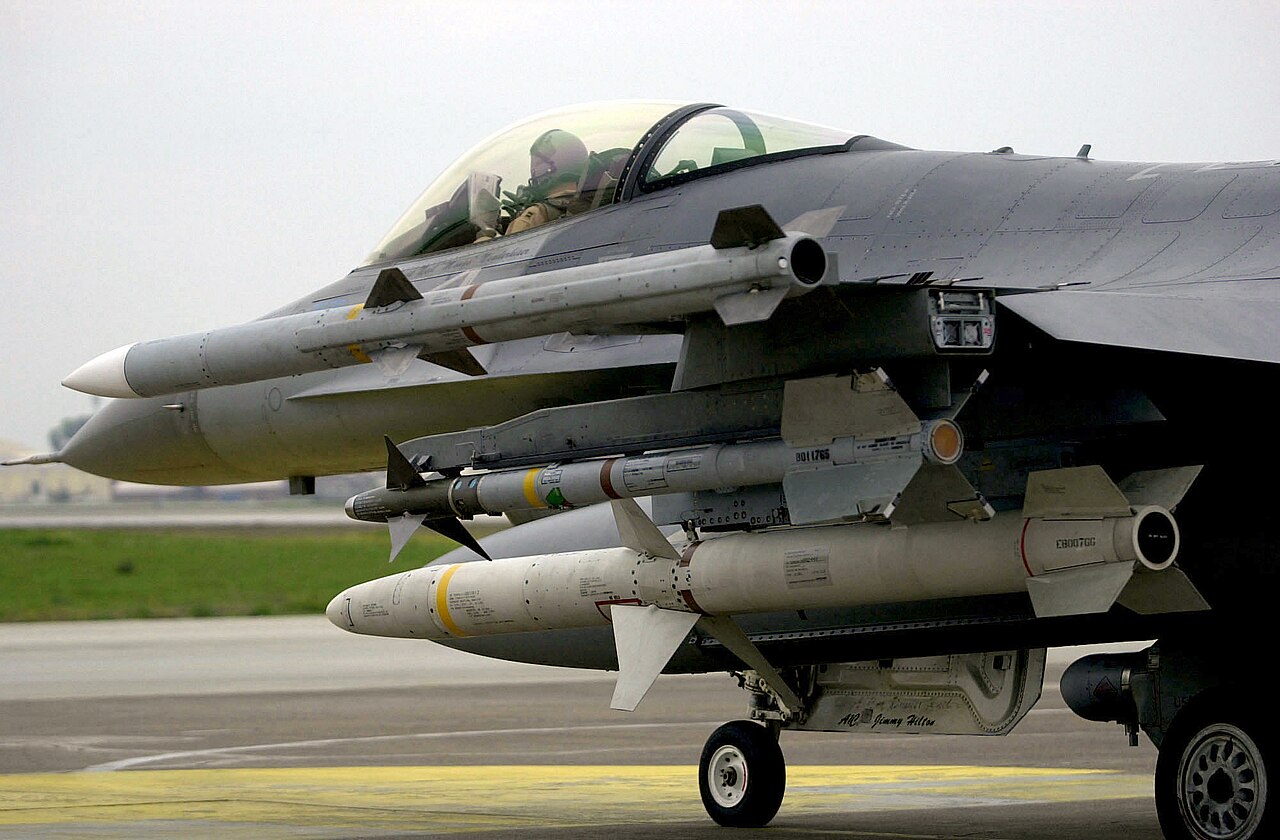
AMRAAM is a medium-range air-to-air missile built by Raytheon that entered service in September 1991 as the successor to the AIM-7 Sparrow. It has since become the main beyond-visual-range weapon on Western fighters, from the F-15, F-16 and F/A-18 to the F-22 and F-35, and it is also fired from the ground in the NASAMS air defence system. From the start the aim was to give pilots a lighter, quicker-reacting weapon than the Sparrow that would let them take on more than one opponent at a time.
The missile has an active radar in its nose working with an inertial navigation unit and an onboard computer. After launch it flies towards the target’s predicted position using updates sent by the launch aircraft, then switches on its own radar for the final phase and homes on the target by itself. This lets the pilot fire several missiles at different targets and turn away, without having to keep the aircraft’s radar on the target until impact.
How the versions evolved
There have been four operational versions: A, B, C and D. The AIM-120C-7 reached initial operational capability in 2008, and the US Navy declared the AIM-120D ready in January 2015; it adds GPS-aided navigation and longer range than its predecessors. Improvements have continued through software rather than airframe changes: the Electronic Protection Improvement Program entered service in September 2019, followed by the second System Improvement Program package in June 2021.
The missile is about 3.66 m long and 18 cm in diameter, weighs between 158 and 161 kg depending on the version, and carries a high-explosive fragmentation warhead. Its exact speed and range are still classified by US authorities. Dozens of air forces around the world rely on it, and Ukraine has used it from ground-based NASAMS launchers against Russian missiles and drones.
Key specifications
| Role | Beyond-visual-range air-to-air combat |
|---|---|
| Manufacturer | Raytheon (RTX) |
| Entered service | September 1991 |
| Length | 3.66 m (12 ft) |
| Diameter | 17.8 cm (7 in) |
| Weight | 158–161 kg (348–356 lb) depending on version |
| Guidance | Inertial navigation with active radar terminal homing, plus GPS on the D model |
| Warhead | High-explosive fragmentation |