Why Did Oman Choose the Eurofighter Typhoon, and Why Is It Now Talking About the Rafale?
Last updated: 25 November 2026
- To close an operational gap after the retirement of the Franco-British Jaguar fighters, alongside the existing F-16 fleet rather than instead of it.
- Muscat required the integration of the Captor-E AESA radar in the Tranche 3 batch before approval, a technical requirement it shared with Saudi Arabia.
- A British offer politically backed personally by Prime Minister David Cameron, within a long-standing British-Omani defence relationship.
- A Swedish alternative (Gripen) was on the table to replace the Jaguar before the choice was settled in favour of the Typhoon in December 2012.
- The high cost of the deal itself later became a factor in explaining why the fleet was not expanded, and it is back in the spotlight now that Muscat is open to alternative French offers.
The decision of the Sultanate of Oman to bring the Eurofighter Typhoon into service with the Royal Air Force of Oman (RAFO) was neither quick nor sudden. The file ran for roughly eight years between the first serious contacts in the first decade of the 2000s and Muscat’s rejection of the aircraft in 2004 in favour of the American F-16, followed by long negotiations over an advanced electronic radar, before the contract was settled in December 2012 at a value of about 4 billion dollars. Today, more than a decade after the Typhoon entered Omani service, Paris is back in the picture with an offer of the Rafale fighter that raises new questions about the Omani air power mix.
First: what is the exact status of the deal?
To avoid any confusion, this file separates two completely different tracks in terms of status:
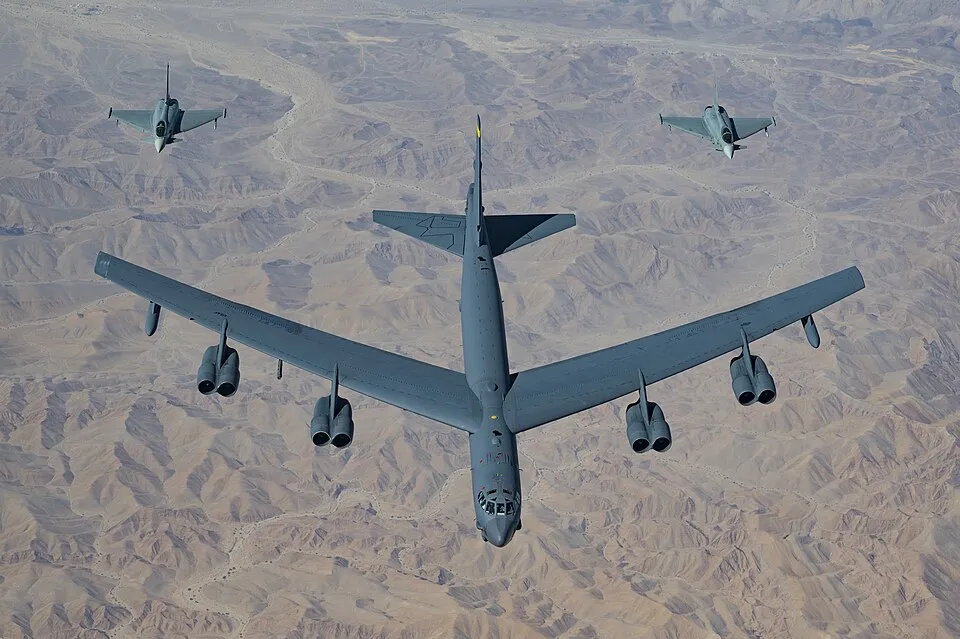
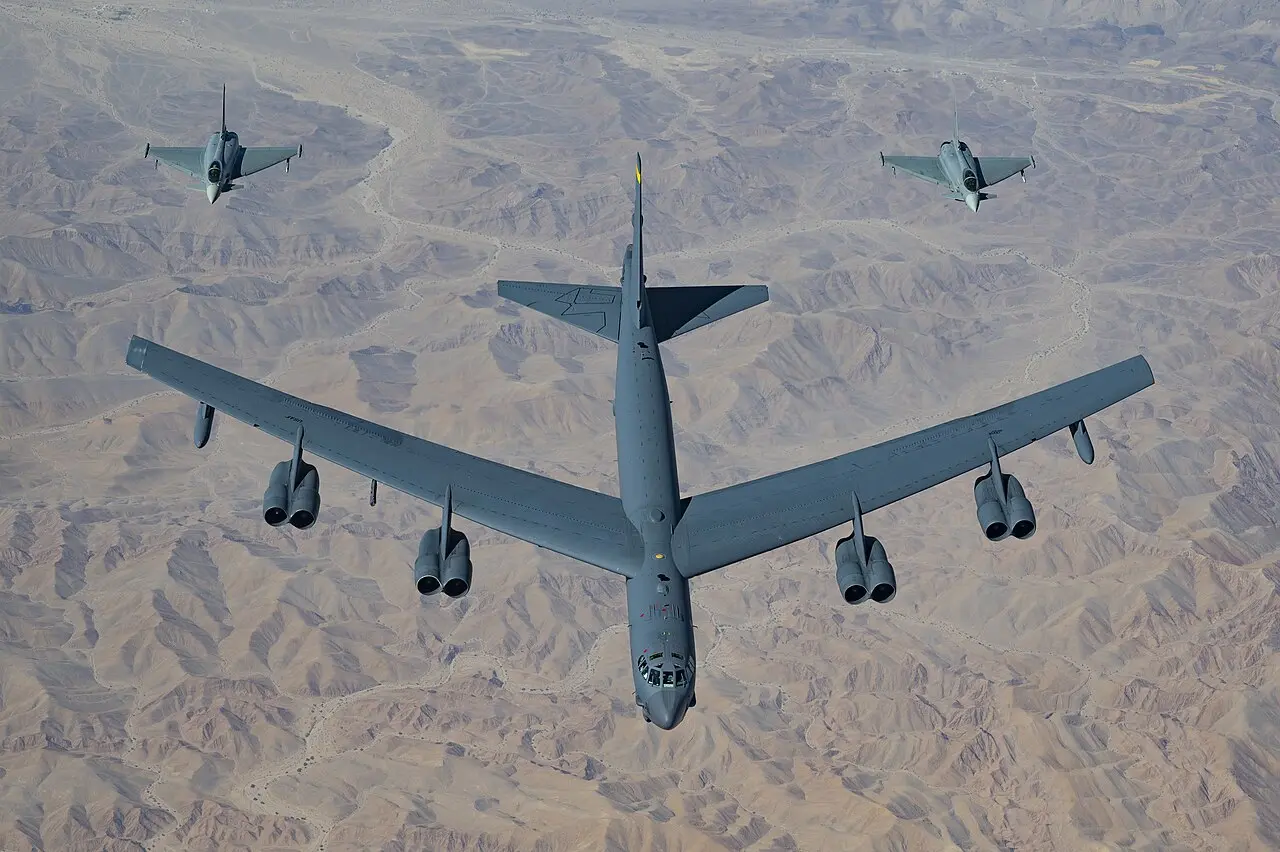
- Eurofighter Typhoon: status (A) — fully delivered. Oman signed the contract with the British company BAE Systems on 21 December 2012 to buy 12 Typhoon fighters of Tranche 3 together with 8 Hawk Mk128 advanced trainers; the first two aircraft were delivered at a ceremony at Adam Air Base on 21 June 2017, followed by four more aircraft (three single-seat fighters and one twin-seat trainer) by the end of the same year, and deliveries continued until the batch was complete. The aircraft are already operational and appeared in a joint flight with an American strategic B-52H bomber over Omani airspace in March 2022.
- Dassault Rafale fighter: status (D) — initial talks, not confirmed by a contract. The New York Times and the French site La Tribune reported in April 2024 that Muscat had opened discussions with Dassault Aviation about the possible purchase of Rafale aircraft, with varying estimates of the number of aircraft on the table (reports ranged between 12, 18 and 24 aircraft depending on the source), with no signed contract or even a final negotiated outcome announced as of the date this file was published. This track will be treated in this dossier as background and later follow-up, not as a completed deal.
What did Oman actually need?
Before the Typhoon entered service, the Royal Air Force of Oman relied on a mix of old Franco-British SEPECAT Jaguar fighters (which entered service in the 1970s) and American F-16 Fighting Falcon fighters, which Oman began operating in the late 1990s and from which it steadily continued to build up its fleet. By the first decade of the 2000s the Jaguars had exceeded their reasonable operational life by decades, and Muscat had to decide how to replace them: with more F-16s, or with an entirely new type that would broaden the supply base and add capabilities not available in the existing fleet.
Oman chose the second path only partially; it continued to buy additional batches of the F-16C/D Block 50 (ordering a new batch of 12 aircraft in December 2011) in parallel with negotiating the Typhoon, which means the decision was less a replacement of one type with another than the building of a mixed fleet of two types to spread operational and political risk between suppliers.
The old fleet: what did the Typhoon replace?
The aircraft that actually left service with the arrival of the Typhoon is the SEPECAT Jaguar, whose last operational aircraft retired in August 2014, belonging to No. 8 Squadron based at Thumrait Air Base. No. 8 Squadron itself was reformed on receiving the Typhoon fighters, but its base moved to Adam Air Base instead of Thumrait. In other words, the Typhoon was not an “upgrade” of the existing F-16s but the direct successor to the retired Jaguars, while the F-16 line continued to expand separately.
The technical file: why this particular type?
Technically, the main sticking point in the negotiations was the radar. Oman, and Saudi Arabia as well, which was conducting similar negotiations, wanted confirmation that the Tranche 3 batch of the Typhoon would be fitted with the Captor-E active electronically scanned array (AESA) radar, an upgrade that was not confirmed for the older versions of the aircraft. According to aviation industry reports of the time, the official announcement of the deal stalled more than once until the four Eurofighter partner nations (Britain, Germany, Italy and Spain) gave a commitment to introduce this radar.
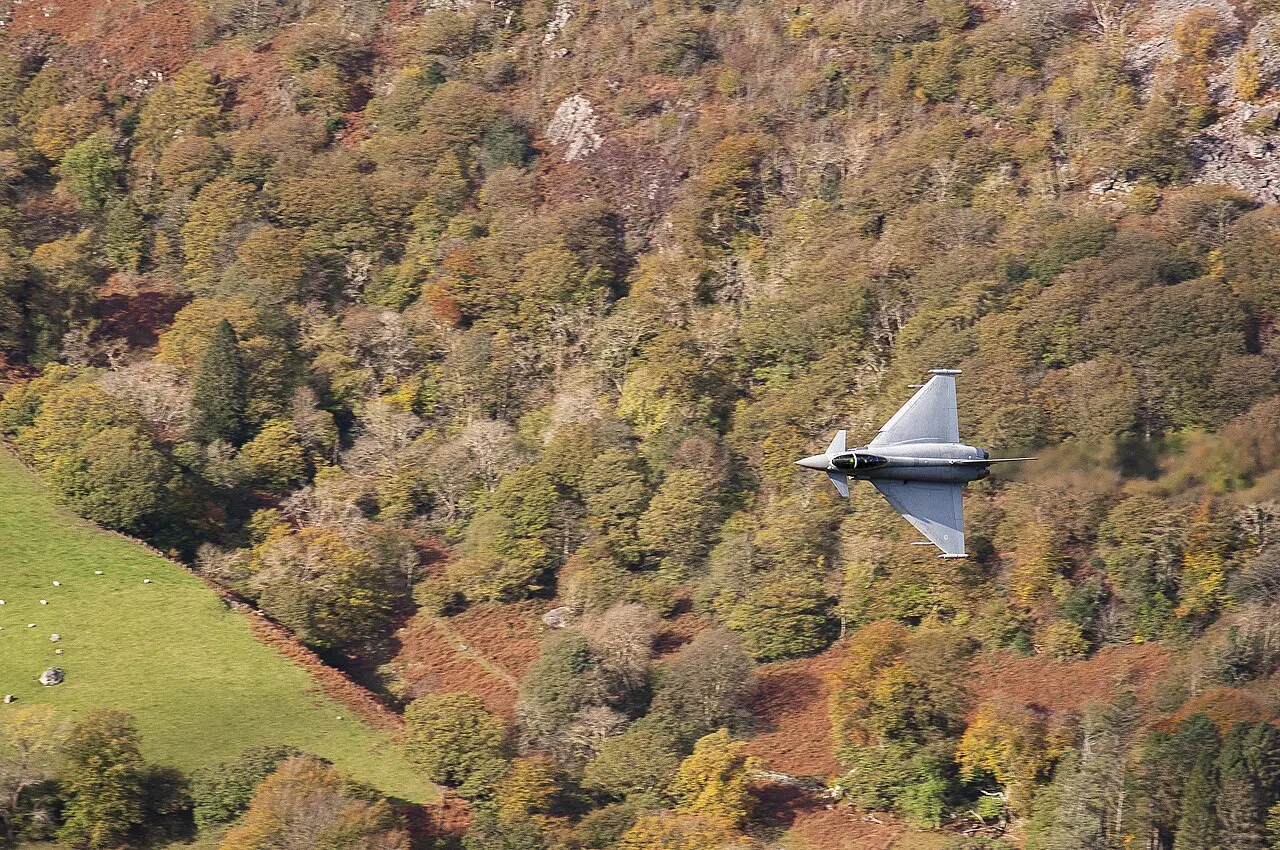
Technically, the Tranche 3 Typhoon is a twin-engine multirole fighter, designed primarily for air superiority with an expanded ground-attack capability, with a heavier payload and longer range than its single-engine Swedish competitor, the Gripen, which was offered in the same period as a possible replacement for the Jaguar (see the comparison table below).
The competing candidates: who was the alternative?
The Jaguar replacement file went through two successive competitive phases that should not be confused:
- 2004 — the first round: Oman considered the Typhoon relatively early, but at that time chose to buy a batch of American F-16s instead of proceeding with a Eurofighter deal, before the file was reopened later.
- 2008–2012 — the second round: As the Jaguar’s retirement approached, the Swedish company Saab offered the Gripen fighter as a direct replacement, against the offer of the Eurofighter consortium (represented commercially by Britain’s BAE Systems). Open sources provide no details on the technical points that favoured the Typhoon over the Gripen in Oman’s internal evaluation, but the decision went in favour of Eurofighter in December 2012, after the radar issue was settled and with high-level British political support (Prime Minister David Cameron personally intervened to push the deal, according to British government statements of the period).
There was also an unofficial French offer of the Rafale fighter made by French President Nicolas Sarkozy to Sultan Qaboos in February 2009, but it did not develop into serious negotiations at the time, which makes the renewed Omani interest in the Rafale in 2024 closer to a “reopening of an old file” than an entirely new track.
Timeline of the decision journey
Cost: the figure for the entire deal, not the price of a single aircraft
The deal was announced on 21 December 2012 with a total value estimated at between 3.75 and 4.1 billion US dollars (about 2.5 billion pounds sterling according to the official British announcement); the difference between the estimates is mostly due to differing currency conversion timing between sources. This figure covers the entire deal: 12 Typhoon fighters and 8 Hawk Mk128 trainers plus an operational support and training package from BAE Systems — not the price of a single aircraft, and any direct arithmetic division of this figure by the number of aircraft does not reflect the real cost of the fighter on its own because it includes a long-term support and training infrastructure. Neither Muscat nor BAE Systems announced an official breakdown of the share of each item in this package.
According to industry reports from that period, the later fall in Omani oil revenues made the high cost of expanding the Typhoon fleet (raising it to between 18 and 24 aircraft had been proposed in earlier negotiating stages) a factor in freezing any additional order, an economic context that intersects directly with the renewed interest in an alternative French offer in 2024.
Technology transfer and local manufacturing
Open sources show no announced item for technology transfer, local manufacturing or partial assembly within the Omani Typhoon deal, unlike other deals in the region that included localisation elements. The only documented industrial element is the operational support and training package that BAE Systems provides for No. 8 Squadron, along with the Hawk Mk128 aircraft that serve as a preliminary training line for new Typhoon pilots. This makes the deal closer to “buying a ready capability with operational support” than an industrial partnership.
Delivery and timeline
Executing the deal took about 4.5 years from signing to the first actual delivery: the contract was signed in December 2012, and the first aircraft rolled off BAE Systems’ production lines at Warton on 15 May 2017, before the first two aircraft arrived at Adam Air Base on 21 June 2017 (they were of the twin-seat version intended for training), followed by four more aircraft by the end of 2017. This extended timeline, relatively long even by the standards of major fighter deals, partly explains why No. 8 Squadron was not operating at full strength until later years.
Logistics and weapons system
As a multirole fighter, the Typhoon was designed to handle air-superiority and ground-attack missions within the usual Eurofighter weapons system, and Oman shares this with Saudi Arabia as the only other operator of the Typhoon in the Middle East, which in theory opens room for regional logistics coordination, although open sources have not documented any formal agreement on this. By contrast, the Omani F-16 fleet continues to depend on an entirely separate American munitions and logistics system, which means Oman today runs two parallel maintenance and supply lines instead of one.
Political constraints and a note on operation
No export restrictions or sanctions affecting the Omani Typhoon deal appeared in open sources; the deal is entirely British through BAE Systems and was not subject to restrictions of the American ITAR type. The British-Omani defence relationship is historic and predates this deal by decades. It is worth noting that an investigative report published by the organisation Declassified UK in 2020 (and carried by the Daily Maverick) pointed to the presence of British personnel, including pilots and ground crew seconded from the Royal Air Force, supporting the operation of the Omani Typhoon fleet, within a routine “seconded officers” programme that long predates this deal and usually accompanies the introduction of a new type into any air force still building up its capacity to operate it. This information concerns the declared operational support structure from a specific press source, and does not touch on any sensitive operational detail.
| Item | Eurofighter Typhoon (Tranche 3) | Saab Gripen C/D (the alternative offered) |
|---|---|---|
| Number of engines | Two engines | One engine |
| Primary role | Air superiority with expanded ground-attack capability | Lightweight multirole |
| Approximate range (general combat radius for the type) | About 1,389 km | About 800 km |
| Approximate maximum payload | About 7.5 tonnes | About 5.3 tonnes |
| Radar offered to Oman | AESA Captor-E (a joint Omani-Saudi condition) | Not announced in detail in the offer of that period |
| Specific offer price for Oman | Not announced per unit (package figure only: about 4 billion dollars for the whole deal) | Not announced |
| Technology transfer / local manufacturing | Not announced (no confirmed item) | Not announced |
| Actual delivery to Oman | From 2017 (about 4.5 years after signing) | No delivery schedule was set because the offer was not awarded |
| Other regional users | Saudi Arabia (the only other user in the Middle East) | No current Arab user |
The deal cannot be reduced to a single reason, but what distinguished it most in practice is that it was not presented as a replacement for the F-16 but as the addition of a second type that broadens the supply base and fills the gap left by the inevitable retirement of the Jaguar, with a prior British commitment to upgrade the radar to the AESA standard that was not confirmed in the older versions of the aircraft.
- The total cost of the package (about 4 billion dollars) was a factor in freezing plans to expand the fleet later as oil revenues fell.
- A relatively extended delivery schedule (about 4.5 years from signing to first delivery).
- No announced item for technology transfer or local manufacturing.
- Oman’s current reliance on two separate maintenance and logistics lines (British for the Typhoon and American for the F-16) instead of a unified line.
Reopening the file: what does Omani interest in the Rafale mean?
Reports in April 2024 reopened the discussion about the Omani air power mix, when the New York Times and the French site La Tribune indicated that Muscat had begun preliminary discussions with Dassault Aviation about Rafale F4 aircraft, amid varying estimates of the size of the potential deal. Some coverage described this interest as coming against a backdrop of a “rapidly deteriorating security environment” in the region, without open sources clearly specifying whether the potential French aircraft would be added alongside the existing Typhoon and F-16 or would replace a planned expansion of the Typhoon fleet that never materialised. As of the date this file was published there is no confirmation of a signed contract with Dassault, and any talk of “Oman buys Rafale” remains inaccurate for now.
Notably, this is not the first French interest in Oman; President Nicolas Sarkozy had previously offered the Rafale to Sultan Qaboos in 2009 without result, which makes the 2024 move closer to resuming an old intermittent track than a diplomatic surprise.
What does this deal mean for the Arab world?
The Omani case offers a model of a Gulf state that chose to diversify its sources of air armament rather than tie itself to a single supplier: a British-American mix established since 2012, with a current openness to a third, French option. This pattern is close to other Gulf paths that operate, or are considering operating, more than one heavy fighter type at the same time (Qatar and the UAE with the Rafale, Saudi Arabia with the Typhoon and the F-15, along with ongoing discussions about further expansion), reflecting shared calculations about operational flexibility and spreading political risk among Western suppliers, more than a regional tendency to replicate Oman’s choice specifically.
Frequently asked questions
Did Oman replace its F-16s with the Typhoon?
No. The Typhoon replaced the retired Jaguar fighters, while the F-16 fleet continued to expand separately, and the two fleets operate side by side.
How many Typhoon fighters are in Omani service?
Oman signed to buy 12 Tranche 3 fighters, together with 8 Hawk Mk128 trainers, all of which have entered service since 2017.
Has Oman bought the French Rafale fighter?
No, as of the date this file was published. What happened was press reports in 2024 of preliminary talks between Muscat and Dassault Aviation, with no signed contract or official confirmation.
Why did it take years for the Typhoons to be delivered to Oman after signing?
The contract was signed in December 2012 and deliveries began in June 2017, about 4.5 years later, which is a usual production and fitting-out schedule for heavy fighter deals involving several manufacturing countries such as the Eurofighter, and open sources have not explained this delay in further detail.
Final verdict
Given Oman’s actual need to replace the retired Jaguar fleet, and its prior condition of an AESA radar before closing the deal, the choice of the Typhoon in 2012 appears an understandable decision within the logic of diversifying sources of armament and strengthening the defence relationship with Britain, not one linked to a cheaper price or a decisive technical superiority over the Swedish alternative offered at the time. The total cost of the package and the absence of any announced technology-transfer item remain among the most important elements to watch in future, especially as Omani interest returns to an alternative French offer in 2024 that has not yet crystallised into a final decision.
Sources
- Official British government statement, December 2012 — confirmation of the contract signing, its value and the package details.
- BAE Systems, statement on delivery of the first two aircraft — date and details of the first delivery in June 2017.
- UK Defence Journal — details of the delivery process, Adam Air Base and the Jaguar replacement.
- GlobalSecurity.org — historical background on the Omani Typhoon file and the Gripen competition.
- Army Recognition, April 2024 — report on Oman’s preliminary talks with Dassault about the Rafale.
- Meta-Defense.fr — French analysis of the context of Omani interest in the Rafale in 2024.
- Declassified UK via Daily Maverick, 2020 — investigative report on the British personnel seconded to support the operation of the Omani Typhoon fleet.
- Quwa Defence News — confirmation of the 2017 delivery details.
See also
- Eurofighter Typhoon: specifications, price and operating countries
- Rafale, F-15EX or Eurofighter Typhoon: which heavy fighter suits the Gulf states best?
- Who operates the Rafale, F-15SA and Eurofighter Typhoon in the Arab world?
- The latest fighters in Arab armies: who operates 4.5 and fifth generation?
- Arab countries that own F-16 fighters: the full list with numbers and types
- Why did the UAE choose the American THAAD system? The first country in the world to buy it