Minuteman III Missile: Specifications, Range and Why the US Is Replacing It with Sentinel
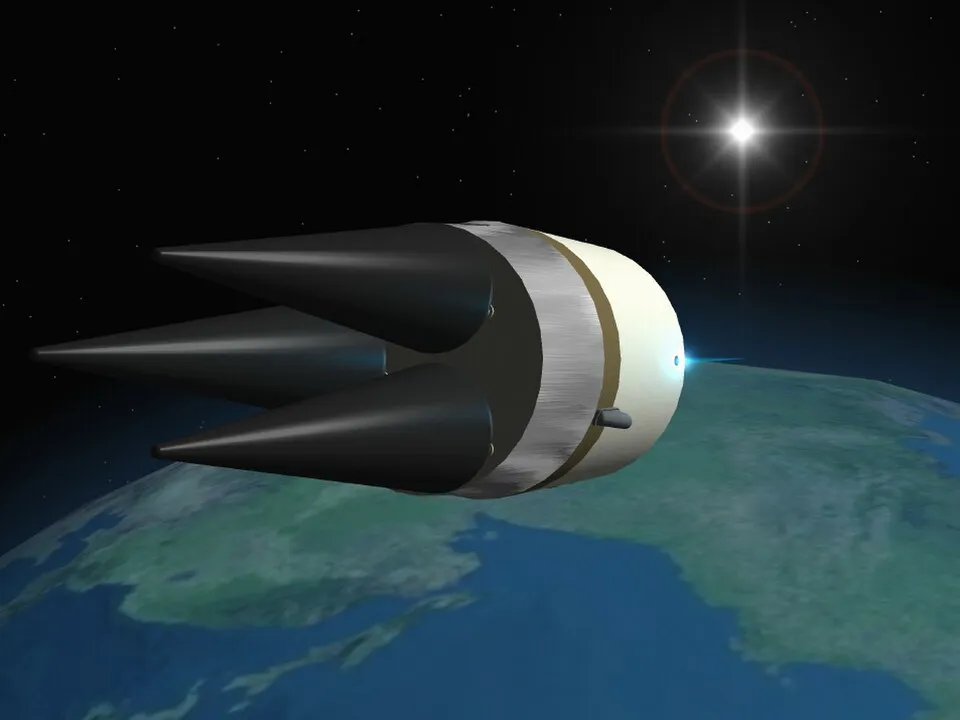
In hardened silos beneath the plains of remote US states, 400 intercontinental ballistic missiles stand on alert around the clock. They are the “Minuteman III” (LGM-30G Minuteman III) missiles, the land-based pillar of US nuclear deterrence since 1970. This guide explains the missile’s official specifications, how it is launched, why Washington is replacing it with the new “Sentinel” missile, and how it relates to the deterrence balances followed in the Arab region.
What is the Minuteman III missile?
The Minuteman III is a solid-fuel intercontinental ballistic missile (ICBM) managed by Air Force Global Strike Command of the US Air Force. Its military designation LGM-30G has specific meanings according to the Air Force: the letter “L” means it is launched from a silo, “G” means attack on surface targets, and “M” means guided missile, while the number 30 refers to the Minuteman family and the letter G after it to the current Minuteman III version.
How does the Minuteman system work?
The missiles are spread across widely separated hardened silos to protect them from attack, and are connected to an underground launch control centre by hardened cables. In each centre a crew of two officers stands watch around the clock. Multiple communication systems provide a direct and almost instant link between the US President, the Secretary of Defense and the launch crews.
If command is cut off between the control centre and the remote silos, E-6B aircraft equipped as airborne launch control centres automatically take control of the isolated missiles, and their crews carry out the President’s orders. The system relies on the “remove and replace” principle in maintenance, which achieves readiness close to 100% according to the Air Force.
Official specifications of the Minuteman III
| Item | Value |
|---|---|
| Type | Intercontinental ballistic missile |
| Prime contractor | Boeing |
| Propulsion | 3 solid-fuel rocket motors |
| Weight | 36,030 kg |
| Diameter | 1.67 metres |
| Range | More than 6,000 miles (about 9,650 km) |
| Speed at burnout | About 24,000 km/h (roughly Mach 23) |
| Maximum altitude | 1,120 km |
| Deployment began | June 1970 |
| Production ended | December 1978 |
| Number in service | 400 missiles |
Where are Minuteman missiles deployed?
The current force of 400 missiles is distributed across three missile wings, according to the US Air Force:
- The 90th Missile Wing at F. E. Warren Air Force Base in Wyoming.
- The 341st Missile Wing at Malmstrom Air Force Base in Montana.
- The 91st Missile Wing at Minot Air Force Base in North Dakota.
From Minuteman 1 to Minuteman 3
The idea of the Minuteman was born in the late 1950s, and the Minuteman 1 was deployed in the early 1960s. The missile was a revolutionary step compared with the previous generation of intercontinental missiles, which used liquid fuel and needed a long time to prepare. Solid fuel makes the missile ready to launch within a very short time, hence its name “Minuteman”, after the American militias of the independence era that were ready to fight “within a minute”. The Air Force describes the current system as the product of about 60 years of continuous improvement in range, accuracy and survivability.
Sentinel: the costly replacement
The US Air Force is working to replace the Minuteman III with a new missile named “Sentinel” (LGM-35A), developed by Northrop Grumman. But the programme has faced a major crisis: in January 2024 the Air Force notified Congress of a critical cost breach under the Nunn-McCurdy law. In July 2024 the Department of Defense announced that the estimated cost of a modified programme had reached 140.9 billion dollars, an increase of 81% over the 2020 estimates, and that most of the increase was in the infrastructure of the launch facilities and command centres. The Department decided to continue the programme with a restructuring and expects a delay of years.
This means that the Minuteman III, whose production ended in 1978, will remain in service for longer than planned. Air Force reports indicate a target of 2027 for the first Sentinel test launch.
Why does it matter to the Arab reader?
US nuclear deterrence rests on a “triad” of land-based missiles, submarines and bombers, and the Minuteman III is its land leg. The balances of this deterrence directly affect the calculations of the major powers in the Middle East, and the ongoing debate about ballistic missiles in the region, including Iranian ballistic missiles, which remain very far from the range and complexity of intercontinental missiles. The Sentinel delay also illustrates the enormous cost of modernising any strategic arsenal, even for the largest defence budget in the world.
Frequently asked questions about the Minuteman III
How many Minuteman III missiles are there?
400 missiles in active service, according to the US Air Force.
What is the range of the Minuteman III?
More than 6,000 miles, or about 9,650 kilometres.
When did the Minuteman III enter service?
It was deployed in June 1970, and its production ended in December 1978.
Which missile will replace it?
The Sentinel LGM-35A from Northrop Grumman, whose programme cost is estimated at 140.9 billion dollars.
Conclusion
The Minuteman III is a missile from the 1970s generation that still carries an essential part of the nuclear deterrent of the world’s largest military power. While its replacement, the Sentinel, struggles with cost and delay, this missile will remain in its silos for additional years, a witness to the fact that strategic weapons live far longer than their designers expect.