THAAD interceptors and launch stations for the UAE

 UAE ←
 United States
Deal progress
Current status: Sale approved — latest milestone in 2022. Not every deal goes through every stage; a government sale approval, for example, applies only in some supplier countries.
Deal details
The UAE is acquiring THAAD missiles and launch stations from the United States, with Lockheed Martin named as the manufacturer. It is classed under air defence. The announced quantity is 96 interceptor missiles, and the value is put at $2.25 billion (DSCA estimate).
The supplier government approved the sale in 2022. Approval is not a signed contract, and the quantity and value may change once one is concluded.
Details: To replenish stocks after the January 2022 attacks.
What is the THAAD missile defence system?
THAAD, short for Terminal High Altitude Area Defense, is an American anti-ballistic missile system developed and built by Lockheed Martin, with Raytheon supplying its main AN/TPY-2 radar. It engages short- and medium-range ballistic missiles, with a limited capability against longer intermediate-range missiles, in the final phase of their flight as they descend towards their targets.
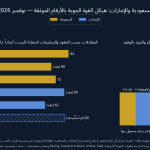
Development began in 1992. The US Army activated the first battery at Fort Bliss in May 2008 and first deployed it abroad to Guam in 2013. US batteries have since been sent to South Korea, the Middle East and Israel. Outside the United States, the UAE has two batteries and Saudi Arabia one in operation; according to the manufacturer, they are the system’s only international customers so far.
How it works and what sets it apart
A typical battery has six truck-mounted launchers carrying eight interceptors each, 48 missiles in all, plus an AN/TPY-2 radar and a fire control and communications unit, and is manned by about 90 soldiers. The radar detects and tracks the target from long range, then the interceptor is launched. It carries no explosive warhead and destroys the incoming warhead by direct impact.
THAAD can intercept both inside and outside the atmosphere, with a range of 150 to 200 km, placing it in a higher tier than Patriot so the two work together in a layered defence. A Congressional Research Service report puts the cost of a single interceptor at about $12.7 million. The system’s first acknowledged combat use came in January 2022, when the UAE intercepted a ballistic missile fired by the Houthis. Lockheed Martin says THAAD has a perfect record in its intercept tests and that the programme supports more than 18,000 jobs worldwide. The interceptors are built at the company’s plant in Troy, Alabama.
Key specifications
| Role | Intercepting ballistic missiles in their terminal phase |
|---|---|
| Prime contractor | Lockheed Martin (United States) |
| Radar | Raytheon AN/TPY-2 |
| Battery composition | 6 launchers, 48 interceptors, radar, fire control unit |
| Range | 150–200 km |
| Kill mechanism | Direct impact (hit-to-kill) |
| First operational battery | 2008 |
| Interceptor cost | About $12.7 million |
| Operators | United States, UAE, Saudi Arabia |