
GBU-39 bombs and JDAM kits for the UAE’s F-16s
 UAE ←
 United States
Deal progress
Current status: Sale approved — latest milestone in 2026. Not every deal goes through every stage; a government sale approval, for example, applies only in some supplier countries.
Deal details
The deal covers GBU-39 bombs and JDAM kits for F-16 fighters for the UAE, supplied by the United States; Boeing is listed as the manufacturer. It is classed under munitions and missiles. The announced quantity is 1,500 bombs + 1,200 kits, and the value is put at $644 million.
The supplier government approved the sale in 2026. Approval is not a signed contract, and the quantity and value may change once one is concluded.
Details: Emergency approval in March 2026.
What are the GBU-39 Small Diameter Bomb and JDAM kits?
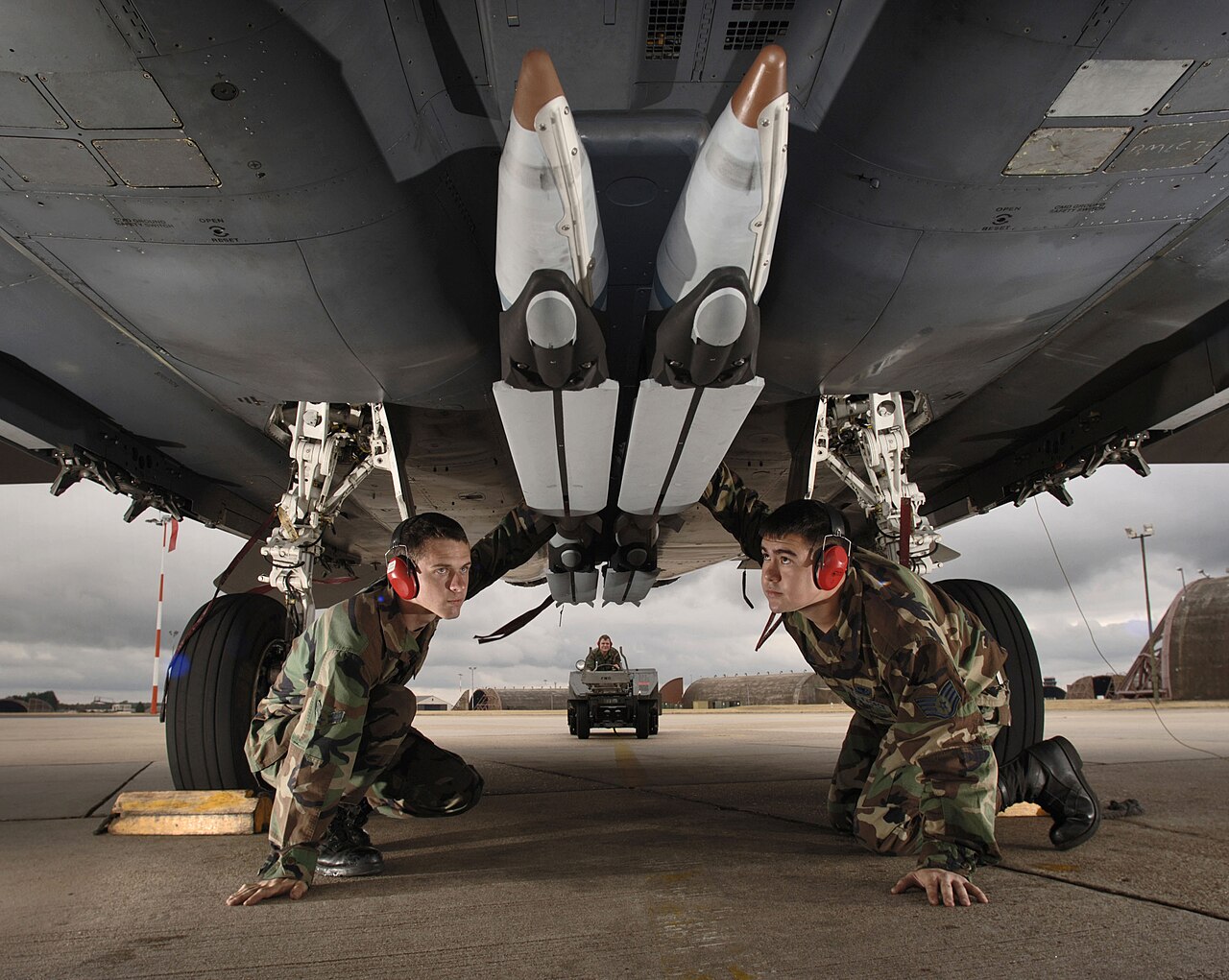
This item covers two types of guided air-launched munitions made by Boeing, often ordered together because they meet different needs. The first is the Joint Direct Attack Munition (JDAM), a guidance kit fitted to free-fall bombs in the 500, 1,000 and 2,000 lb classes. The second is the GBU-39 Small Diameter Bomb, a light gliding munition designed from the outset as a precision weapon.
JDAM went into production at Boeing’s St. Charles plant in 1998 and became the most widely used guided munition in the US Air Force and allied air arms, with more than 260,000 kits built by 2015 for US forces and 27 countries. The GBU-39 reached initial operational capability on the F-15E in October 2006 and has since been integrated on a wide range of aircraft, including the F-16 and F-35.
How it works and what sets it apart
Both weapons use GPS-aided inertial navigation: target coordinates are loaded before release and the bomb flies to them in any weather. The JDAM kit replaces a conventional bomb’s tail with a guidance section and control fins, giving a range of about 24 km, extended to more than 72 km with the wing kit on the JDAM-ER. The GBU-39, by contrast, weighs only about 129 kg and deploys wings after release that let it glide more than 110 km when dropped from high altitude. Its multipurpose penetrating warhead is used against hardened positions and targets inside buildings. Because it is so small, the BRU-61/A carriage holds four of them on a single hardpoint, so one aircraft can hit several targets in one sortie. The small warhead also allows strikes on targets near civilians or friendly troops with less collateral damage than heavier bombs cause.
Key specifications
| Manufacturer | Boeing (United States) |
|---|---|
| Guidance | GPS-aided inertial navigation (both weapons) |
| GBU-39 weight | 129 kg (285 lb) |
| GBU-39 length | 1.80 m |
| GBU-39 range | More than 110 km when dropped from high altitude |
| GBU-39 carriage | BRU-61/A, 4 bombs |
| JDAM range | About 24 km; more than 72 km in the ER version |
| Service entry | JDAM: in production since 1998; GBU-39: initial capability October 2006 |