FS-LIDS counter-drone system for the UAE
 UAE ←
 United States
Deal progress
Current status: Sale approved — latest milestone in 2026. Not every deal goes through every stage; a government sale approval, for example, applies only in some supplier countries.
Deal details
The deal covers the FS-LIDS counter-drone system for the UAE, supplied by the United States; the US Army (counter-drone programme) is handling the sale. It is classed under air defence. The quantity has not been disclosed, and the value is put at $2.1 billion.
The supplier government approved the sale in 2026. Approval is not a signed contract, and the quantity and value may change once one is concluded.
Details: Part of the March 2026 package.
What is FS-LIDS?
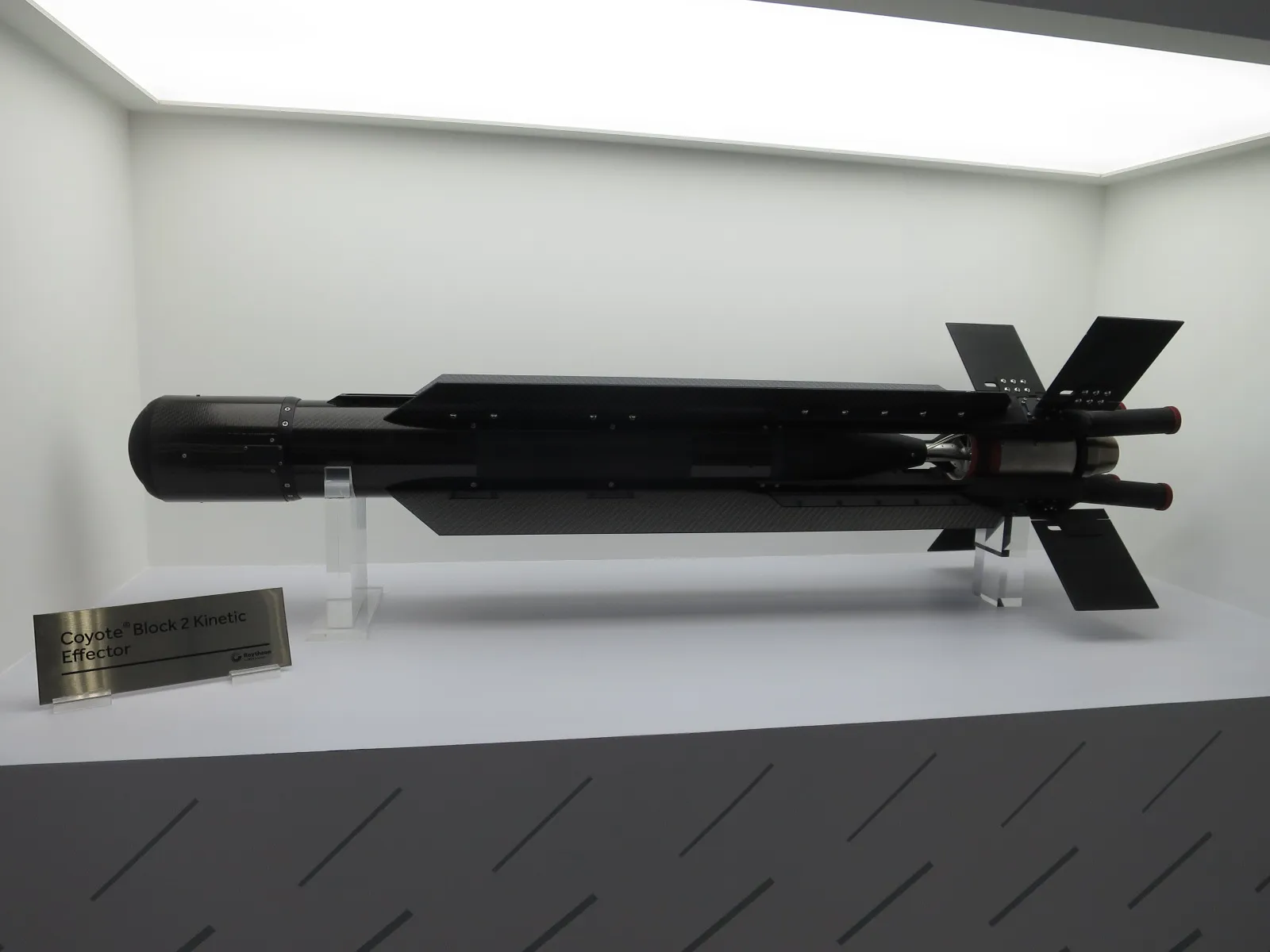
FS-LIDS is the fixed-site version of the US Army system for intercepting small drones that fly low and slow. It is installed to protect military bases and sensitive sites and relies on two main components made by Raytheon, part of RTX: the Ku-band KuRFS radar and the Coyote interceptor. The configuration can also include SRC’s AN/TPQ-50 radar, electro-optical cameras and electronic warfare equipment, all working under unified command and control.
The system has a mobile sibling, M-LIDS, which uses the same radar and interceptor on vehicles. Army budgets for 2025–2029 plan the purchase of 118 radars for fixed sites and 252 fixed launch systems, along with 33 radars and 25 launch systems for the mobile version.
How it works and what sets it apart
The KuRFS radar handles detection and tracking with a precision that, according to Raytheon, lets it pick up an object the size of a 9 mm bullet, so it can single out small drones amid ground clutter. Once a target is identified, the operator chooses between electronic jamming and a physical intercept. In the latter case the Coyote Block 2 launches on a rocket booster and then continues on a turbojet engine, guided by radar until it closes on the target and detonates a forward-firing fragmentation warhead designed to limit collateral damage. Engagement range exceeds 10 km, and the interceptor flies for about four minutes.
Coyote Block 2 completed qualification testing in December 2019 and was fielded by the US government the following year; Raytheon describes it as combat-proven. In January 2024 RTX received a $75 million contract for 600 interceptors. The company has also developed a non-kinetic Block 3NK version that can loiter, take on swarms and be recovered for reuse on another mission.
Key specifications
| Role | Protecting fixed sites against small drones |
|---|---|
| Manufacturer | Raytheon (RTX) for radar and interceptor |
| Surveillance radar | KuRFS multi-mission Ku-band |
| Interceptor | Coyote Block 2 |
| Interceptor propulsion | Rocket booster and turbojet engine |
| Engagement range | More than 10 km |
| Warhead | Forward-firing fragmentation, low collateral damage |
| Fielded | 2020 |