KARA ATMACA: ROKETSAN’s Land-Attack Cruise Missile


 Tepki Ver
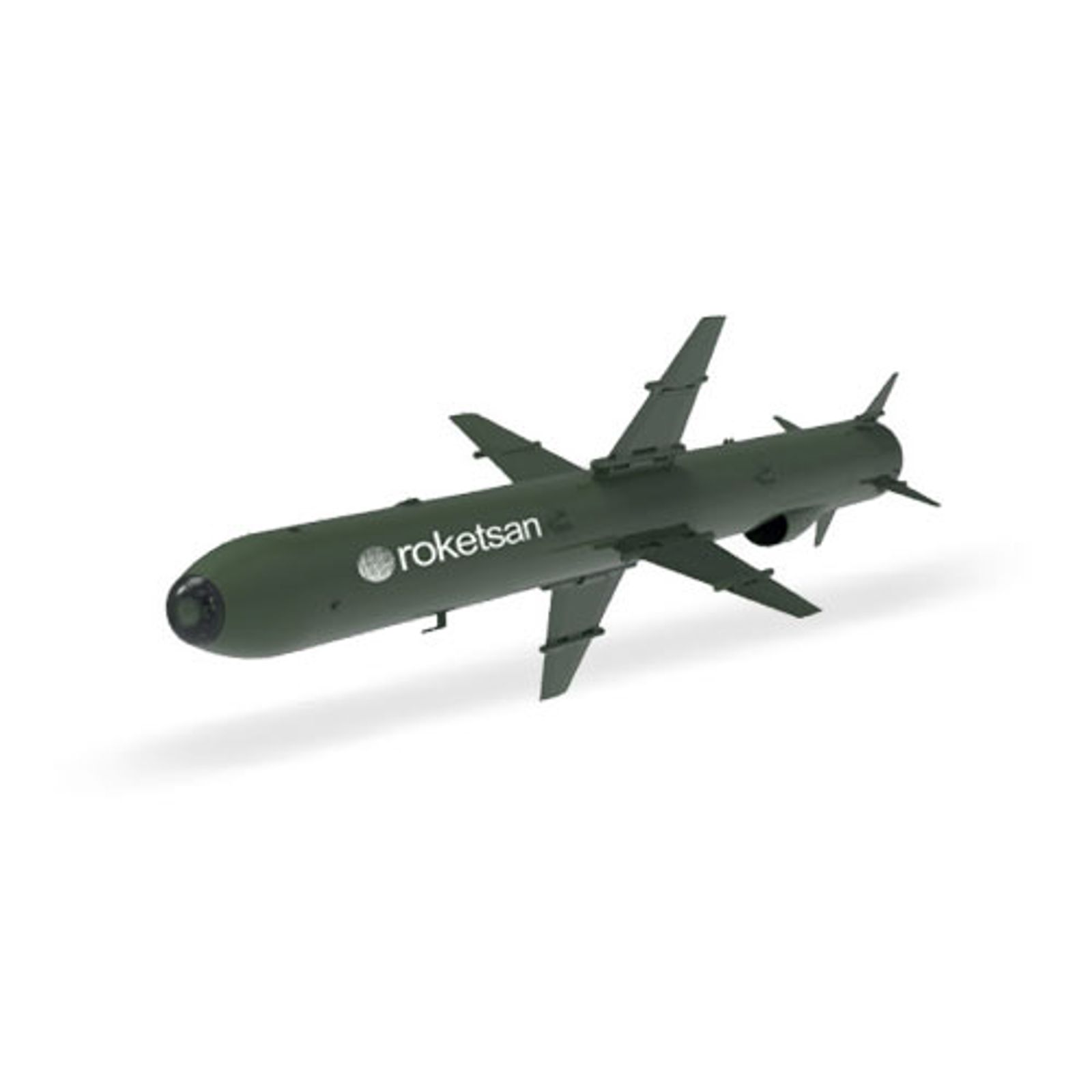
KARA ATMACA is ROKETSAN’s land-attack cruise missile, a road-mobile derivative of the ATMACA anti-ship missile developed for the Turkish Land Forces Command and handed over to the Turkish Armed Forces in serial production configuration in April 2026. Stretched, heavier and fitted with an imaging infrared seeker in place of the naval weapon’s active radar homing head, it gives Turkey a subsonic, terrain-following deep strike round launched from a tactical wheeled vehicle. In July 2026 the missile was folded into a NATO multinational ground-based precision strike initiative, placing it among the few non-American land-attack cruise missiles inside an allied common procurement framework.
KARA ATMACA: Identity, Customer and Designation
The system is produced by ROKETSAN A.S., Turkey’s state-linked missile house with facilities at Ankara, Elmadag and Lalahan, under a programme managed by the Savunma Sanayii Baskanligi (SSB), the Presidency of Defence Industries. ROKETSAN’s official product name is KARA ATMACA Karadan Karaya Seyir Fuzesi in Turkish, rendered in the company’s English material as KARA ATMACA Surface-To-Surface Cruise Missile. The name translates literally as Land Hawk, ATMACA itself meaning sparrowhawk.
ROKETSAN describes the weapon as a jamming-resistant long-range cruise missile system launched from tactical wheeled vehicles against strategic land targets. The SSB project page states that the programme was initiated to meet the Turkish Land Forces Command requirement for a surface-to-surface cruise missile, and that institutional detail is the essential one. ATMACA is a naval weapon carried by fast attack craft, corvettes and frigates. KARA ATMACA is an army weapon, and the programme exists because the Turkish Land Forces wanted a cruise missile complement to the ballistic rockets already in the inventory.
The Second Designation and How to Read It
Turkish and international defence press increasingly refer to the weapon as ATMACA UM, the suffix standing for Uzun Menzil, or long range. TURDEF, reporting on the NATO summit of 7 July 2026, treated ATMACA-UM as the name formerly known as KARA ATMACA, implying a rename. ROKETSAN’s own product pages and its serial delivery announcement of 7 April 2026 still use KARA ATMACA, while the company’s social media posts covering the 2024 and 2025 test firings used ATMACA UM. Both names are therefore current in official Turkish usage, and no public source establishes that one has formally superseded the other. The accurate formulation is that KARA ATMACA is also referred to, by ROKETSAN and by the Turkish press, as ATMACA UM.
What Kind of Weapon It Is
Functionally, the weapon is a road-mobile, land-based, surface-to-surface cruise missile: subsonic, turbojet-powered, terrain-following and fitted with an imaging infrared terminal seeker. It is a derivative rather than a new design, taking the ATMACA airframe and stretching it, adding weight and fuel, exchanging the seeker and adding a terrain-navigation suite that a missile flying over open water has no use for. The customer is the Turkish Land Forces Command. As of July 2026 a prospective additional customer set exists in the form of the NATO Ground-Based Precision Strike initiative.
How the KARA ATMACA Programme Developed
Origins in the ATMACA Anti-Ship Programme
The parent programme traces to a contract placed with ROKETSAN by Turkey’s then Undersecretariat for Defence Industries for a surface-to-surface cruise missile for the Turkish Naval Forces, with design work following in the years afterwards. The early programme dates circulate mainly through secondary reference sources and are best treated as approximate. The development milestones that followed are consistently reported and matter here because KARA ATMACA inherits the airframe, the datalink architecture and the guidance philosophy of the naval missile.
A first land-based ATMACA firing took place in March 2017. The serial production contract was signed on 29 October 2018. The first ship-launched firing followed on 3 November 2019 from the corvette TCG Kinaliada, and a target was struck at over 200 km on 1 July 2020. A live-warhead test with TCG Kinaliada was conducted on 3 February 2021, certification testing was completed in June 2021 after twenty successful firings, and first deliveries to the Turkish Navy took place in August 2021. On 10 March 2024 ATMACA flew for the first time on the indigenous Kale KTJ-3200 engine, replacing the French Safran/Microturbo TR-40. According to EDR Magazine, work on a land-attack derivative began in 2019.
The 2021 Contract
The development contract was signed between the SSB and ROKETSAN on 18 August 2021 at IDEF’21 in Istanbul, with then SSB President Prof. Dr. Ismail Demir attending alongside Turkish Armed Forces and industry representatives. The specification announced at signature gave a range of 280 km and three-dimensional mission planning capability, with entry into the Land Forces inventory targeted for 2025. Both of those figures are worth holding onto: the 280 km range has never been revised in ROKETSAN’s published material despite what was later demonstrated in flight test, and the 2025 service entry target was met in substance if not to the calendar year.
Engine Delivery and the First Publicised Firing
In January 2024, Kale Arge announced that it was days away from delivering the first KTJ-3700 turbojet to ROKETSAN for KARA ATMACA. Kale Arge General Manager Cuneyt Kenger said a prototype had been tested successfully in 2023, that prototype production was continuing, and that the engine was lighter and lower in fuel consumption than international alternatives. The claim of superiority over foreign engines is a company statement and should be read as such.
On 18 August 2024 the missile completed what was then its longest flight and scored a direct hit on a floating target after launch from a mobile launcher. Daily Sabah reported the range as over 280 kilometres; the launch site was not disclosed, though it was reported as most likely Sinop on the Black Sea coast. SSB President Prof. Dr. Haluk Gorgun stated that the missile, powered by the KTJ3700 engine, had hit its target with pinpoint accuracy and completed its longest flight to date. ROKETSAN’s own announcement described ATMACA UM as having achieved its longest range and duration flight with a direct hit.
The 400 km Firings
Late in 2024 a firing was conducted from a ROKETSAN universal MLRS-type launcher mounted on a Koluman DERMAN 8×8 vehicle, and the missile struck a container target at sea at 400 km. Haluk Gorgun disclosed the achievement at the SSB 2024 evaluation and 2025 goals press meeting, framing ATMACA UM, in TURDEF’s rendering, as the alternative land-based long-range missile alongside the BORA and TAYFUN ballistic missiles.
On 2 and 3 March 2025 the missile flew its longest and longest-duration flight yet, exceeding 400 km with a direct hit. TURDEF reported that this firing used a higher-altitude profile than previous tests, reducing drag and improving fuel efficiency at the cost of greater detectability, which is a meaningful technical disclosure about how the range was obtained. ROKETSAN General Director Murat Ikinci said the missile had set records in the firing test and had proven its battlefield reliability and deterrent power. The exact distance beyond 400 km was not disclosed. Defence Turkey’s January 2026 annual review noted only that the March 2025 figure surpassed the 400 km threshold with exact distances unconfirmed, and no more precise number should be attributed to the test.
Serial Production and Delivery
The missile was among the systems ROKETSAN showcased at IDEF 2025 in Istanbul in July 2025. At the same exhibition the company displayed a concealed launcher concept built into an ISO shipping container, reported by Army Recognition as holding up to six rounds and transportable by truck, rail or cargo ship without a prepared firing site. That launcher reporting comes from the trade press rather than from ROKETSAN’s own IDEF release, and the same article carried a specification table using the naval ATMACA’s range and warhead figures, so its numbers should not be applied to the land missile.
A clearer production marker came on 25 July 2025, when ROKETSAN and Kale Jet Engines signed cruise missile serial production motor supply agreements covering the KTJ-3200A for ATMACA, the KTJ-3200S for SOM, the KTJ-3700 for KARA ATMACA and the KTJ-1750 for CAKIR. Series engine supply contracts are the clearest public evidence that the missile had moved out of development.
On 7 April 2026, at a combined facility opening, serial delivery and groundbreaking ceremony attended by President Recep Tayyip Erdogan, ROKETSAN handed over twenty different defence systems in serial production to the Turkish Armed Forces. KARA ATMACA appeared on that list alongside TAYFUN, SIPER, ATMACA, HISAR-A, HISAR-O, SUNGUR, CAKIR, SOM, T-107/122 MBRL, MAM-L/C/T, TEBER, OMTAS, L-OMTAS, CIRIT, LUMTAS, KARAOK and IHA-230. No delivered quantity of KARA ATMACA rounds has been published, and none should be inferred from the ceremony. The missile appeared again in ROKETSAN’s display at the EFES 2026 multinational exercise on 22 May 2026, at the company stand; the ROKETSAN release describes no live firing or operational employment during that exercise.
The NATO Ground-Based Precision Strike Initiative
On 7 July 2026, at a NATO summit held in Ankara, NATO Deputy Secretary General Radmila Shekerinska announced a multinational Ground-Based Precision Strike initiative: a six-nation consortium to develop, produce and acquire low-cost land-based cruise missiles in order to expand allied arsenals. The reported total value of the initiatives announced at the summit was around 1.6 billion dollars, a figure that also covered a joint NATO 155 mm ammunition prototype and procurement contract routed through the NATO Support and Procurement Agency. ATMACA-UM, that is the Turkish land-attack missile, was included. Shekerinska stated that Turkiye is committed to the procurement of the ATMACA-UM LACM in significant numbers, and framed the initiative against the Ukraine experience, in which long-range precision strike proved decisive and stocks depleted rapidly under intensive combat. TURDEF added that the missile is already in the Turkish Army inventory as of 2026.
KARA ATMACA Airframe, Dimensions and Warhead
Two Official Specification Sets
ROKETSAN publishes two different specification sets for the missile, and they do not agree. The product page on the ROKETSAN website, in both Turkish and English, gives a length of 6 m, a weight of 890 kg, a range of 280 km, a 250 kg warhead, an imaging infrared seeker and a guidance stack of inertial navigation, satellite navigation, barometric altimeter, radar altimeter and terrain-referenced navigation. It provides no diameter. The English PDF datasheet in ROKETSAN’s 2024 product catalogue gives a length of 6.1 m, a diameter of 370 mm, a weight of 910 kg, the same 280 km range, and a warhead described simply as high-explosive blast fragmentation. It also adds tracked land platforms to the launch platform list.
Both documents are official. The catalogue is the newer of the two and is the only source of a diameter figure, and Army Recognition’s May 2026 coverage uses the catalogue set, which is a reasonable independent tiebreak in its favour. The honest reading is that this is a missile of 6.0 to 6.1 m in length, 370 mm in diameter and 890 to 910 kg at launch, with the residual uncertainty being a matter of which official document is consulted rather than a matter of dispute between sources.
Airframe Growth Over the Naval Missile
Against the naval ATMACA at 4.3 to 5.2 m and under 750 kg, the land missile is a substantially stretched airframe carrying more fuel and a larger engine. The warhead grows from 220 kg to 250 kg. ROKETSAN’s Turkish page describes the warhead as high explosive with fragmentation and penetration effect, a formulation the English catalogue simplifies to high-explosive blast fragmentation. The penetration wording matters for the target set: hardened shelters, command facilities and protected launcher positions require more than a fragmentation sleeve.
Key Characteristics
| Characteristic | KARA ATMACA | ATMACA (naval parent) |
|---|---|---|
| Role | Surface-to-surface land-attack cruise missile | Anti-ship cruise missile |
| Manufacturer | ROKETSAN | ROKETSAN |
| Length | 6.0 m (website) / 6.1 m (2024 catalogue) | 4.3 to 5.2 m |
| Diameter | 370 mm (2024 catalogue) | Not published in the same form |
| Launch weight | 890 kg (website) / 910 kg (2024 catalogue) | Under 750 kg |
| Warhead | 250 kg, high explosive, fragmentation, penetration effect | 220 kg, high explosive fragmentation with penetration |
| Propulsion | Kale KTJ-3700 turbojet, 3,700 N | Kale KTJ-3200 turbojet (previously Safran/Microturbo TR-40) |
| Range | 280 km official; 400 km and 400+ km demonstrated in test | 250 km official |
| Midcourse guidance | INS, anti-jam GNSS, barometric and radar altimeters, terrain-referenced navigation | INS, GPS, barometric and radar altimeters |
| Terminal seeker | Imaging infrared | Active radar frequency |
| Datalink | Two-way, target update, re-attack, mission abort | Two-way datalink |
| Launch platform | Tactical wheeled vehicle; tracked land platforms per catalogue | Fast attack craft, corvettes, frigates |
| Speed | High subsonic, no official figure published | High subsonic |
| Status | Serial production; delivered to the Turkish Armed Forces 7 April 2026 | In Turkish Navy service since August 2021; exported |
Propulsion: The KTJ-3700 Turbojet
The missile is powered by the Kale KTJ-3700 turbojet, rated at 3,700 N of thrust and developed by Kale Arge, renamed Kale Jet Engines in December 2025. This is not the KTJ-3200. The 3,200 N engine powers the naval ATMACA and the air-launched SOM, and the smaller KTJ-1750 powers CAKIR. Every source that has addressed the question since the engine choice became public, including Defense Mirror, TURDEF, Daily Sabah, SavunmaSanayiST and Defence Turkey, attributes the KTJ-3700 to KARA ATMACA, and Haluk Gorgun named the KTJ3700 explicitly when describing the August 2024 firing. One outlier exists: EDR Magazine’s August 2021 preview, written before the selection was announced, projected that the land missile would use a KTJ-3200 with an enlarged fuel tank. That was a pre-decision estimate and has been overtaken.
The distinction is more than a catalogue detail. For scale, EDR’s 2021 figures for the KTJ-3200 describe a four-stage axial engine of 300 mm diameter and 720 mm length producing 3.2 kN nominal and 3.5 kN maximum thrust, running on JP-8 or JP-10 with a 5,000 m ceiling at Mach 0.95. Moving to a 3,700 N class engine, in an airframe with more internal volume, is what buys the additional range and payload over the naval missile. TURDEF makes a point worth carrying: KARA ATMACA is the first configuration in the ATMACA family designed around an indigenous engine from the outset rather than converted to one after the fact.
ROKETSAN has published no Mach figure for the missile, which is described only as high subsonic. For comparison the company gives Mach 0.75 to 0.85 for CAKIR. No solid-propellant launch booster is described for the land launcher in official material, and none should be assumed.
Guidance, Navigation and Mission Systems
Midcourse Navigation
ROKETSAN lists a midcourse stack combining inertial navigation, anti-jam satellite navigation, a barometric altimeter, a radar altimeter and terrain-referenced navigation. The last element is the defining addition relative to the naval missile. Terrain referencing lets the weapon fix its position against the shape of the ground beneath it, which serves two purposes at once: it permits very low flight that uses terrain masking to break line of sight to defending radars, and it keeps the missile navigating when satellite signals are jammed or denied. EDR described the addition of a terrain-matching navigation system permitting low-altitude flight exploiting terrain masking as the defining new feature over the naval weapon as early as 2021. TURDEF additionally credits the missile with digital scene-matching area correlation alongside the infrared seeker; that is a press attribution and does not appear in ROKETSAN’s own listing.
Terminal Seeker
The terminal seeker is imaging infrared, and this is the single most consequential difference between the two missiles. An active radar seeker looking for a ship hull against sea return is the wrong sensor for a hardened structure against a hillside. An imaging infrared seeker matches a thermal image of the target against a stored reference, which works against ground clutter and, being passive, emits nothing for a defender to detect or home on. For a weapon whose named target set includes air defence batteries, a non-emitting terminal sensor is a survivability feature as much as an accuracy one.
Datalink, Mission Planning and Salvo Modes
A two-way datalink supports in-flight target update, re-attack and mission abort, and enables coordination between missiles in a salvo. ROKETSAN’s official feature list covers autonomous operation, long range, low observability, high precision, all-weather capability, countermeasure and jamming resistance, real-time target update and mission abort by datalink, advanced three-dimensional mission planning, multiple salvo timing modes including time on target, delayed and simultaneous time on target and ripple fire, and a re-attack mode. The salvo timing modes are the practical expression of the datalink: several rounds routed on different approach axes and timed to arrive together is the standard method for saturating a point air defence.
Accuracy
No official circular error probable has been published. SavunmaSanayiST and Daily Sabah have described the infrared seeker as delivering centimetre-level precision, but that is a press and company characterisation rather than a measured figure, and it should be read against published CEPs of about 3 m for JASSM and 2 to 3 m for Hyunmoo-3. Against those benchmarks the centimetre language is promotional rather than metrological. What can be said without qualification is that the seeker architecture is of the same class used by Western weapons credited with single-digit-metre accuracy.
The KARA ATMACA Range Question
The most interesting open question about the missile is the gap between what ROKETSAN publishes and what the missile has been shown to do. The official range is 280 km. That figure appears on the ROKETSAN website, in the 2024 catalogue, and in the specification announced at contract signature in August 2021. It has never been revised. Yet the late-2024 firing struck a target at 400 km, and the March 2025 firing exceeded 400 km, both disclosed by the SSB and by ROKETSAN themselves.
No official explanation of the discrepancy has been offered. EDR Magazine called the 280 km figure quite probably a conservative one as early as August 2021, before any of the long-range firings took place. Beyond that, the available readings, that the published number reflects export-control presentation, that it reflects caution around the Missile Technology Control Regime threshold, or that 280 km is a guaranteed contractual minimum rather than a demonstrated maximum, are inference rather than established fact, and none of them has been confirmed by ROKETSAN or the SSB.
The March 2025 test also indicates that range is a variable rather than a constant. TURDEF’s report that the record flight used a higher-altitude profile, trading detectability for fuel efficiency, implies a selectable flight profile in which the operator chooses between reach and survivability. A missile flown low and terrain-masked over its whole route will not fly as far as the same missile flown high, and the published 280 km and the demonstrated 400-plus km may simply describe different profiles of the same weapon. That reading is consistent with the evidence but has not been stated by any official source.
Mobility and Launch Platforms
ROKETSAN’s official platform description is a tactical wheeled land vehicle, with the 2024 catalogue adding tracked land platforms. In practice, the late-2024 400 km firing used a ROKETSAN universal MLRS-type launcher mounted on a Koluman DERMAN 8×8 truck, according to TURDEF, and TURDEF’s July 2026 reporting describes NATO-standard 8×8 trucks carrying four-round launchers. ROKETSAN has not published a launcher configuration of its own, so the round count per vehicle remains a press figure.
The container launcher shown at IDEF 2025, reported as accommodating up to six rounds inside a standard ISO shipping container and requiring no prepared site, extends the mobility logic into concealment within civil logistics. Army Recognition compared the concept to Russia’s Club-K. Whether it is a product or a display concept is unresolved, and ROKETSAN’s own IDEF material does not describe it.
Either way, the basing mode is the point. A cruise missile on a wheeled truck disperses, moves between firing positions and hides in the road network, which makes the battery difficult to find and difficult to hold at risk before launch. That is the same survivability argument that applies to the missile in flight, transferred to the launcher on the ground.
The ATMACA Family and Where KARA ATMACA Fits
The Naval Parent
ATMACA, the anti-ship parent, is officially credited by ROKETSAN with a length of 4.3 to 5.2 m depending on booster fit, a launch weight under 750 kg, a range of 250 km, a 220 kg high-explosive fragmentation warhead with penetration effect, guidance by inertial navigation, GPS and barometric and radar altimeters, and an active radar frequency seeker with a sea-skimming terminal approach. It entered Turkish Navy service in August 2021 and has been positioned by Turkey as its replacement for the American Harpoon. It has been exported to Indonesia, where a contract was signed on 2 November 2022 with 45 missiles reported in January 2024, and to Malaysia, which signed for 24 missiles at a reported 79.5 million euros at DSA 2026 in Kuala Lumpur on 22 April 2026, for three Littoral Mission Ship Batch 2 hulls building in Istanbul. Algeria was reported as an interested party in June 2022.
Five Differences That Matter
- Mission. Ships at sea become fixed and relocatable targets on land.
- Seeker. An active radar frequency head is replaced by an imaging infrared seeker.
- Navigation. Terrain-referenced navigation is added, and per press reporting scene matching as well, so the missile can hug terrain over land and keep navigating without satellites.
- Size and reach. Roughly 6.0 to 6.1 m and 890 to 910 kg against 4.3 to 5.2 m and under 750 kg; a 250 kg warhead against 220 kg; 280 km official with 400-plus km demonstrated against 250 km.
- Engine. The KTJ-3700 replaces the KTJ-3200, and KARA ATMACA becomes the first family member designed around an indigenous engine from inception.
Other Family Members and Near Relations
ATMACA Blok-2 is an acknowledged but undescribed development of the naval missile. Turkish coverage states that it is in development with details not made public, with improved electronic warfare resistance expected. No range, seeker or timing information exists in the public record, and it is a naval upgrade path rather than a land-attack variant.
AKATA is the submarine and capsule-launched member, unveiled at IDEF 2025, with a first sea firing on 12 March 2025 from the submarine TCG Preveze off Mersin, launched from between 15 and 60 metres depth using the KTJ-3200. A second firing campaign in mid-October 2025 engaged both a moving naval target and a fixed land target, the latter showing the family’s land-attack capability migrating to the undersea leg.
CAKIR is a sibling rather than a descendant: a smaller multi-platform cruise missile unveiled in April 2022, up to 3.3 m without booster and 4.1 m with, up to 275 mm in diameter, up to 275 kg without booster and 330 kg with, with a range above 150 km at Mach 0.75 to 0.85 and a 70 kg high-explosive semi-piercing blast fragmentation thermobaric warhead. It uses the KTJ-1750 with a solid-propellant launch motor, a guidance stack of inertial navigation, anti-jam GNSS, radar and barometric altimeters and terrain-referenced navigation, and a selectable imaging infrared, radar frequency or hybrid terminal seeker. It launches from fixed and rotary-wing aircraft, unmanned combat air vehicles, unmanned surface vessels, tactical wheeled vehicles and naval platforms, with a networked datalink supporting swarm coordination. In positioning terms CAKIR is the cheap, numerous, launch-from-anything weapon carrying roughly a quarter of the warhead over roughly half the official range, while KARA ATMACA is the heavy land-attack round. CAKIR was also among the twenty systems delivered on 7 April 2026.
GEZGIN is the one most often confused with KARA ATMACA and is a different programme from a different institution. It is developed by TUBITAK SAGE rather than ROKETSAN, described as a national joint cruise missile for long-range land attack, multi-platform across land vehicles, surface warships, submarines and aircraft, and compatible with the MIDLAS vertical launching system. Its range has never been officially disclosed; the widely circulated estimate of over 1,000 km is an expert estimate rather than a published figure, and Turkish press descriptions of it as a national Tomahawk should be read accordingly. Capsule-based mass-equivalent launches were conducted at Aksaz using the DATA submarine test infrastructure in March 2025, with a first media-reported launch in May 2025. Its engine history involved Ukrainian proposals that Turkey has been working to design out. The clean distinction is that KARA ATMACA is the near-term, in-service, several-hundred-kilometre cruise missile while GEZGIN is the aspirational strategic-range one still in test. SOM, the ROKETSAN and TUBITAK SAGE air-launched stand-off munition using the KTJ-3200S, and the TAYFUN and BORA ballistic missiles complete the immediate picture.
Doctrine and Operational Role
Three Legs of Turkish Deep Strike
The framing of a three-legged long-range strike architecture comes from the Turkish side itself. Haluk Gorgun described ATMACA UM as the alternative land-based long-range missile alongside the BORA and TAYFUN ballistic missiles, and President Erdogan spoke at the April 2026 ceremony of consolidating cruise and ballistic missile capabilities as a pair. The ballistic leg, TAYFUN and BORA, is fast and hard to intercept but has a high-signature launch, flies a predictable trajectory once tracked and carries considerable political weight. The cruise leg is slow but low, terrain-hugging and small in radar cross-section, able to route around defences, approach from an unexpected bearing and be recalled or re-tasked in flight. The air-launched leg, SOM and CAKIR, depends on getting an aircraft close enough to release.
Suppression of Air Defences and Counter-Force
The named target set, strategic land targets, surface-to-air missile batteries and fixed or relocatable missile launchers, is a suppression-of-enemy-air-defences and counter-force set. Every design choice follows from that. A weapon sent to destroy a SAM battery has to survive that battery on the way in, which is the argument for low altitude, terrain masking, a passive infrared terminal seeker that emits nothing, and a navigation stack that continues to function in GPS-denied conditions. The doctrinal case for the missile is about survivability against integrated air defences rather than about speed.
Reach Without Basing Rights
A road-mobile cruise missile in the 400 km class fired from Turkish territory covers a substantial share of the country’s near abroad with no aircraft crossing a border and no basing agreement required, a point Turkish commentary makes explicitly. The launcher is a truck, so the battery is dispersible and hard to target, and the container launcher concept shown at IDEF 2025 extends that reasoning into concealment within ordinary freight.
A secondary coastal-defence role has been described by TURDEF. This is plausible given the airframe’s anti-ship parentage, and the late-2024 test scored a land-attack missile against a container target at sea at 400 km. ROKETSAN does not advertise an anti-ship mission for the land missile, so it is best understood as capability inherited from the parent design rather than a stated mission.
The ATACMS Comparison
Army Recognition’s May 2026 framing sets KARA ATMACA against ATACMS, which ranges from 165 to 300 km depending on variant and flies a ballistic profile, and against PrSM, expected to exceed 500 km. The Turkish missile covers comparable or greater distance by a different route: low, slow and evasive rather than high and fast. There is a political dimension as well. Turkey has never been supplied with ATACMS, so the missile is not a competitor to a weapon Turkey already fields but a substitute for one it could not obtain.
International Comparison
Against the American Tomahawk, at 5.55 m and 1,315 kg with a 454 kg payload and Block IV ranges around 1,600 km, the Turkish weapon is a theatre-scaled rather than strategic-scaled weapon: three to four times shorter in reach with a warhead a little over half the size. The guidance philosophy, though, belongs to the same family of ideas, since Tomahawk combines GPS and inertial navigation with terrain contour matching and scene matching, and Block IV added the two-way datalink for in-flight re-routing that the Turkish missile also carries.
The AGM-158 JASSM is the closest Western analogue for seeker and warhead philosophy. At 4.27 m and 1,023 kg with a 432 kg penetrating blast-fragmentation warhead, it uses inertial and satellite navigation with an infrared terminal seeker guiding onto modelled aimpoints, and is credited with a 3 m CEP. The baseline JASSM’s 370 km sits very close to KARA ATMACA’s demonstrated performance. The decisive difference is basing: JASSM needs a survivable aircraft to carry it, while KARA ATMACA is fired from a truck.
Storm Shadow and SCALP EG offer the most instructive comparison of all. At 5.1 m, 630 mm and 1,300 kg with a 400 kg BROACH penetrating warhead and a 250 to 400 km range band, the MBDA weapon uses inertial navigation, GPS and terrain reference plus an imaging infrared seeker with automatic target recognition, which is functionally the same architecture. It carries a heavier penetrator and is air-launched, and its employment in Ukraine, together with the political friction over export permissions attached to it, illustrates precisely the dependency that Turkey’s programme is built to avoid.
Kongsberg’s Naval Strike Missile is the closest conceptual cousin, approaching the land-attack and anti-ship crossover from the naval side. Kongsberg states a range above 300 km, a weight of 407 kg, high subsonic speed, a fully passive seeker with autonomous target recognition, effectiveness against sea and land targets, and multiple launch platforms including a truck-mounted coastal battery. It is less than half the Turkish missile’s launch weight with a far smaller warhead. Israel’s Delilah, at 2.71 m and 185 kg with a 30 to 54 kg warhead and a 250 to 300 km range, shows how differently the same range band can be used: it loiters over a target area with a man in the loop, trading warhead mass for persistence against fleeting targets, where KARA ATMACA is a heavy pre-planned strike weapon with in-flight update.
South Korea’s Hyunmoo-3 is the best structural parallel. At 6.2 m it is almost exactly the same length, but roughly 50 per cent heavier with double the payload, and in its 3B and 3C forms it reaches 1,000 to 1,500 km against the Turkish missile’s several hundred. It is likewise a middle-power, road-mobile, indigenously developed land-attack cruise missile built by a United States ally seeking deep-strike options not contingent on American release. Where South Korea climbed the range ladder over roughly fifteen years, Turkey has the first rung in service and GEZGIN aimed at the higher ones. Taken together, KARA ATMACA sits in the Storm Shadow, JASSM and Delilah band on range, carries a warhead heavier than most of them, and is distinguished from all of them by being launched from a road vehicle rather than an aircraft, which is exactly the gap NATO’s 2026 initiative was created to fill.
ROKETSAN’s Industrial Position
The Engine as the Hard Part
The turbojet has historically been the choke point in any national cruise missile programme, and Turkey’s has been addressed by Kale Arge, renamed Kale Jet Engines in December 2025. The family now runs from the KTJ-1750 for CAKIR through the KTJ-3200 for ATMACA and SOM to the KTJ-3700 for the land-attack round. The concrete proof-point of the localisation story is not the new engine but the substitution in the old one: ATMACA’s first firing on the domestic KTJ-3200 on 10 March 2024 removed a French export-licence dependency from Turkey’s principal anti-ship missile. The serial production supply agreements signed on 25 July 2025 covering all four engines put that capability on a production footing.
Seeker, Guidance and Domestic Content
The imaging infrared seeker, terrain-referenced navigation, anti-jam satellite navigation and datalink are all presented by ROKETSAN as elements of its own system. The significance is operational as well as industrial. A nation that builds its own terrain-reference and inertial navigation generates its own mission-planning data and does not depend on a foreign supplier’s terrain database, satellite navigation keys or seeker software release. Murat Ikinci’s April 2026 statement of over 90 per cent domestic content rate is the headline figure, though it is a company claim covering ROKETSAN’s output as a whole rather than a measurement specific to this missile.
Manufacturing Capacity
The April 2026 ceremony supplied the capacity numbers that any discussion of NATO-scale orders eventually requires. Roughly one billion dollars of facilities were opened, and two to three billion including the groundbreakings: a rocket-fuel plant at Kirikkale at 450 million dollars, a warhead plant at Lalahan at 350 million dollars described as Europe’s largest such facility, and an N-26 research and development centre at 100 million dollars. ROKETSAN stated a fivefold increase in production capacity, with around 2,000 new jobs in the new facilities and around 1,300 at the Lalahan Missile Integration Centre, against a workforce of more than 3,300 engineers and technicians. Ikinci described the investments as the largest in the history of the Republic. Whether or not that characterisation is accepted, the scale is the answer to whether allied orders could be filled.
Operators, Exports and Outlook
The operator picture is straightforward and short. The Turkish Land Forces Command is the customer, the missile was formally delivered to the Turkish Armed Forces on 7 April 2026 as one of twenty systems handed over at ROKETSAN’s Ankara ceremony, and TURDEF reports it as being in Turkish Army inventory during 2026. No export contract for the land variant has been announced anywhere. What exists instead is the NATO Ground-Based Precision Strike initiative of July 2026, which contemplates production and procurement support for ATMACA-UM across allied inventories with a stated Turkish commitment to buy in significant numbers. That is an initiative with a procurement commitment attached, not a sale, and it should not be reported as one. If it does materialise it would be the first NATO common-procurement land-attack cruise missile of Turkish origin.
The commercial precedent sits with the naval missile rather than the land one. ATMACA has been exported to Indonesia and Malaysia with Algeria reported as interested, and Kale Jet Engines has exported the KTJ-3200 to Brazil for the MANSUP-ER anti-ship missile, which places a Turkish propulsion unit inside a third country’s weapon. For a supplier that has repeatedly been on the receiving end of embargoes and licence refusals, a missile with no American or European components is one that requires no third-country release to be used or sold, and that is the strategic argument the whole programme rests on.
Several things remain unpublished and are worth stating plainly rather than filling in. The quantity delivered to the Turkish Army and the unit cost are not public. No official CEP has been released. The actual maximum range is unknown beyond the 400-plus km ceiling of what has been disclosed, while the published figure remains 280 km and has never been revised. It is unresolved whether ATMACA-UM formally supersedes KARA ATMACA as the designation. The number of rounds per launcher vehicle is reported as four by TURDEF and six per ISO container by Army Recognition, with no ROKETSAN configuration published, and whether the container launcher is a product or a display concept is unclear. The content and timing of ATMACA Blok-2 are undescribed, and the identity of the five NATO members joining Turkey in the Ground-Based Precision Strike consortium, along with their commitments, has not been disclosed. What can be said is that Turkey has moved a land-attack cruise missile from contract signature in August 2021 to serial delivery in April 2026, on a domestic engine, and has placed it inside an allied procurement framework within fifteen months of the first serial engine contract.
Frequently Asked Questions About KARA ATMACA
What engine powers the KARA ATMACA cruise missile
KARA ATMACA is powered by the Kale KTJ-3700 turbojet, an indigenous engine rated at 3,700 N of thrust, developed by Kale Arge and now supplied by Kale Jet Engines. It is not the KTJ-3200, which powers the naval ATMACA and the air-launched SOM, and it is not the KTJ-1750 used by CAKIR. Kale Arge announced in January 2024 that the first KTJ-3700 was about to be delivered to ROKETSAN following successful prototype testing in 2023, and SSB President Haluk Gorgun named the engine explicitly when describing the August 2024 firing. A serial production supply agreement covering the KTJ-3700 along with the other three cruise missile engines was signed with ROKETSAN on 25 July 2025.
What is the real range of the KARA ATMACA missile
The officially published range is 280 km, a figure that appears on ROKETSAN’s website, in the 2024 product catalogue and in the specification announced at contract signature in August 2021, and that has never been revised. Flight testing has gone considerably further. A firing late in 2024 struck a target at 400 km, and a test on 2 and 3 March 2025 exceeded 400 km, with the exact distance not disclosed. No official explanation for the gap has been given. TURDEF reported that the March 2025 flight used a higher-altitude profile to reduce drag and improve fuel efficiency at the cost of greater detectability, which suggests that range depends on the flight profile selected, but that reading is inference rather than a stated position.
How does KARA ATMACA differ from the ATMACA anti-ship missile
The land missile is a derivative of the naval weapon rather than a new design, and five differences define it. Its mission changes from ships at sea to fixed and relocatable land targets. Its terminal seeker changes from active radar frequency to imaging infrared, which is the sensor suited to picking a target out of ground clutter without emitting. It adds terrain-referenced navigation for low-altitude terrain-masked flight and for navigating without satellites. It grows to 6.0 to 6.1 m and 890 to 910 kg with a 250 kg warhead, against 4.3 to 5.2 m, under 750 kg and 220 kg for the naval weapon. And it moves to the larger KTJ-3700 engine, making it the first member of the family designed around a domestic turbojet from inception.
Is KARA ATMACA in service and has it been exported
The missile is in serial production and was formally handed over to the Turkish Armed Forces on 7 April 2026, when ROKETSAN delivered twenty systems at a ceremony in Ankara attended by President Erdogan; TURDEF reports it as being in Turkish Army inventory during 2026. No quantity of delivered rounds has been made public. No export contract for the land-attack variant has been announced. The nearest thing to an export dimension is the NATO Ground-Based Precision Strike initiative announced on 7 July 2026 at a summit in Ankara, a six-nation consortium for low-cost land-based cruise missiles that includes ATMACA-UM, with NATO Deputy Secretary General Radmila Shekerinska stating that Turkiye is committed to procuring the missile in significant numbers. That is a procurement initiative rather than a concluded sale.


