Germany Backs Lebanese Army, Plans Navy Training Role
Germany on Friday, 27 November 2026, reaffirmed its commitment to keep supporting Lebanon and its army, particularly through its participation in the European Union mission that is to help train and advise the Lebanese Armed Forces, alongside support for the Internal Security Forces.
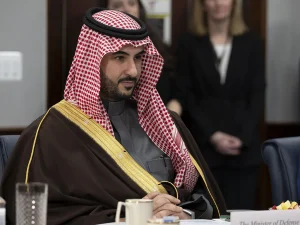
The message came as Lebanese Defence Minister Maj. Gen. Michel Menassa received German Defence State Secretary Jens Plötner and a delegation at his office in Yarze, with the German ambassador attending, according to the statement carried by Daily Beirut and IMLebanon.
What was discussed
Menassa thanked Germany for the support and aid it continues to provide to Lebanon and the army in several fields, especially in building up the capabilities of the navy. The meeting covered the period after the mandate of the United Nations Interim Force in Lebanon (UNIFIL) ends, the alternatives proposed to meet the related challenges, and the framework agreement and ongoing negotiations in that context.
The published accounts of the meeting announced no new equipment, funding figure or timetable.
What Berlin had already decided
The German cabinet had approved participation in both the civilian and military sides of the EU Support Mission in Lebanon (EUSM Lebanon). A Federal Government statement dated 18 November sets out the terms:
- Up to 15 officials from the federal and state police and customs for the civilian component.
- A small number of Bundeswehr personnel for training and exercise programmes for the Lebanese Navy.
- The Bundestag will be informed of the mandate; no vote is required because the military deployment is unarmed.
- A decision on the start of operations is not expected before December 2026.
The Council of the EU established the mission on 12 October 2026. Its military pillar is to advise and train the Lebanese Armed Forces on border and maritime security. On 26 November, Italy said it was ready to lead the military pillar.
From UNIFIL to the EU mission: the naval training track
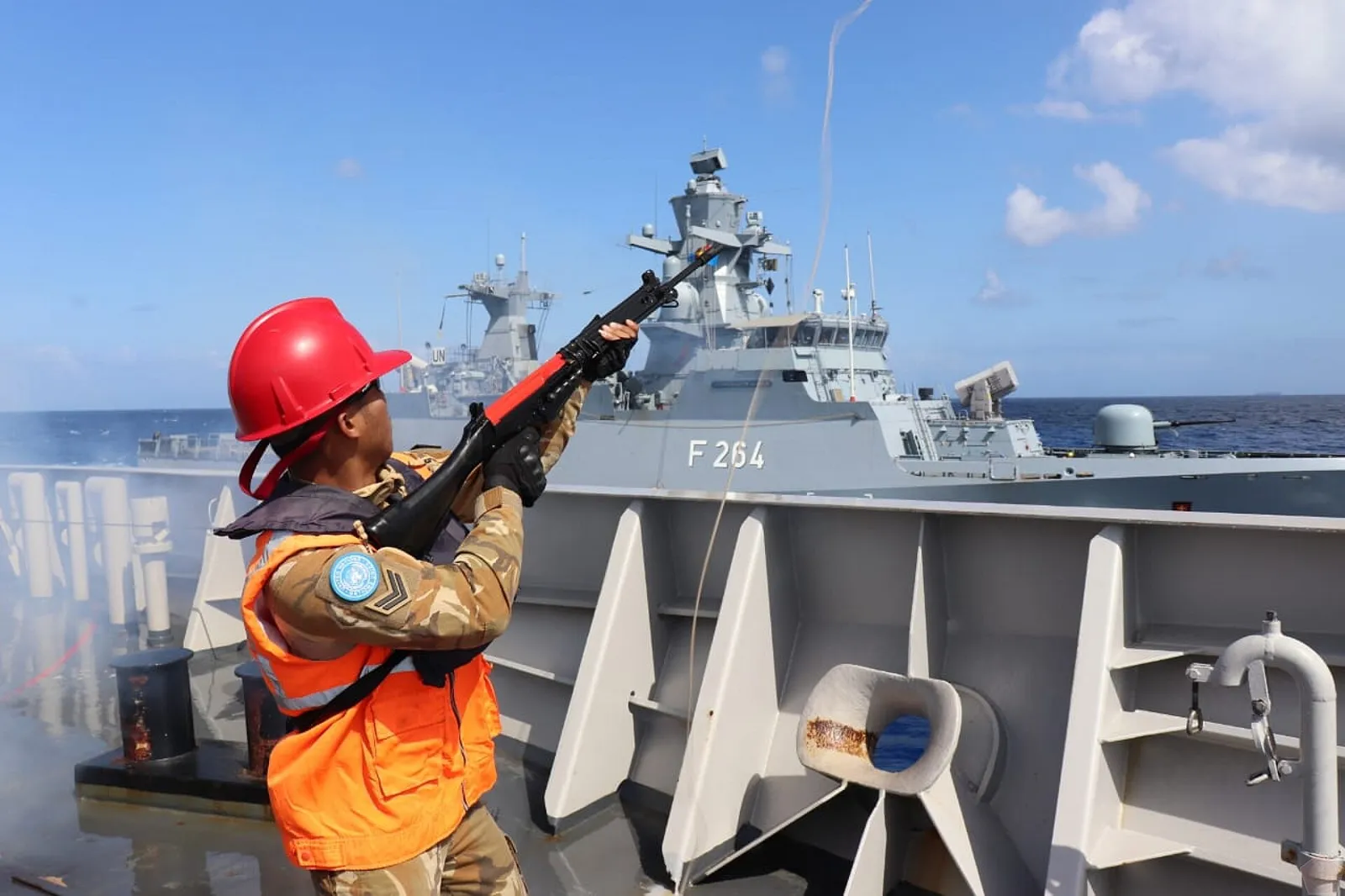
Germany has served for years in UNIFIL’s maritime component. On 25 June 2026 the Bundestag extended that participation for the last time by 511 votes to 67, with four abstentions. The ceiling is 300 service members, operations end on 31 December 2026, and a drawdown phase with no more than 80 personnel runs to 30 June 2027.
The German contribution includes a seagoing unit, headquarters staff and trainers focused on the Lebanese Navy. According to the government’s account to parliament, training was temporarily suspended in March 2026 because of the security situation, while remaining part of the mandate. The government said the Lebanese Navy had made considerable progress in monitoring its territorial waters and could now carry out all technical procedures on its own, up to the inspection of suspect vessels.
Berlin tied the timing of its ship’s withdrawal to the Lebanese Navy taking over the task and to a decision by the UN Secretariat, with the end of 2026 as the latest date.
Why it matters for Lebanon
The sequence is what counts. Germany’s role under UNIFIL is winding up, while Berlin has written Lebanese Navy training into its contribution to the EU mission. That points to the training track moving into a European advisory framework, with coastal monitoring resting on the Lebanese Navy.
Still open are the launch date of the mission, the number of German military trainers, and post-UNIFIL arrangements, whose alternatives the Lebanese account describes as still under discussion.
Sources
- Daily Beirut: Menassa receives Plötner, 27 November 2026
- IMLebanon: statement on the meeting (Arabic)
- German Federal Government: participation in EUSM Lebanon
- German Bundestag: participation in UNIFIL (German)
- Council of the EU: mission established, 12 October 2026
- EU Medbridge: text of the EU announcement